
The Zone of Interest (2023) Movie Review
Action / Drama / History / War

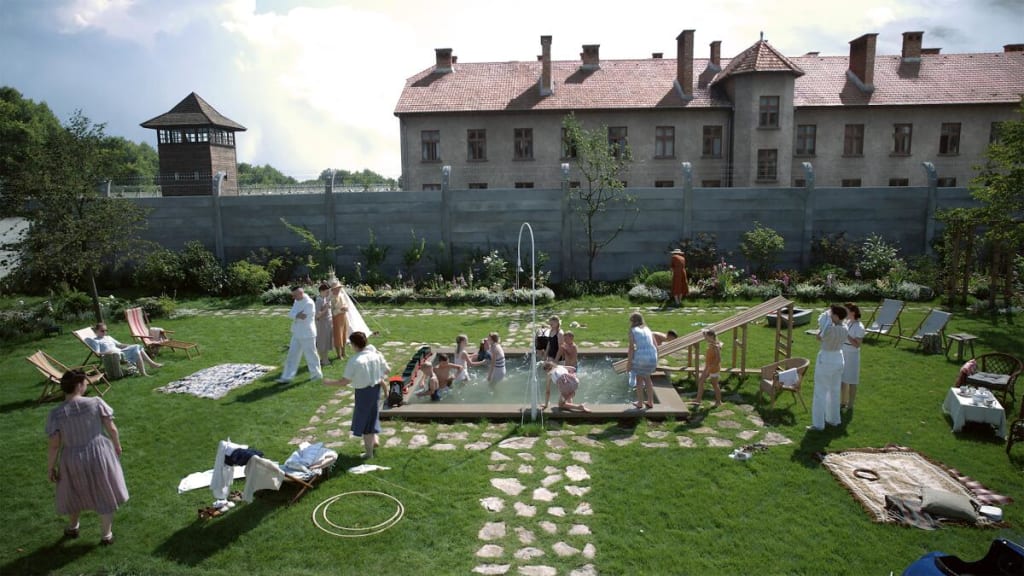
Many months have passed, yet the impact of "The Zone of Interest" lingers with haunting resonance. Jonathan Glazer's bold reinterpretation of the Holocaust, experienced back in May, left an indelible mark. In a cinematic landscape already saturated with narratives of unimaginable suffering and human cruelty, Glazer's adaptation of Martin Amis' novel offers a unique perspective that transcends mere witnessing.
Unlike conventional Holocaust films that implore viewers to bear witness to the atrocities committed under genocidal regimes, "The Zone of Interest" challenges the audience with a discomforting immaculateness. Glazer's film is not content with mere observation; it confronts the viewer with the sanitized facade of horror, reflecting unsettling parallels with contemporary narratives of violence and manipulation.
At its core, the film revolves around Rudolf Höss, the commandant of Auschwitz, portrayed with chilling detachment by Christian Friedel. Set against the backdrop of the concentration camp, Glazer paints a surreal portrait of domestic tranquility juxtaposed with the horrors unfolding beyond the walls. Through Rudolf and his family's unflinching indifference to the nearby genocide, Glazer explores the banality of evil, blurring the lines between humanity and inhumanity.
Friedel and Sandra Hüller, who plays Rudolf's wife Hedwig, navigate this morally fraught terrain with remarkable restraint and complexity. Amidst the emotional void, they grapple with the challenge of humanizing characters tainted by their complicity in unspeakable atrocities. Glazer's framing and Lukasz Zal's cinematography further amplify the film's dissonance, linking domestic tranquility to the sinister sounds of extermination.
The film's meticulous attention to detail extends beyond its performances to its visual and auditory composition. Glazer masterfully weaves a tapestry of sound and imagery, drawing parallels between the domestic routine of the Höss family and the atrocities unfolding outside their walls. Composer Mica Levi's haunting score adds another layer of depth, accentuating the film's themes of concealment and revelation.
Yet, amidst the film's disquieting portrayal of complicity and denial, there are moments of stark realism that puncture the facade of sanitization. Glazer juxtaposes scenes of domestic tranquility with visceral reminders of the camp's brutality, challenging viewers to confront the uncomfortable truth lurking beneath the surface.
As Rudolf grapples with his role in history, Glazer forces us to consider the ways in which history is recorded and remembered. Through Rudolf's descent into moral ambiguity and the chilling juxtaposition of past and present, the film underscores the power of narrative manipulation and the enduring legacy of sanitized violence.
In today's world, where truth is often obscured by propaganda and manipulation, "The Zone of Interest" serves as a timely reminder of the dangers of collective amnesia. Glazer's unflinching portrayal of sanitized horror forces us to confront uncomfortable truths about complicity and accountability, leaving an indelible impression long after the credits roll. As we navigate the complexities of memory and history, Glazer's images linger as a haunting reminder of the dangers of forgetting.
In conclusion, "The Zone of Interest" stands as a stark and chilling exploration of the Holocaust, offering a unique perspective that challenges conventional narratives of witnessing and remembrance. Jonathan Glazer's bold directorial vision, coupled with Martin Amis' source material, creates a cinematic experience that transcends mere observation, delving into the unsettling dynamics of complicity, denial, and the manipulation of history.
Through the lens of Rudolf Höss and his family, portrayed with chilling detachment by Christian Friedel and Sandra Hüller, the film navigates the moral complexities of living in proximity to unspeakable atrocities. Glazer's juxtaposition of domestic tranquility with the horrors of Auschwitz creates a dissonant atmosphere that forces viewers to confront uncomfortable truths about the banality of evil and the mechanisms of sanitization.
The film's meticulous attention to detail, from its cinematography to its haunting score, underscores the theme of concealment and revelation, challenging audiences to confront the uncomfortable realities lurking beneath sanitized surfaces. As Rudolf grapples with his role in history and the ways in which narratives are manipulated and remembered, "The Zone of Interest" serves as a timely reminder of the dangers of collective amnesia and the enduring legacy of sanitized violence.
In a world where truth is often obscured by propaganda and manipulation, Glazer's film stands as a powerful testament to the importance of bearing witness and confronting uncomfortable truths. Long after the credits roll, the images and themes of "The Zone of Interest" linger, serving as a haunting reminder of the dangers of forgetting and the imperative of remembrance.
About the Creator
Keep reading
More stories from Diresh Sherid and writers in Geeks and other communities.
Poor Things (2023) Movie Review
Yorgos Lanthimos revels in portraying extreme human behavior against the backdrop of pristine environments. Whether it's the serene suburbia in "Dogtooth," the sterile laboratory setting in "The Lobster," or the lavish opulence depicted in "The Favourite," Lanthimos consistently explores the jarring dichotomy between societal expectations and the messy reality of human nature, a theme that endlessly captivates him.
By Diresh Sherid2 years ago in Geeks
Protest Tomorrow
Across the United States, activists, civil society groups, students, and labor supporters are preparing for protest tomorrow, as a large-scale demonstration and economic shutdown is scheduled for Friday. Known widely as the nationwide strike Jan 30, the movement reflects rising tensions surrounding immigration enforcement policies and recent high-profile incidents involving federal agents.
By Saboor Brohi about 8 hours ago in Geeks



Comments
There are no comments for this story
Be the first to respond and start the conversation.