
The Villains of Puss in Boots: The Last Wish
A review

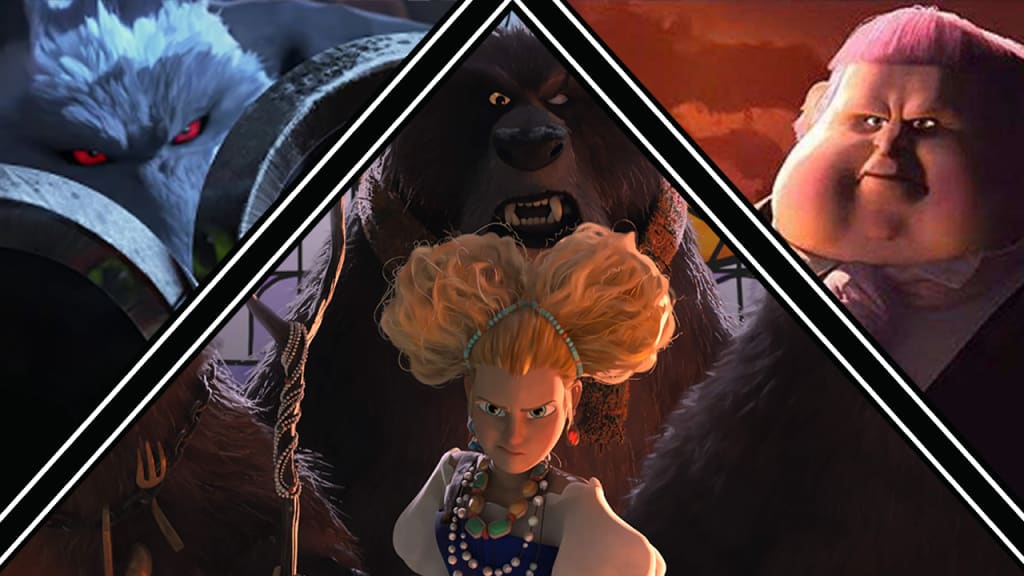
If there is one thing that will make or break any form of media for me, it's the conflict. Villains or antagonists can turn a mediocre film into a classic. Without them, the protagonist has no cause to action. The antagonist exists to be a foil, a source of tension, the antithesis of the hero and the lesson in which the hero has to learn. For there to be a Percy Jackson, there needs to be Kronos. For every Cinderella, there is an Evil Stepmother.
Most stories need only one antagonist, though its not uncommon to have two, like a mini boss of a video game or some underling to the main villain. Puss in Boots, however, has three main antagonists.
For those who haven't seen it, what are you doing here? But just in case, warning for spoilers ahead. I highly advise watching this movie. Even if you haven't seen the first Puss in Boots movie. Honestly, you don't really need to.
Not all villains are equal. There are a plethora of different ways to antagonize the hero. Whether it be physical, psychological, or emotional, really the main criteria is to just be an obstacle in the path of the Hero's journey. Each villain in Puss in Boots tackles different aspects of the hero, Puss in Boots, or 'Pickles,' and provides a whimsical, engaging, and thrilling story. It would have been so easy to mess this up. It would have been a miracle to pull off three main and separate conflicts in one film. And yet, here we are.
It would be safe to assume that Death is, in an existential sense, often an antagonist in film. In this movie, however, Death is a character. Not the grim reaper, not some bringer of death, but Death as an actual, tangible source of anxiety for Puss in Boots. This character is where this movie experiences its first level up. He enters at an empty bar where Puss is grappling with the reality that he is on his ninth life, the last life which cats are rumored to have. You don't see Death at first. You hear him. He whistles a tune, the message that he is near.
This could be just me, but the tune of the whistle sounds similar to the nursery rhyme, 'Pop goes the Weasel.' For those unfamiliar, or need a reminder, the rhyme goes, 'All around the mulberry bush, the monkey chased the weasel. The monkey thought it was all in fun, Pop goes the weasel.' Death asks Puss for an autograph, and says he's been looking for Puss 'for a long time,' as he points the the word 'dead' on Puss' wanted poster. Puss interprets this as the threat of a bounty hunter, but it also occurs to me that Puss' laughing in the face of Death, and having no fear of Death, could be interpereted as Puss being like the weasel in the nursery rhyme if 'pop' was meant to mean 'pop off' or 'to kill.' Death has been chasing Puss, and does so actively in the movie, expressing his enjoyment in the chase, loving the smell of fear. Relating Death's tune to this nursery rhyme perfectly illustrates Puss and Death's relationship to each other. Puss has eluded Death and never took it seriously, yet Death continued his pursuit, and now he's closing in.
This interaction with Puss frightens him, and he decides to bury his old life and retire in a home for cats. It's here where he hides from Death, and he would have possibly stayed there if it weren't for Puss in Boots' second driving force.
Goldie and the Three Bears arrive at the home for cats looking for Puss in Boots. At first, they seem to intend harm to him, but after they find the burial ground of his old life and conclude he has died, they talk about the Wishing Star. They needed to steal a scroll from a man named Jack Horner in order to find it, and it's the discovery of this that Puss decides to uncover his old visage and pursue the wishing star for himself.
Goldie and the Three Bears are closer to antagonists than villains. They are after the same thing as Puss and his friends but have no desire to kill any protagonists. They are the types of antagonists who have the human touch to them. They're relatable, sympathetic, and fun to watch as they learn the same moral that the protagonists do. Villains in this tier are often a foil in their similarities rather than their differences. Goldie has a wish that she feels will make her happy. Something to improve her life and make her feel whole. There is a scene while in Nostalgia Pines where the audience is given time to really understand Goldie's motives. You understand her dilemma and how, much like Puss, she doesn't see how what she really wants is something she already has.
Combined with their chemistry and being thwarted, they're in a tier similar to Team Rocket from Pokemon, or Kronk from Emperor's New Groove, or even King Harold from the second Shrek movie where Puss in Boots first debued. They actively attempt to thwart the protagonist, but whether it be out of good intentions or misguided faith or both, they're sympathetic and likeable characters.
As for the third Antagonist, he's introduced as the man that ordered the scroll for the Wishing Star to be delivered to him. If Goldie and the three bears are similar to Team Rocket or Kronk, Jack Horner is the Giovanni or the Yzma. He's the Scar, the Evil Stepmother, the evil-ass, chubby-ass, Gru-lookin' ass, cardboard cutout, no depth villain that we've adored since the dawn of time. We love to hate them and we feel no remorse in hating them. The movie itself reminds us time and again that Jack Horner is as evil as Dreamworks fairy-tale villains can be. While Death succeeds in being daunting, threatening and spine-tingling, Jack Horner is threatening, nasty, and hilarious.
For those who are after the Wishing Star, most of them are understandable human desires. Puss wants his lives back so he can continue to live his lives of no fear. Kitty Softpaws wanted someone she could trust. Goldi wanted a family, and the three bears wanted Goldi to be happy. Jack Horner, however, wanted all the magic in the world so that no one else could have any magic. As the unnamed insect conscious tells Jack, he's an 'irredemable monster.'
It should be obvious what Jack Horner is in the show to emulate. He's the rich man. The priveliged man who gives zero shits about anyone else where he doesn't even bat an eye when his employees, the Baker's Dozen, get eaten by plants, exploded into confetti by his own poor shooting, fallen off a cliff as he walks over them like a bridge, and vaporized by a wall of dream magic. He was even willing to shoot a puppy in the face! He is a characterization of the cold, heartless businessman. Though not explicit in the tale of the nursery rhyme Jack Horner, it was generally implied that Jack was in the corner because he stole the pie to eat all by himself. 'What a good boy am I,' Jack Horner says, illustrating that he feels he's owed this pie because he's good, despite doing something bad by the mere act of obtaining the prize he cherished. This movie's version of Jack Horner fits the context of the nursery rhyme perfectly.
So now we have an understanding of each villain, but the question still remains: Why do these three villains fit the movie so well? And why is each villain necessary for the story? It's because of the parallels each villain has with the three protagonists and how each villain represents a folly of Puss in Boots that he has to face in the film.
The parallels I'm talking about are the ones between Kitty Softpaws and Goldi, Perrito and Death, and Puss in Boots with Jack Horner.
When looking at the map, Kitty's trials lead heavily on the concept of loneliness. Her wish reflects the same desire. With Goldi, her drive is also centered around loneliness. They're both searching for somewhere to belong. Death and Perrito's parallel is fear. Death, as he says, loves the smell of fear. It makes the chase fun for him. It gives him a rush. He strives to instill fear in others. Perrito, however, wants to be a therapy dog. His desire is in being a companion. He wants to be someone to help other people cope with their fear. In one of the strongest scenes in the movie, he aids in saving Puss in Boots from a panic attack, therefore illustrating his value in being a therapy dog as well as a good friend to Puss. The parallels Puss has with Jack Horner, however, molds in with the folly Jack Horner represents within Puss.
Jack Horner and Puss are alike in their fortune as well as their lack of value in life. No, Puss doesn't go shooting dogs in the face or allowing men to be slaughtered by the dozen, but he does revel in his fame and glory. He has what no other creature has, which is nine lives. He wastes these lives, believing there would be no repercussions of his actions. He may lose one or two, but he has more. Why be worried about losing them? Why fear Death? He may be aiding others as a feline Robin Hood, but it doesn't make him any less fool to the folly of taking advantage of what he has. Puss learns throughout the movie that he wasted what should have been cherished, and becomes humble to the idea that he needs to recognize the blessings in his life while they're still with him. Something Jack Horner never learns, and in the end is done in by his greed and abuse of those around him.
As for Goldi, Puss shares the desire for something more. They're both blind of the fact that they both already have what they're really looking for. Puss wants his glory. His reputation. The reason he wants this is because he chased the adoration and ran away from vulnerability. He wanted things to be just as they were. He wanted the comfort in having nothing to fear. As for Goldi, she wanted a proper family. She wanted to feel as though she belonged and didn't stick out like a girl surrounded by bears. The bells and whistles formed by their ideal wish granted kept them from understanding that what they wanted, though imperfect and not ideal, was something that was easily within their grasp. Goldi's family, the three bears, were willing to sacrifice everything, even losing Goldi, just so she could get what she believed would make her happy. Goldi wanted to belong, and she did with the bears. They were her real, true family. A crime family, but a family all the same.
Puss would always say that he walked alone. In a few flashbacks while in the Cave of Lost Souls, the audience catches glimpses of the loneliness Puss struggled with. The moments between the glory came to light. No matter how adored he was to the villagers he liberated by dispersing wealth, he had no companions to travel with. He was as driven by his desire to be adored as he was by his desire to live with no fear, and it was his fear that distanced him from Kitty. To accept fear was to accept love from others, and to realize the value of a life was to take the time to cherish his last one. And as Perrito says, maybe one life is enough. Like Goldi, Puss was unable to see his true wish right in front of him. And as luck would have it, he was Kitty's wish as well.
Puss wanted to live a life without fear, but in his previous lives, he never cherished them. Now he was on his last life, and Death became a very real and very present force. Death didn't necessarily have something in common with Puss, but he did represent Puss' biggest folly: his dismissal of Death as well as his lack of fear.
The night after he realizes he has only one life left to live, that's when Death comes. He looms over Puss and attacks him, drawing blood. Before this, Puss stated he was never struck with a blade. Now, an attacker drew blood. This was the catalyst for Puss' decisions in the rest of the movie. The fear of Death consumed him. He resigned to stop living, even going so far as burying his clothes and therefore the persona 'Puss in Boots.' But no matter how resigned one tries to be, life will always come knocking. Or in the case of the bears, come pounding. Death is seen only a handful of times, and even then, only three times to any lengthy degree. All other times it's his whistle, or his image in a crowd. Death is a hunter. He bides his time. He watches. He waits. And he comes for us all.
Puss in Boots is a remarkable film. I say 'remarkable' because it is, quite specifically, worth noting. There are so many facets of the story still left unexplored that could be analyzed, discussed, and discovered. I have only skimmed the top of the iceburg that is the brilliance of the villains in this story. Each character could have their own review. I was as nervous as everyone else about a Puss in Boots sequel. Our media is drowning in these sequels, spin-offs, reboots and remakes to the point where it feels like there is no more creativity for original work. Its a constant frustration for me personally as someone that thrives on original content. I'm proud to say that, in regards to this film, it's exactly the kind of spin-off sequel you wish for.
About the Creator
Jean Bruce
They/Them, 32. Writes Horror/Mystery/Fantasy and occasionally Reviews. I enjoy joining the contests. Friendly and easy to approach, talk to me about writing!~
Keep reading
More stories from Jean Bruce and writers in Geeks and other communities.
The Macaw and the Puffin
I was traveling for a vacation to Caracas Venezuela. I had been there a few times before and there was a beach that was absolutely perfect. I went alone after a recent breakup and needed the time to let out some stress, and there was nowhere else better than the tropical area by the beach.
By Jean Bruce3 years ago in Fiction
History of The Three Stooges (Part I: The Beginnings and Columbia Pictures - 1920s-1936)
I have been itching to write about The Three Stooges on Vocal for close to two years, but I couldn't figure out how to do it. I wanted to do it by third Stooge, but that's a bit complicated. I know this much. I was about eight or nine years old when I first saw The Three Stooges. I remember one of my local channels had the Stooges on for hours, and I tried my damnedest to be up for those shorts. I remember that the Family Channel actually had an hour of the Stooges on from 11PM to midnight, and it was the entire library on during that time.
By Clyde E. Dawkins4 days ago in Geeks
Iran Releases Epstein Files:
Introduction The controversy surrounding the Epstein files has once again captured global attention. These documents relate to the criminal activities and powerful connections of American financier Jeffrey Epstein, who was accused of operating a large international sex-trafficking network involving underage girls. In recent months, rumors and reports have circulated online claiming that Iran has released sensitive information related to these files, sparking intense debate and speculation across political and media circles worldwide.
By shaoor afridi7 days ago in Geeks


Comments
There are no comments for this story
Be the first to respond and start the conversation.