
"The Strawberry Grows Underneath the Nettle"
Shakespeare's Language of Food and Eating

Background and Context
Same as before:
- These are all expansions of random notes from back when I went to university a while ago. I will move on from Shakespeare when I'm almost done with him
- Check out the secondary sources - there's some good stuff in there
- Enjoy
"The Strawberry Grows Underneath the Nettle"
Shakespeare's Language of Food and Eating
Food in Shakespeare’s plays is far more than a mere necessity for survival. Across his works, references to feasting, hunger, poison, and indulgence shape themes of power, desire, morality, and decay. Whether in the grand banquets of Macbeth and Timon of Athens or the grotesque use of food in Titus Andronicus, Shakespeare employs culinary imagery to reflect human nature and the political and social structures of his time. As Joan Fitzpatrick argues, food in early modern literature often carries "allegorical and moral weight," serving as a marker of status, virtue, or corruption (Fitzpatrick, 2007). In Shakespeare’s hands, it becomes a vehicle for both humour and horror, exposing greed, betrayal, and the fragility of human life.
Beyond the obvious scenes of feasting, food frequently appears in insults and metaphors, highlighting character traits or relationships. Falstaff, for instance, is the subject of numerous food-related jibes, reinforcing his gluttonous, indulgent persona. Similarly, Cassius in Julius Caesar is described as having a "lean and hungry look" (1.2), equating his ambition with an unsatisfied appetite. As David Goldstein notes, Shakespeare’s language of food often "complicates rather than clarifies" moral judgements, blurring the boundaries between nourishment and excess, generosity and manipulation (Goldstein, 2013).
I will explore Shakespeare’s use of food thematically through the plays. By examining patterns across his works, we can better understand how food functions as a symbol of power, deprivation, insult, poison, and love; revealing the deeper anxieties and desires that shape his writings.
Feasting and Power

In the plays, feasting is rarely just an act of communal enjoyment. Instead, it is deeply entwined with questions of power, status, and political control. Grand banquets signal wealth and authority, but they can also be fragile displays of stability, vulnerable to disruption. In Macbeth, for instance, the banquet scene (3.4) serves as a key moment in the play’s exploration of kingship and legitimacy. Macbeth, having secured his throne through murder, attempts to assert his dominance through hospitality. Yet the arrival of Banquo’s ghost shatters the illusion of order, turning the feast into a spectacle of disorder and paranoia. Joan Fitzpatrick states, food in Shakespeare often reflects "the precariousness of political power," with feasts acting as "performances of authority" that can be undermined at any moment (Fitzpatrick, 2007).
A similar point is evident in Timon of Athens, where feasting initially represents excess but later becomes a means of exposing corruption. In the first half of the play, Timon hosts extravagant banquets, using food as a symbol of his wealth and generosity. However, once abandoned by his so-called friends, he stages a bitter reversal: a feast of warm water and stones (3.6), designed not to nourish but to insult. This transition from indulgence to starvation mirrors his personal and financial decline. As David Goldstein observes, Shakespeare uses feasting in Timon of Athens to "dramatise the limits of hospitality" and to reveal the transactional nature of social relationships (Goldstein, 2013).
Beyond personal downfall, feasting in Shakespeare frequently intersects with political strategy. In Henry IV Part 1, Falstaff’s indulgence in food and drink contrasts with Prince Hal’s calculated restraint. Hal strategically immerses himself in the world of taverns and feasting, only to later reject it, proving himself a disciplined ruler. Similarly, in Hamlet, Claudius’s courtly feasts serve to mask political unease. The hasty marriage banquet following King Hamlet’s death is a stark example of how feasting can be used to consolidate power rather than genuinely celebrate.
Therefore, Shakespeare’s portrayal of feasting highlights the performative nature of power. Whether in the royal courts or the alehouses of England, food is rarely just sustenance: it is a tool for manipulation, a symbol of control, and, in the wrong hands, a harbinger of downfall.
Hunger and Deprivation

While feasting in Shakespeare often symbolises power and excess, hunger and deprivation function as stark reminders of vulnerability, injustice, and decay. Whether representing: societal neglect, political unrest, or personal desperation, the imagery of starvation frequently underscores the fragility of human existence. In plays such as King Lear and Coriolanus, hunger reflects broader societal collapse, while in Titus Andronicus, the grotesque use of food and cannibalism reveals the dehumanising effects of extreme desperation.
In King Lear, hunger is closely associated with poverty and suffering. As Lear descends into madness, he gains a new awareness of the hardships endured by the poor, lamenting the inequality that leaves many to "bide the pelting of this pitiless storm" (3.4). The theme of hunger in the play is not merely physical but symbolic of emotional and moral deprivation. As Ken Albala argues, early modern literature often links food scarcity with "the breakdown of social bonds," illustrating how economic hardship reflects a failing moral order (Albala, 2007). Lear’s realisation that he has ignored the plight of the hungry highlights his tragic transformation from an oblivious monarch to a humbled, broken man.
A more overtly political depiction of hunger appears in Coriolanus, where the plebeians’ starvation fuels their demands for grain and political representation. Coriolanus’s disdain for the hungry masses, whom he describes as "curs" (1.1), reveals his inability to empathise with those who suffer. As Joan Fitzpatrick states, the play exposes "the tension between the privileged and the impoverished, with food functioning as a contested symbol of power and entitlement" (Fitzpatrick, 2007). The plebeians’ hunger is not just a literal problem but a symptom of systemic injustice, making their rebellion an act of survival rather than mere discontent.
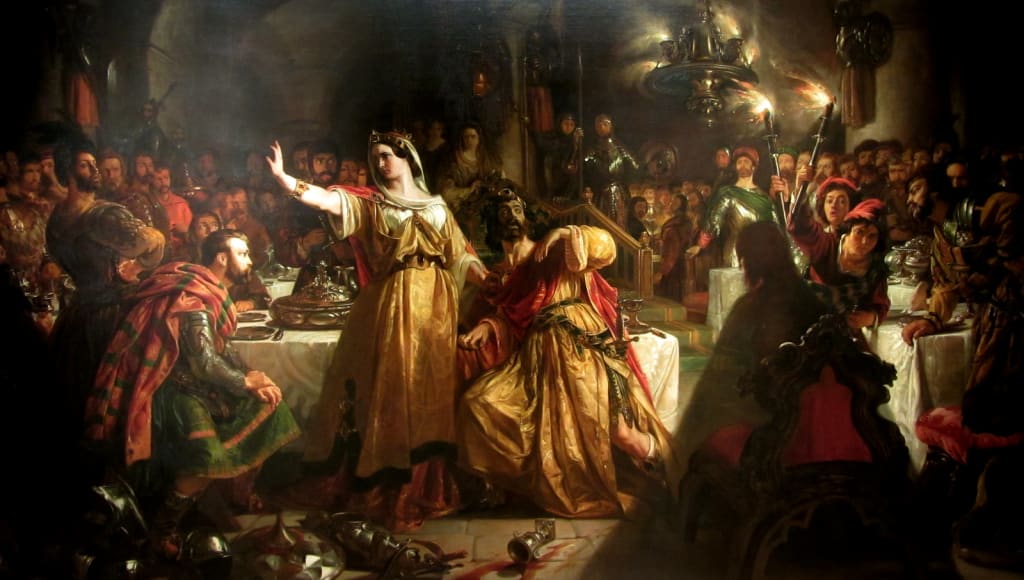
In Titus Andronicus, hunger takes on a horrifyingly grotesque form, as the boundaries between sustenance and vengeance collapse. The infamous banquet scene (5.3), in which Tamora unknowingly eats a pie made from her own sons, turns food into an instrument of cruelty. Unlike King Lear and Coriolanus, where hunger reflects deprivation, Titus Andronicus presents starvation as a force that distorts human morality, reducing people to primal, animalistic behaviours. As David Goldstein notes, the play’s use of cannibalism is "a parodic inversion of hospitality," where food ceases to nourish and instead becomes a vehicle for destruction (Goldstein, 2013).
Thus, Shakespeare’s depiction of hunger moves beyond simple deprivation to reveal deeper anxieties about power, justice, and humanity. Whether through Lear’s moral awakening, Coriolanus’s class divisions, or Titus Andronicus’ descent into savagery, starvation in Shakespeare is never just about food, it is a mirror reflecting the collapse of both individuals and societies.
Food, Satire and Insults

Shakespeare frequently uses food not just as sustenance or a marker of power, but as a means of insult, mockery, and satire. Whether deployed in witty exchanges, as indicators of character flaws, or as social commentary, food-based language serves as a vivid tool for both humour and critique. From Falstaff’s corpulent excess in Henry IV Part 1 to Cassius’s "lean and hungry look" in Julius Caesar, Shakespeare’s food-related insults offer insight into perceptions of greed, weakness, and even political ambition.
One of Shakespeare’s most enduringly humorous characters, Sir John Falstaff, is a frequent target of food-based mockery. Prince Hal famously ridicules him, comparing his girth to "a tun of man" and calling him "that roasted Manningtree ox with the pudding in his belly" (Henry IV Part 1, 2.4). Later, Falstaff himself embraces such imagery, declaring, "If sack and sugar be a fault, God help the wicked!" (2.4), blending self-deprecating humour with indulgent pride. As Robert Appelbaum notes, Falstaff represents a "comic embodiment of excess," where his appetite for food and drink mirrors his larger-than-life personality and moral looseness (Appelbaum, 2006).
Similarly, in Julius Caesar, food imagery is weaponised to contrast Cassius with Caesar. Caesar observes, "Let me have men about me that are fat; / Sleek-headed men, and such as sleep o’ nights" (1.2), implying that Cassius’s leanness signals both hunger and dangerous ambition. Early modern physiognomy often associated a lack of bodily fat with a scheming, envious nature, making Cassius’s thinness a visual and metaphorical sign of his discontent. As Ken Albala explains, Renaissance dietaries linked body size to temperament, with corpulence implying contentment and leanness suggesting "restlessness and dissatisfaction with one’s lot" (Albala, 2007, p. 53).
Shakespeare also uses food imagery to satirise gluttony and excess. Twelfth Night’s Sir Toby Belch is a prime example, his very name evoking overindulgence. His love of feasting and drunken revelry directly contrasts with the puritanical Malvolio, creating a comic opposition between indulgence and restraint. At one point, Sir Toby dismisses moderation entirely, exclaiming, "Dost thou think, because thou art virtuous, there shall be no more cakes and ale?" (2.3). His gluttonous lifestyle, while amusing, also critiques aristocratic excess. As Joan Fitzpatrick notes, Shakespeare often links "overconsumption with moral laxity," suggesting that excessive indulgence in food reflects a deeper lack of discipline and virtue (Fitzpatrick, 2007, p. 135).
These food-based insults and satirical characterisations serve multiple purposes in Shakespeare’s plays. They are tools of comedy, reinforcing the personalities of figures like Falstaff and Sir Toby, but they also reveal societal attitudes toward consumption, self-control, and power. Whether used to mock, warn, or amuse, Shakespeare’s language of food remains one of his most effective means of characterisation and critique of lifestyle and habit.
Poison, Power and Corruption

Shakespeare frequently associates food and drink with themes of poison and corruption, both in a literal and metaphorical sense. Whether through fatal substances, such as: the poisoned cup in Hamlet and the potions in Romeo and Juliet, or through the symbolic contamination of power and morality, food often becomes an agent of destruction. The idea that what is consumed can lead to decay reflects Renaissance anxieties about trust, deception, and the fragility of the body.
In Hamlet, the poisoned cup in the final scene epitomises the play’s obsession with treachery and moral contamination. Claudius, having already murdered his brother by pouring poison into his ear, extends his corruption further by attempting to kill Hamlet through a poisoned chalice (5.2). However, in an ironic twist, Gertrude drinks from it instead, falling victim to the very treachery she has been complicit in. As David Goldstein states, the cup represents “the inescapable cycle of decay” in Hamlet, where consumption becomes an act of self-destruction (Goldstein, 2013). The physical poison mirrors the corruption that has spread through Denmark, reinforcing the idea that moral rot is as fatal as any toxic substance.
Similar to this, Romeo and Juliet uses the imagery of ingestion to explore fatal misjudgements and the consequences of societal toxicity. Juliet’s sleeping potion (4.1) allows her to feign death, while Romeo’s actual poison (5.3) seals their tragic fate. Unlike Hamlet, where poison symbolises external betrayal, in Romeo and Juliet it reflects personal desperation and a world where love and death are inextricably linked. As Joan Fitzpatrick notes, early modern anxieties about adulteration in food and drink often extended to moral concerns, with poison serving as a metaphor for “the tainting of innocence by external forces” (Fitzpatrick, 2007). In this sense, the lovers’ downfall is not just the result of poison but of a corrupted social order that makes their love impossible.
Beyond individual tragedy, Shakespeare also uses food to symbolise political and moral decay, particularly in Richard III. Richard’s ascent to the throne is marked by metaphorical consumption, as he “feeds” off the destruction of others. The famous line “I am not in the giving vein today” (4.2) underscores his refusal to nourish or sustain loyalty, instead hoarding power for himself. His manipulative nature aligns with Renaissance fears about gluttonous rulers who devour their subjects for personal gain. As Robert Appelbaum explains, the play presents food as “a site of moral contestation,” where the act of consumption mirrors the corrupt exercise of power (Appelbaum, 2006). Richard’s reign, like an unchecked appetite, becomes an unsustainable force of destruction that ultimately leads to his downfall.
Here, Shakespeare’s use of poison and corruption through food and drink serves as both a literal plot device and a wider commentary on moral and political decay. Whether in the treachery of Hamlet, the tragic misjudgements of Romeo and Juliet, or the ruthless consumption of power in Richard III, ingestion becomes an act fraught with peril, reinforcing the inescapable link between sustenance and destruction.
Love and Romance

In Shakespeare’s works, food is frequently intertwined with themes of love, passion, and sensuality. Appetite (whether for food or romance) becomes a marker of desire, excess, or, conversely, restraint. In Venus and Adonis and Antony and Cleopatra, indulgence in food is aligned with erotic longing and excess, while in comedies such as The Taming of the Shrew and The Merry Wives of Windsor, food often serves as a playful metaphor for romantic relationships and courtship.
In Venus and Adonis, food imagery reinforces the theme of unfulfilled desire. Venus, consumed by passion for the reluctant Adonis, likens herself to a hungry creature desperate to feast upon its prey:
"Feed where thou wilt, on mountain or in dale:
Graze on my lips; and if those hills be dry,
Stray lower, where the pleasant fountains lie."
Here, Shakespeare links physical hunger with sexual appetite, portraying Venus as an insatiable lover whose desires remain unmet. As Joan Fitzpatrick observes, the poem reflects early modern anxieties about excessive appetite, “where the act of consuming, particularly by women, is seen as both dangerously seductive and disruptive to the natural order” (Fitzpatrick, 2007). Venus’s unchecked hunger for Adonis parallels wider concerns about gluttony and moral restraint, highlighting the interplay between physical and erotic consumption.
Similar to this, Antony and Cleopatra presents indulgence in food as an extension of sensual excess. Cleopatra’s lavish feasts and extravagant lifestyle reflect her approach to love, intensely passionate, dramatic, and all-consuming. The play’s Roman characters, particularly Octavius Caesar, contrast this indulgence with a more measured, disciplined appetite, linking food with self-control and political stability. As Ken Albala notes, “Cleopatra’s feasting is not mere indulgence but a demonstration of power and seduction, reinforcing the idea that love and food are intimately connected in displays of dominance and excess” (Albala, 2002).
In contrast, Shakespeare’s comedies use food to explore the humour and absurdities of love. In The Taming of the Shrew, Petruchio weaponises hunger as a means of taming Katherina, denying her food until she submits to his authority:
"Thus have I politicly begun my reign,
And 'tis my hope to end successfully.
My falcon now is sharp and passing empty;
And till she stoop, she must not be full-gorged." (4.1)
By comparing Katherina to a hunting falcon that must be starved into obedience, Shakespeare presents a darker, more satirical take on food and love, where appetite is linked to control rather than pleasure. As Madeline Bassnett depicts, “Food in this play is not a site of sensual delight, but of power dynamics, where love is mediated through physical deprivation” (Bassnett, 2016).
Meanwhile, in The Merry Wives of Windsor, food and drink become emblems of excess and comic indulgence, particularly through the character of Falstaff. His romantic pursuits are closely tied to his gluttony, with Mistress Ford and Mistress Page using his greed for food and drink to deceive him. His downfall, being tossed into the river while disguised in a basket of dirty laundry, underscores the play’s use of food not as a symbol of love’s refinement, but of its folly. Robert Appelbaum notes that “Falstaff’s appetites are always excessive, blurring the line between culinary and sexual consumption” (Appelbaum, 2006).
In Shakespeare’s works, food and love are deeply intertwined, serving as symbols of passion, power, and folly. Whether in the seductions of female characters like: Venus or Cleopatra, the comedic manipulations of The Merry Wives of Windsor, or the brutal control of appetite in The Taming of the Shrew, Shakespeare consistently uses food to explore the complexities of desire, making the act of eating a metaphor for love itself.
Conclusion

In Shakespeare’s works, food transcends its role as mere sustenance, becoming a potent symbol of power, pleasure, corruption, and insult. Whether through feasts that signify political control, hunger that reflects societal decay, or the use of food in insults and satirical portrayals of human folly, Shakespeare intricately weaves themes of consumption into the fabric of his narratives. The idea that what we consume whether: food, power, or affection, can shape or destroy us permeates his plays, offering a profound commentary on human desires and weaknesses.
Works Cited:
- Albala, K. (2007) Eating Right in the Renaissance. Berkeley: University of California Press.
- Appelbaum, R. (2006) Aguecheek’s Beef, Belch’s Hiccup, and Other Gastronomic Interjections: Literature, Culture, and Food Among the Early Moderns. Chicago: University of Chicago Press.
- Bassnett, M. (2016) Women, Food and Power in Early Modern England. Oxford: Oxford University Press.
- Fitzpatrick, J. (2007) Food in Shakespeare: Early Modern Dietaries and the Plays. Farnham: Ashgate.
- Goldstein, D. B. (2013) Eating and Ethics in Shakespeare’s England. Cambridge: Cambridge University Press.
- Shakespeare, W. (2008) The Complete Plays of William Shakespeare. UK: Wordsworth Editions
About the Creator
Annie Kapur
I am:
🙋🏽♀️ Annie
📚 Avid Reader
📝 Reviewer and Commentator
🎓 Post-Grad Millennial (M.A)
***
I have:
📖 280K+ reads on Vocal
🫶🏼 Love for reading & research
🦋/X @AnnieWithBooks
***
🏡 UK
Reader insights
Outstanding
Excellent work. Looking forward to reading more!
Top insights
Easy to read and follow
Well-structured & engaging content
Expert insights and opinions
Arguments were carefully researched and presented
Eye opening
Niche topic & fresh perspectives
On-point and relevant
Writing reflected the title & theme
Keep reading
More stories from Annie Kapur and writers in Geeks and other communities.
Book Review: "The Ghost of the Mary Celeste" by Valerie Martin
As you know I've started using the library in this city more and though it is a bit out from me, there is still a reason to use it: to get out of my apartment a little bit. As of writing this review, it is the 23rd of February 2025 and well, you know how much I love a good ghost story. I had heard of this book before and I'd even seen it back in the library in my hometown but for some reason I had only felt compelled to pick it up now. It is one of those books where I do actually regret not reading it earlier on in my life. It is absolutely fantastic.
By Annie Kapur10 months ago in Geeks
Marvel Zombie
The last entry into our 2025 superhero projects catalogue is Marvel Zombies. This was a show that was anticipated by absolutely no one and it disappeared from the public consciousness as quickly as it was released. There was nothing special about the project that made it a must see, or a must remember. In fact if anything it's a must forget.
By Alexandrea Callaghan27 days ago in Geeks
Emma Watson, Sir Lenny Henry and Sir Elton John lead British Diversity Awards
The prizes will be handed out at a glittering ceremony in London on March 25 2026 and Harry Potter actress/activist Watson will compete with Henry and John for the top gong of Media Personality of the Year with the musician competing alongside his husband David Furnish.
By Dena Falken Esq7 days ago in Geeks




Comments (1)
⚡💙⚡