
The Storied Origins of the Taj Mahal Diamond Necklace Margot Robbie Wore to the Wuthering Heights Premiere
Tracing the centuries-old journey of a legendary Mughal jewel—from imperial India and Elizabeth Taylor’s iconic collection to Margot Robbie’s show-stopping red-carpet moment

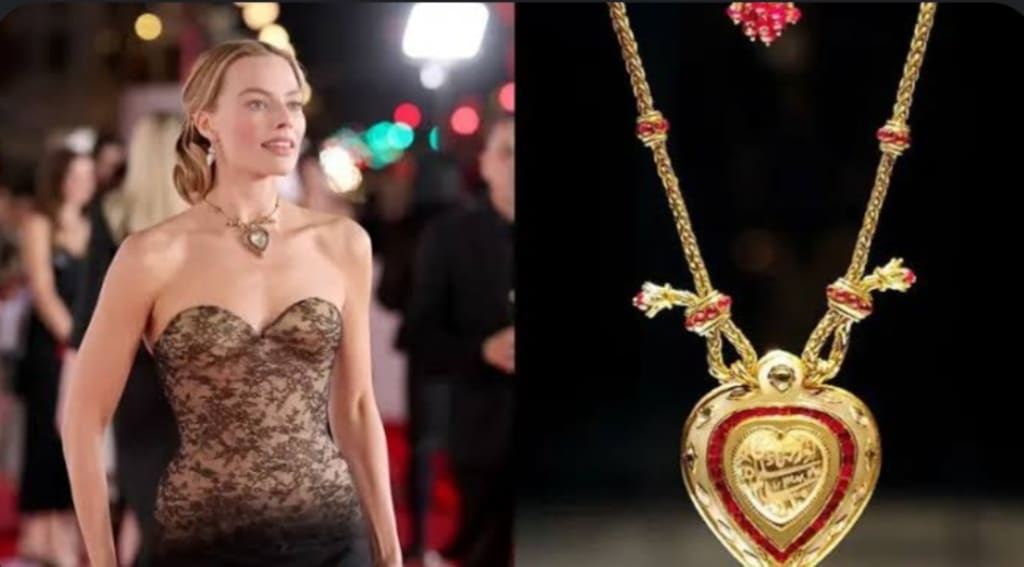
At the Wuthering Heights world premiere in Los Angeles on January 28, 2026, Margot Robbie captivated fans and fashion critics alike—not just with her performance and a stunning couture gown, but with a piece of jewellery steeped in history: the Taj Mahal Diamond necklace. More than just a glamorous accessory, this stunning necklace has a journey spanning centuries, from Mughal emperors to Hollywood royalty and now onto one of today’s biggest movie stars.
A Jewel With Imperial Beginnings
The story of the Taj Mahal Diamond begins far from the red carpets of Hollywood—deep in the courts of the Mughal Empire in India. Historians believe the heart-shaped, table-cut diamond was originally part of the treasures of Emperor Jahangir, who reigned from 1605 to 1627. As a symbol of devotion, he presented it to his wife Empress Nur Jahan—one of the most powerful and influential women of her time.
The gem’s early provenance is linked to some of the most iconic figures in Indian history. After its time with Nur Jahan, the diamond is thought to have passed to her son, Shah Jahan, the Mughal emperor famed for commissioning the Taj Mahal mausoleum in Agra in honor of his beloved wife Mumtaz Mahal. The connection to that legendary monument is what ultimately inspired the diamond’s modern name.
From India to Europe: Cartier’s Transformation
Centuries later, the diamond left the Mughal treasury and entered the world of European luxury through Cartier, one of the most prestigious jewellers in history. Cartier acquired the piece around 1971 and undertook an artful transformation: architects of glamour reimagined the ancient stone, setting it in a custom gold, ruby, and diamond chain that echoed both its royal heritage and modern elegance.
Originally, the jewel was suspended from a traditional Indian silk cord, a nod to its origins. But Cartier designer Alfred Durante later created the richly detailed chain that makes up the necklace’s current form—giving the Mughal treasure a fresh identity fit for a new era.
A Hollywood Love Token: Richard Burton and Elizabeth Taylor
In 1972, this remarkable piece made its way into the hands of Richard Burton, one of Hollywood’s most charismatic stars, known as much for his commanding screen presence as for his tempestuous love life with Elizabeth Taylor. Burton purchased the necklace at Cartier and presented it to Taylor as a gift for her 40th birthday during an extravagant celebration in Budapest.
The jewel became one of the most celebrated pieces in Elizabeth Taylor’s legendary collection, a symbol of the intense passion between the two stars. Known as the Taj Mahal Diamond, the necklace was not just a luxurious accessory—it was a narrative in gemstone form, bearing an inscription in Parsee (a dialect of Persian) that translates to “Love is Everlasting.”
After Taylor’s passing, the necklace was sold at auction in 2011 for $8.8 million, setting a record at the time for Indian jewellery at Christie’s. The buyer chose to remain anonymous, and the piece entered a private collection—but its story was far from over.
A Modern Revival on the Red Carpet
Fast forward to January 2026: Margot Robbie, the star of Wuthering Heights, brought the Taj Mahal Diamond back into the spotlight at the film’s grand premiere. Styled by Andrew Mukamal, Robbie paired the historic necklace with a dramatic Schiaparelli couture gown in black and red hues—an aesthetic echo of the gothic romance at the heart of Emily Brontë’s classic.
Robbie’s choice of jewellery wasn’t merely a glamorous statement; it was a deliberate nod to the themes of Wuthering Heights—timeless love, longing, and emotional extremes. The connection between the tale’s tempestuous lovers, Catherine and Heathcliff, and the legendary real-life romance of Taylor and Burton added layers of meaning to the look.
Robbie acknowledged the necklace’s romantic heritage in interviews, saying that wearing a piece with such profound symbolic weight felt particularly fitting for the evening. Her selection shows how red carpet fashion can transcend beauty, becoming an expressive extension of storytelling and emotional resonance.
Why This Necklace Still Captivates
The journey of the Taj Mahal Diamond—from imperial India to Hollywood’s golden age to a modern cinematic premiere—reveals why it continues to fascinate. It is more than a glittering accessory; it’s a cultural artifact that weaves together history, romance, artistic craftsmanship, and personal narrative.
The piece’s Mughal roots give it cultural depth and antiquity; Cartier’s transformation exemplifies luxury refinement; Taylor and Burton’s ownership adds Hollywood lore; and now, Margot Robbie’s moment in the spotlight extends this legend into a new cultural moment. Each chapter enriches the next, making this more than just jewellery—it’s a bearer of stories that span continents and centuries.
In a world where fashion and film increasingly intersect with history and heritage, the Taj Mahal Diamond necklace worn by Margot Robbie stands as a luminous intersection of past and present—a testament to the enduring allure of love, legend, and beauty.
About the Creator
Keep reading
More stories from Salaar Jamali and writers in Geeks and other communities.
Dhaka-Karachi Direct Flights Resume After 14-Year Hiatus
After a prolonged gap of fourteen years, direct flights between Dhaka and Karachi have officially resumed, marking a significant milestone in the evolving relationship between Pakistan and Bangladesh. The restoration of this long-suspended air link is being widely seen as a practical step toward rebuilding people-to-people ties, facilitating trade, and signaling a cautious diplomatic reset between the two South Asian nations.
By Salaar Jamali2 days ago in Geeks
Lauren Sánchez Bezos debuts vintage Versace look styled by Zendaya’s image architect
Amazon founder Jeff Bezos has regained his position as the third richest person in the world following the increase in Amazon’s stock price and a significant change in the company’s retail business strategy.
By Dena Falken Esqabout 2 hours ago in Geeks



Comments
There are no comments for this story
Be the first to respond and start the conversation.