
The Sting (1973) Review
1973 American caper film set in September 1936, involving a complicated plot by two professional grifters (Paul Newman and Robert Redford) to con a mob boss (Robert Shaw).
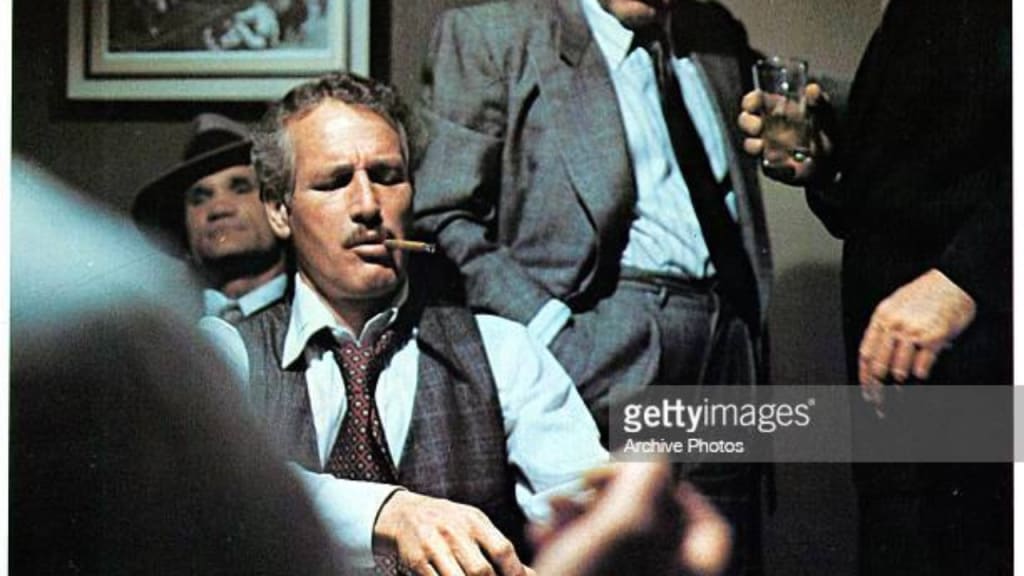
“The Sting” is a 1973 American film directed by George Roy Hill and starring Paul Newman and Robert Redford. The movie is set in the 1930s and follows two con artists, Johnny Hooker (Redford) and Henry Gondorff (Newman), as they attempt to pull off a major scam against a notorious gangster named Doyle Lonnegan (Robert Shaw).
One of the most impressive aspects of “The Sting” is its masterful storytelling. The movie is divided into two parts: the setup and the sting. In the first part, we see Hooker and Gondorff as they prepare for their big con. We meet a range of memorable characters, including J.J. Singleton (Ray Walston), a corrupt police officer, and Kid Twist (Harold Gould), a veteran con man who serves as a mentor to Hooker.
In the second part, we see the con in action. The planning and execution of the sting are meticulously crafted, with each step building on the previous one. The movie keeps the audience guessing throughout, with unexpected twists and turns that keep us on the edge of our seats.
The film's attention to detail is also remarkable. From the costumes to the sets to the dialogue, everything feels authentic to the era in which the film is set. The movie does an excellent job of immersing the audience in the world of 1930s Chicago.
The performances in “The Sting” are outstanding. Newman and Redford have a natural chemistry that makes their characters' partnership feel believable and compelling. Newman, in particular, gives a standout performance as Gondorff, a seasoned con man who takes Hooker under his wing. Shaw is also excellent as Lonnegan, a ruthless gangster who becomes the target of the con.
The movie's score, composed by Marvin Hamlisch, is another standout aspect of the film. The music perfectly captures the mood of the era and helps to build tension throughout the movie. The use of ragtime music also adds to the film's authenticity and charm.
The film's themes of loyalty and redemption are also worth noting. Both Hooker and Gondorff are flawed characters with checkered pasts, but they are ultimately loyal to each other and to their cause. The film shows that even the most unlikely of partnerships can lead to great things.
One of the most memorable scenes in the movie is the poker game between Hooker and Lonnegan. The scene is brilliantly executed, with the tension building as the stakes get higher and higher. The scene showcases the incredible talent of the actors and the filmmakers and is a highlight of the movie.
Another standout aspect of “The Sting” is its use of humor. The movie has a lightness of touch that is often missing in films of this genre. The banter between Hooker and Gondorff is particularly entertaining, and the movie's comedic moments help to balance out the tension and drama of the story.
The movie's final twist is a stroke of genius. Without giving too much away, the twist ties everything together in a satisfying and surprising way. It's the kind of twist that makes you want to go back and watch the movie again, just to see if you missed any clues.
In conclusion, “The Sting” is a cinematic masterpiece. Its masterful storytelling, attention to detail, and outstanding performances make it one of the best films of its genre. The movie's themes of loyalty and redemption, as well as its use of humor and unexpected twists, make it a timeless classic that is as entertaining today as it was when it was first released. If you haven't seen “The Sting” yet, do yourself a favor and watch it as soon as possible. You won't be disappointed.
About the Creator
Keep reading
More stories from Nishank Koul and writers in Geeks and other communities.
Up (2009) Review
“Up” is a 2009 Pixar animated film directed by Pete Docter and co-directed by Bob Peterson. It tells the story of an elderly widower named Carl Fredricksen (voiced by Ed Asner) who embarks on a grand adventure to fulfill his lifelong dream of visiting South America, using a house lifted by helium balloons. The film was released to critical acclaim and went on to win the Academy Award for Best Animated Feature.
By Nishank Koul3 years ago in Geeks
Goodbye, Mr. Duvall
It is turning out to be an interesting year. I was in the middle of teaching a class when a pop-up appeared on the screen announcing the death of Mr. Robert Seldon Duvall (yes, that was his full name). I was in the middle of a discussion on the obsession we have with winning when it comes to sports (the Winter Olympics was a theme), and I felt as though things were coming full circle. We had already lost Gene Hackman last year, and along with that titan, it feels though one particular golden age has closed off to be replaced by...?
By Kendall Defoe 26 days ago in Geeks
My Etsy Journey and Listings
In mid-January this year, I opened an Etsy shop and named it 'ArtsforHealingGifts'. As of March 8, 2026, in my shop, I have 68 listings. I am tracking which items are working, which are not. Why success and failure happen? How can I improve the invisible ones?
By Seema Patel6 days ago in Geeks


Comments
There are no comments for this story
Be the first to respond and start the conversation.