
The Rise of Smart Flight Booking Engines
Powering Seamless Travel


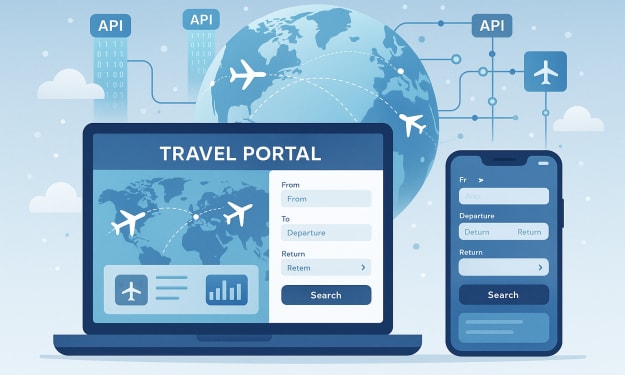
In a world where travelers expect instant confirmations and personalized offers, the role of a flight booking engine has grown from convenience to necessity. It’s no longer enough for travel portals and agencies to simply offer a list of flights today’s travelers demand real-time availability, intelligent filtering, secure payments, and even ancillaries like seat selection and baggage options. The answer lies in implementing a smart and scalable flight booking system that aligns with evolving user expectations.
In this article, we dive into the role of flight booking engines, their components, how they empower modern travel businesses, and what you should look for when choosing one for your travel portal or OTA.
What Is a Flight Booking Engine?
A flight booking engine is an online software solution that allows users to search for flights, compare fares, book tickets, and receive e-tickets all from a unified interface. This system integrates with GDSs (Global Distribution Systems) like Amadeus, Sabre, or Travelport, as well as airline APIs to fetch real-time flight data.
Whether you're a startup OTA or a large travel consolidator, a powerful booking engine acts as the backbone of your travel business. It not only streamlines operations but also enhances customer experience by offering an intuitive interface and fast processing.
Core Features of a Modern Flight Booking Engine
The best flight booking engines aren’t just about ticketing they bring an ecosystem of tools that enhance the traveler's journey and the agent’s efficiency. Look out for these key features:
- Multi-GDS and API Integration: Access flight inventories from multiple sources including LCCs (Low-Cost Carriers) and full-service airlines.
- Real-Time Fare Updates: Stay updated with dynamic pricing changes and flight availability.
- Advanced Filtering Options: Let users search by stops, airline, class, or even refundability.
- Mobile-Responsive UI: Ensure seamless user experience across devices.
- Ancillary Services: Include options like baggage, meals, seat selection, or insurance.
- Integrated Payment Gateway: Secure and reliable transactions for global travelers.
- Back-Office Control: Admin panel for agent/affiliate management, commissions, reporting, and CRM sync.
Why Every Travel Portal Needs a Scalable Flight Booking System
If you’re a B2B or B2C travel business without a robust booking engine, you’re missing out on automation and customer satisfaction. Here’s why investing in one is crucial:
- Reduced Manual Work: Automate ticket issuance, cancellations, and refunds.
- Faster Time to Market: Launch your travel portal faster with pre-built APIs and UI templates.
- Global Reach: Integrate with multiple flight providers and cater to international audiences.
- Revenue Channels: Monetize with markups, agent commissions, and add-ons.
- Scalability: As your business grows, your booking engine should support more traffic, agents, and integrations without performance drops. A scalable solution ensures you’re not stuck upgrading every few months.
- Personalized Offers with AI: Some advanced engines now use AI to offer route suggestions, loyalty discounts, or dynamic bundling based on user behavior. This creates a personalized experience and increases conversion rates.
Flight Booking Engine vs Traditional Booking Systems
Unlike traditional systems that relied on human agents or desktop applications, today's booking engines are API-driven, cloud-hosted, and fully responsive. They offer:
- Real-time integration with multiple data sources.
- Instant e-ticket generation.
- Flexibility for travel agents to access backend dashboards.
- APIs for connecting with CRMs, accounting tools, and third-party add-ons.
This is a game-changer for travel startups that want to automate their operations, reduce dependency on third-party ticketing, and scale globally.
How It Helps B2B and B2C Models
A well-designed airline reservation software benefits both types of business models:
For B2B Agencies:
- Add and manage sub-agents.
- Provide white-label booking portals.
- Set dynamic markups and margins.
For B2C Portals:
- Enable direct customer bookings.
- Accept multiple currencies and payment modes.
- Send branded e-tickets and SMS/email alerts.
Choosing the Right Flight Booking Engine
While dozens of flight booking solutions are available, picking the right one means ensuring it aligns with your business model, customer base, and long-term goals. Ask yourself:
- Does it support my target markets and airlines?
- Can it handle high volumes during peak season?
- Is it customizable to reflect my brand identity?
- Are updates and support included?
- Can it integrate with hotel/car/holiday APIs for cross-selling?
Also, think beyond just functionality. Consider how future-ready the platform is—does it offer cloud-native architecture, real-time analytics, or AI-based recommendation engines? These features will make your platform stand out in the competitive travel tech space.
Real-World Use Case: A Scalable Booking Engine in Action
Let’s say you’re building a travel portal targeting budget travelers across Southeast Asia. With a solid booking engine, you can:
- Integrate with AirAsia, Scoot, and IndiGo via API.
- Offer dynamic pricing with markups tailored for each region.
- Let agents book tickets and manage cancellations from a white-label dashboard.
- Run marketing campaigns with coupon code support and email automation.
This is how powerful a flight booking system can be when tailored correctly.
Final Thoughts: Future of Airline Booking Engines
The future of flight booking systems is headed toward even more automation and personalization. Expect AI-led travel suggestions, smart filtering, voice search, and blockchain-based ticketing in the coming years.
If you're in the travel industry, integrating a robust flight booking engine isn't optional it's strategic. It determines how fast you respond to market changes, how satisfied your customers are, and how efficiently your backend runs.
About the Creator
OneClick IT Consultancy P Limited
OneClick IT Consultancy delivers innovative digital solutions in travel tech, automation, and CRM development, helping businesses streamline processes, enhance customer experiences, and drive growth through technology-driven strategies.
Keep reading
More stories from OneClick IT Consultancy P Limited and writers in Geeks and other communities.
Flight Booking API Integration
The travel industry has evolved rapidly over the last decade, with digital technology becoming the backbone of how we book and manage travel. Among the key drivers of this transformation is the Flight Booking API Integration, an essential technology for modern OTAs, travel portals, and airline platforms.
By OneClick IT Consultancy P Limited6 months ago in Geeks
Marty Supreme Review: Timothée Chalamet Is Excellent, The Movie… Not So Much
⭐ Rating: 2 out of 5 stars Marty Supreme Directed by Josh Safdie Written by Josh Safdie, Ronald Bronstein Starring Timothee Chalamet, Gwyneth Paltrow, Tyler The Creator, Odessa A'zion
By Sean Patrickabout a month ago in Geeks
Landman Season 2 Episode 8 Breakdown: The Twist That Changes Everything
Landman Season 2 is racing toward its final showdown, and right before the finale, the show suddenly slams the brakes and pivots in a direction nobody saw coming. With only two episodes left, the writers are clearly setting Tommy up for an ending that most of us did not expect—so we need to unpack it.
By Bella Andersonabout 5 hours ago in Geeks
Center Stage with Gina C.
*** I'm keen to republish the interviews I did for my series with Vocal creators. It's been a few years and I thought it might be nice to revisit these wonderful conversations. I'll be releasing them one at a time for a few weeks/months.
By Heather Hubler5 days ago in Interview


Comments
There are no comments for this story
Be the first to respond and start the conversation.