
‘The Prestige’ (2006)
Magic, science, and the pursuit of the real
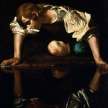
“Any sufficiently advanced technology is indistinguishable from magic.”
— The 3rd Law of Arthur C. Clarke
“Knowledge kills action, for action requires a state of being in which we are covered with the veil of illusion.”
― Friedrich Nietzsche, The Birth of Tragedy
I watched Christopher Nolan’s second or third film, The Prestige (2007), last night on BBC TV and had forgotten much of the film. I had previously watched it back in late 2007 when it was released on DVD. I was impressed then, and I am still impressed by the film, but I was now struck by a new appreciation of the film for reasons that have nothing or very little to do with my first experience nearly two decades ago.
I had forgotten how intricate the plot of the film is, and the hard work to be done by the mind to follow the numerous timelines we are shown of Robert Angier and Alfred Borden, played by Hugh Jackman and Christian Bale, respectively. They are both brilliant magicians and friends, but through tragedy become rivals and enemies.
Though Angier is the more successful of the two financially, as an artist and craftsman, Borden proves superior in his ability to create new tricks and illusions. Angier’s desperation to outshine and thereby destroy Borden consumes him. Each man attends the other performer’s shows, and each man sabotages his opponent’s routine by posing as an audience volunteer — another illusion — all while attempting to perfect a new trick.
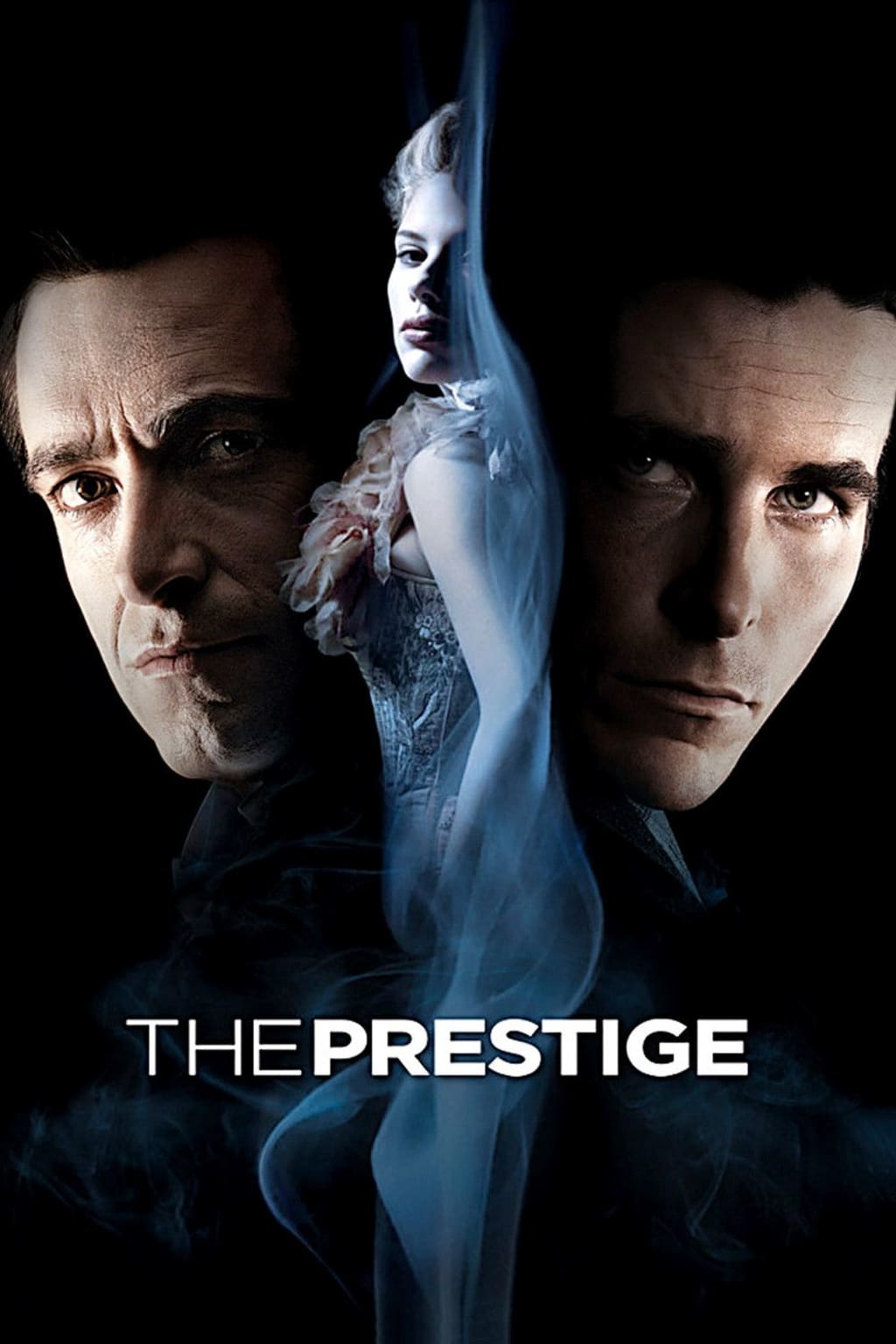
Above is a movie poster and cover for the DVD case, which shows our two protagonists, Robert Angier and Alfred Borden, rival stage magicians in Victorian London who both create a teleportation illusion. Yet Angier wants to create more than just a trick. Their faces are well-lit and their expressions very serious and powerful.
Between their heads is a smoky siren in almost full profile of Scarlet Johansson as Olivia. The pose is seductive and is more that of a femme fatale in a film noir than that of a magician's assistant in Victorian England. If you knew nothing of the film and saw only this poster, you would think it a love story and tragedy about the love and rivalry of two men for one woman. It is not a love story. It is a very dark tale.
The film is about obsession, but not over any woman, but with being the best magician. The love interest is delegated to a drowned wife at the beginning of the movie, which is the reason for the enmity between Angier and Borden, then a mistress, Olivia, and another wife, Sarah (Rebecca Hall), who commits suicide because she no longer has her husband’s love. Borden’s wife leaves their only child behind. It is a tragedy.
That was my first take on The Prestige, but on my third watch, I realised that there is, throughout the film, a constant theme of duality. There are two protagonists, two women, and the twins. Borden is only able to perform his illusion by using his twin, and Angier by finding his lookalike. And then to top it all off is the overarching thematic duality and dialectic between magic and science. There are a plethora of dualities in this film.
Angier will not accept any simple answer as to how Borden can ‘teleport’ himself from one closed door to the other. Olivia, sent to ascertain the truth, tells Angier what she sees. But Angier cannot accept such a simple answer, probably because he has used a double in his act. He wants more illusion. More and more. He wants the illusion to be Real. This obsession with being the best magician takes him on a long journey to meet Tesla to create a machine capable of real teleportation. It is possible that Angier has actually lost his mind to a pathologically delusional and obsessive state. How very Dionysian.

There is another duality that can be applied to the film, and this involves one of the most important cultural dialectical theories of the philosophy of Nietzsche: Apollo and Dionysus. The main theme in The Birth of Tragedy is that the fusion of Dionysian and Apollonian Kunsttriebe (“artistic impulses”) forms dramatic arts or tragedies.
Apollo represents harmony, progress, clarity, logic, and the principle of individuation, whereas Dionysus represents disorder, intoxication, emotion, ecstasy, and unity (hence the omission of the principle of individuation). These two forces are easy to see in the characters of our protagonists. Borden is a technical magician, skilled in the art of creating tricks that confound other magicians, while Angier’s talent lies in presentation and thrilling audiences with his showmanship.
Angier returns to London with the ‘teleportation’ machine built by Tesla and uses it to perform the ‘Real Transported Man', a refined version of the trick that brings him unprecedented recognition and fame. It is not a sophisticated magic trick but a machine that is not a device for teleportation but a machine that creates a fully functioning copy and clone of whatever is placed into it, be that a top hat, a black cat — how symbolic — or Angier. It is a machine that obliterates the principle of individuation through duplication. It is both unity and chaos, and can be seen as the unity of Apollo and Dionysus.
Yet the machine/magic trick and the Prestige are tragically monstrous and life-affirming simultaneously — Apollo and Dionysus are united. The tragedy is that the innocent and the guilty die. Another duality that we know so well in life. But the monstrous crime that Angier commits every night is the murder of his cloned self by drowning. This was how his wife died at the beginning of the film. Every night, Angier is a witness to such a death and does nothing to save the drowning man — himself. That is as dark as you can get. A soul that is damned forever. It is Faustian in its damnation, and the scene of multiple dead clones of Angier is as nihilistic as anything I have ever seen in a movie.
So the movie poster above gets it right with the duality of Apollo and Dionysus, but the attempt to show a woman being fought over is completely wrong. I suppose the styling of Scarlett Johansson as a femme fatale might be a draw for some, but her character is rather irrelevant in the grand scheme of things.
For it is a mythological transcendence — the duality of Apollo and Dionysus — that both splits them and unites them in their journey to obtain the power of illusion and the power of reality. Both are dangerous, and both can give life and take it. The ghost-like human figure in the middle of Apollo and Dionysus should be a picture of the teleport machine made by Tesla.
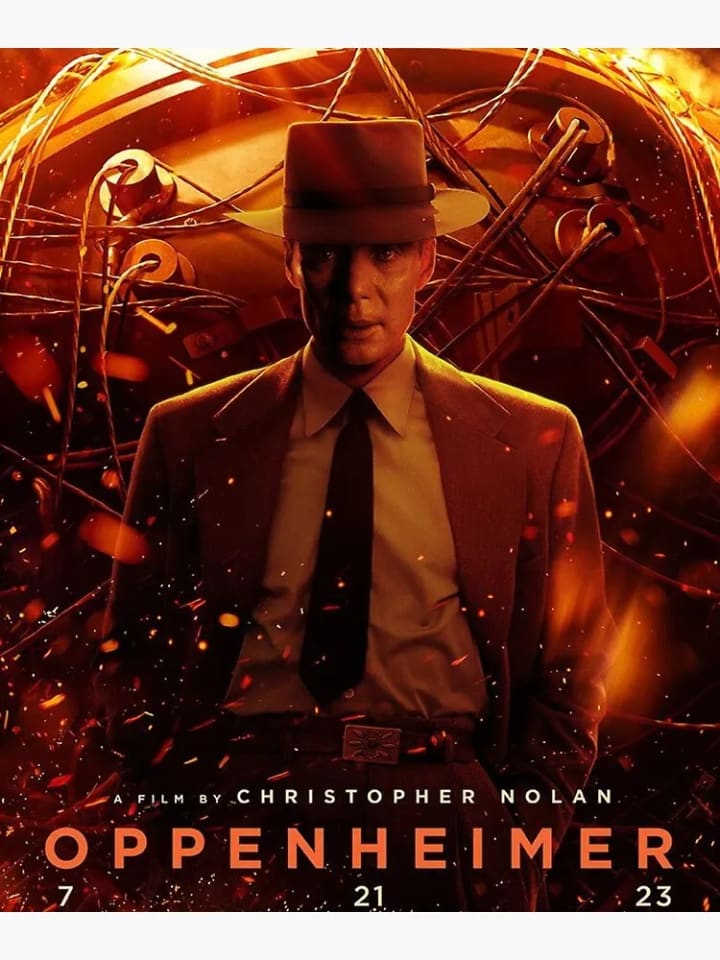
Nolan’s film is, I think, about the real power and danger of science and the responsibility needed when using it. This can be referred to as the Promethean Gap. It is a theme he would revisit in the reality of creating the A-bomb in Oppenheimer (2023), see film poster above.
The Prestige is a warning that resonates louder than ever in our world now on the verge of the Singularity, developing AI omnipresence, weaponised robotic machines and lab-grown brains. It's all in the movie you just have to see it.
About the Creator
Marc Barham
Ancient and Justified.
Keep reading
More stories from Marc Barham and writers in Geeks and other communities.
Can a TV Show Restore Your Faith in Humanity?
Department Q is a series of ten Danish Nordic noir crime novels by author Jussi Adler-Olsen (see below), which have been adapted into hugely successful Danish films. I have not seen one of these, but have just finished watching the 9-episode English-language TV adaptation for Netflix, which immediately changes the setting from Denmark to Scotland.
By Marc Barham28 days ago in Geeks
Thank You, John Cena
When December 13, 2025 arrived, I welcomed it. I welcomed it with open arms. The reason was simple: I wanted to see how John Felix Anthony Cena, Jr, someone who I've been a fan of for over 20 years, would end his iconic and legendary career.
By Clyde E. Dawkins28 days ago in Geeks
Takeover 2026 Movie Review
In an era defined by algorithms, automation, and constant digital surveillance, cinema has increasingly turned its attention to stories about control. Takeover (2026) enters this landscape as a tense, futuristic thriller that feels less like speculative fiction and more like a warning disguised as entertainment. Rather than imagining a distant dystopia, the film presents a world that looks uncomfortably close to our own—one where power no longer arrives with force, but quietly assumes authority through systems we depend on every day.
By David Cook5 days ago in Geeks


Comments
There are no comments for this story
Be the first to respond and start the conversation.