
The Box Man by Kobo Abe
Why It's a Masterpiece (Week 35)


The Box Man ("Hako Otoko") was first published in 1973 by the Japanese author Kobo Abe. Renowned for his avant-garde and surreal style, Abe is often compared to Western writers like Franz Kafka and Albert Camus. "The Box Man" is a quintessential example of Abe's literary exploration of existential themes and psychological depth, embodying his fascination with identity, alienation, and societal norms.
The novel, translated into English by E. Dale Saunders in 1974, brought Abe international acclaim, adding to his reputation established by earlier works such as "The Woman in the Dunes" and "The Face of Another." Its unique narrative structure, blending diary entries, fragmented stories, and introspective monologues, challenges conventional storytelling, inviting readers into the disorienting and isolating world of its protagonist. Abe's work, including "The Box Man," remains influential in both Japanese literature and global literary circles, praised for its originality, philosophical depth, and the way it blurs the line between reality and imagination.
Plot
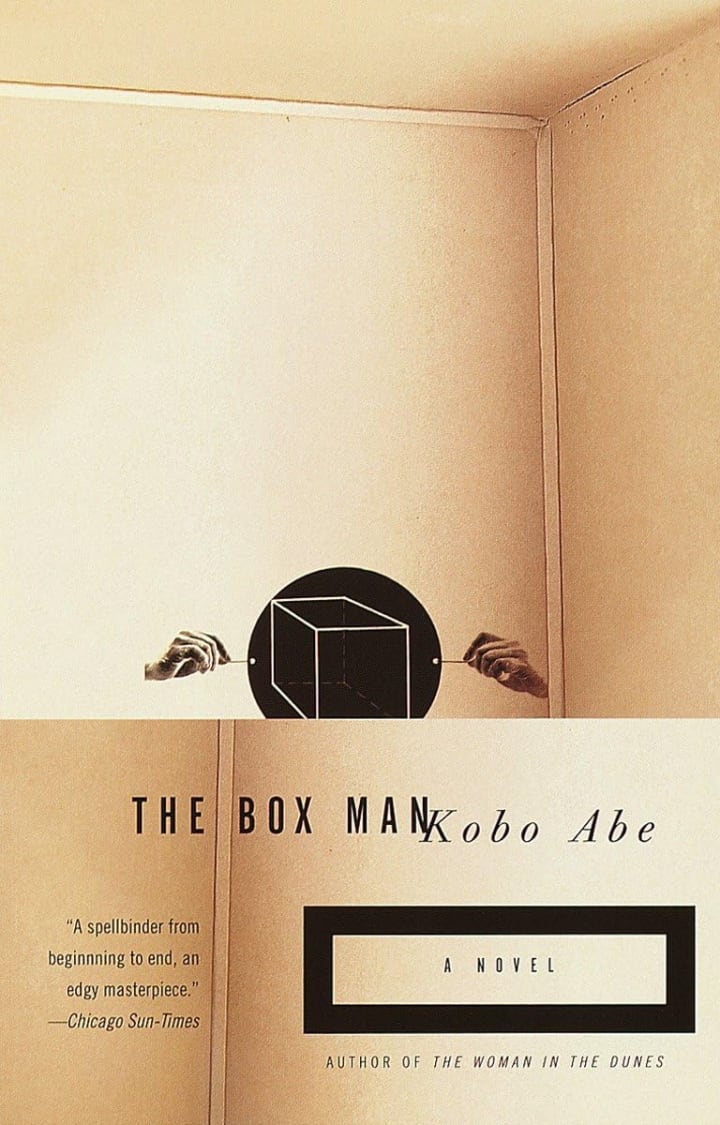
The Box Man follows the enigmatic journey of a man who chooses to live inside a cardboard box, detaching himself from societal conventions and material possessions. The protagonist, referred to as the Box Man, constructs his new reality within the confines of his box, which he carries on his back, viewing the world through a small peephole.
The narrative unfolds through a series of diary entries and fragmented accounts, revealing the Box Man's inner thoughts and encounters. As he navigates the city, he encounters various characters, each embodying different facets of human nature and society. Among them is a doctor who becomes obsessed with studying the Box Man, seeing him as a unique specimen. The doctor represents the scientific and rational aspect of society, striving to understand and categorize the Box Man’s existence, ultimately seeking to control and exploit him.
Another significant character is a woman who becomes romantically involved with the Box Man. Her interactions with him reveal the complexities of human relationships and the struggle to connect genuinely with another person when societal norms are stripped away. Their relationship oscillates between moments of intimacy and alienation, highlighting the inherent difficulty in understanding and accepting true individuality.
Throughout the novel, the Box Man grapples with the nature of his identity and existence. His box becomes a metaphor for the barriers people construct around themselves, both physical and psychological. The narrative blurs the lines between reality and hallucination, questioning the very nature of perception and self-awareness. The Box Man's journey is a profound exploration of freedom and isolation, examining what it means to truly escape societal expectations and live authentically.
Into the Book
A central theme in "The Box Man" is the exploration of identity and self-perception. The protagonist’s decision to live inside a box symbolizes a radical detachment from societal roles and expectations. By isolating himself physically, the Box Man confronts the essence of his being, stripped of external influences. This theme is vividly illustrated in the scenes where he describes his life within the box, viewing the world through a peephole. The box becomes both a sanctuary and a prison, reflecting the dual nature of self-imposed isolation. For instance, the Box Man’s diary entries reveal his fluctuating sense of self, where moments of clarity are interspersed with doubt and confusion. This fragmentation of identity is further emphasized when the Box Man encounters the doctor, who seeks to define and understand him through scientific means. The doctor's inability to categorize the Box Man underscores the complexity of identity beyond societal labels and rational analysis.
“When I look at small things, I think I shall go on living: drops of rain, leather gloves shrunk by being wet...When I look at something too big, I want to die: the Diet Building, or a map of the world...”
- The Box Man by Kobo Abe
Alienation and isolation are pervasive themes in the novel, manifesting through the Box Man's physical separation from society and his psychological introspection. The protagonist's choice to live inside a box is an extreme act of withdrawal, symbolizing a rejection of social norms and connections. His interactions with other characters, such as the doctor and the woman, highlight the challenges of genuine human connection. The Box Man's relationship with the woman, in particular, oscillates between moments of intimacy and estrangement, reflecting the difficulty of understanding and accepting others when one is fundamentally isolated. This theme is poignantly depicted in scenes where the Box Man observes people from within his box, feeling both a part of and apart from the world. The novel’s fragmented narrative style, with its shifts in perspective and disjointed chronology, further conveys the sense of disconnection and the fragmented nature of modern existence.
“I personally feel that a box, far from being a dead end, is an entrance to another world. I don't know to where, but an entrance to somewhere, some other world.”
- The Box Man by Kobo Abe
"The Box Man" delves into the theme of reality and perception, questioning the nature of truth and the reliability of subjective experience. The protagonist's life inside the box blurs the boundaries between reality and hallucination, creating a sense of ambiguity that permeates the narrative. This theme is exemplified in the Box Man's diary entries, where his descriptions of events and encounters often merge with his inner thoughts and fantasies. The unreliable narrative challenges readers to discern what is real and what is imagined, reflecting the fluidity of perception. For instance, the scenes involving the doctor and his experiments on the Box Man raise questions about the objective reality of scientific observation versus the subjective reality of individual experience. The novel’s surreal elements, such as the Box Man's encounters with other box men and his hallucinations, further underscore the idea that reality is a construct shaped by perception and interpretation.
“I want to spy on all sorts of places, and the box is a portable hole that occurred to me under the circumstances, it being impossible to punch holes throughout the world.”
- The Box Man by Kobo Abe
Why It's a Masterpiece
The Box Man is considered a masterpiece for several reasons, chiefly its innovative narrative structure, profound thematic depth, and its ability to evoke intense introspection. Kobo Abe’s use of fragmented diary entries, shifting perspectives, and surreal imagery challenges traditional storytelling, creating a unique literary experience that engages readers on multiple levels. This narrative complexity mirrors the protagonist's fragmented identity and the elusive nature of reality, making the novel a profound exploration of existential themes.
Thematically, "The Box Man" addresses universal questions about identity, alienation, and perception, resonating with readers across different cultural and temporal contexts. Abe's portrayal of a man who withdraws from society to seek authenticity and self-understanding taps into deep-seated human fears and desires. The novel’s exploration of these themes through the lens of surrealism and existentialism situates it alongside works by literary giants like Kafka and Camus, cementing its status as a classic in modern literature.
Moreover, Abe's skilful blending of philosophical inquiry with vivid, often unsettling imagery creates a hauntingly beautiful narrative that lingers in the reader's mind. The novel's ability to evoke both intellectual and emotional responses is a testament to Abe’s literary genius. "The Box Man" challenges readers to reflect on their own lives and the societal constructs that shape their identities, making it a timeless and thought-provoking work.
Conclusion
The Box Man remains a compelling read today due to its timeless exploration of themes that continue to resonate in contemporary society. Issues of identity, alienation, and the nature of reality are as relevant now as they were when the novel was first published. In an era characterised by rapid technological advancements and increasing social isolation, the Box Man's quest for authenticity and his struggle to maintain a sense of self amid external pressures strike a particularly poignant chord.
The novel's innovative narrative style also appeals to modern readers who appreciate experimental and non-linear storytelling. Kobo Abe’s use of fragmented structure and surreal elements offers a refreshing departure from conventional narratives, inviting readers to engage with the text on a deeper, more reflective level. This complexity and ambiguity allow for multiple interpretations, making "The Box Man" a rich source of discussion and analysis for literary enthusiasts all over the world.
Next Week: Hangsaman by Shirley Jackson
About the Creator
Annie Kapur
I am:
🙋🏽♀️ Annie
📚 Avid Reader
📝 Reviewer and Commentator
🎓 Post-Grad Millennial (M.A)
***
I have:
📖 280K+ reads on Vocal
🫶🏼 Love for reading & research
🦋/X @AnnieWithBooks
***
🏡 UK
Reader insights
Outstanding
Excellent work. Looking forward to reading more!
Top insights
Easy to read and follow
Well-structured & engaging content
Expert insights and opinions
Arguments were carefully researched and presented
Eye opening
Niche topic & fresh perspectives
On-point and relevant
Writing reflected the title & theme
Keep reading
More stories from Annie Kapur and writers in Geeks and other communities.
Book Review: "Heresy" by Catherine Nixey
Here we go! It's been a while since I have reviewed a work of nonfiction and it's been even longer since I've read a book by Catherine Nixey. More than often, Catherine Nixey's work has been a bit hard for me to read because of its constantly interlinking arguments and though I got through it this time - I think I might have picked quite a bad time to read it since I have so much to do. I like to read the book and then do the reading around the book so you could say that I make the job even more difficult for myself. So let's dive into the arguments Catherine Nixey presents in this book and what I thought of them.
By Annie Kapurabout a year ago in Geeks
Marvel Zombie
The last entry into our 2025 superhero projects catalogue is Marvel Zombies. This was a show that was anticipated by absolutely no one and it disappeared from the public consciousness as quickly as it was released. There was nothing special about the project that made it a must see, or a must remember. In fact if anything it's a must forget.
By Alexandrea Callaghan27 days ago in Geeks
Shah Rukh Khan at Joy Awards 2026: Bollywood Icon Hails Saudi Arabia’s Warmth, Love, and Hospitality
Bollywood superstar Shah Rukh Khan, often hailed as the “King of Bollywood,” stole the spotlight once again at the 2026 Joy Awards, held this year in Riyadh, Saudi Arabia. The actor, whose global fan base spans continents, used the platform not only to celebrate cinematic excellence but also to express his admiration for the warmth and hospitality extended by Saudi Arabia to artists, fans, and visitors. The Joy Awards, which recognize achievements across film, music, and entertainment, have increasingly drawn attention from international stars, reflecting Saudi Arabia’s growing prominence as a hub for global cultural exchange. Shah Rukh Khan’s presence at the event was a testament to this trend, and his interactions with fans and local dignitaries highlighted the country’s evolving approach to entertainment and tourism. In his acceptance speech for a special honor recognizing his contribution to cinema, Khan spoke about the joy of connecting with audiences worldwide. “Saudi Arabia has welcomed me with incredible warmth,” he said. “The love I have received here is unlike anything I have experienced. From the fans to the organizers, every interaction has been filled with genuine hospitality. It is heartwarming to see the country embrace art and artists with such enthusiasm.” The actor’s remarks resonated deeply with the audience, which included prominent figures from the film industry, cultural institutions, and international media. Shah Rukh Khan also praised Saudi Arabia’s efforts to promote global entertainment, citing the rapid development of venues, cultural festivals, and media infrastructure in the kingdom. “The energy here is palpable,” he noted. “Saudi Arabia is not just hosting an awards show; it is building a platform where artists and audiences can come together to celebrate creativity, talent, and storytelling.” Khan’s visit coincided with a period of significant transformation in Saudi Arabia’s entertainment landscape. Over the past few years, the country has invested heavily in cultural projects, from theaters and concert halls to film festivals and live events. These initiatives aim to diversify the economy and provide global audiences with access to unique cultural experiences. Shah Rukh Khan’s attendance at the Joy Awards highlights the success of these efforts and underscores the kingdom’s growing influence in the global entertainment industry. Fans gathered outside the venue and online to celebrate the superstar’s presence. Social media platforms were flooded with photos, videos, and messages expressing admiration for Khan and excitement about his visit. Many applauded his acknowledgment of Saudi Arabia’s hospitality, while others noted that his words helped bridge cultural divides and foster mutual understanding. “Shah Rukh Khan is not just a phenomenal actor; he is a global ambassador for goodwill and cultural exchange,” tweeted one fan. In addition to his public appearances, Shah Rukh Khan took part in private events and discussions with local filmmakers, actors, and industry professionals. These sessions focused on the future of cinema in the Middle East, co-productions with Indian studios, and strategies for nurturing local talent. According to sources, Khan encouraged aspiring artists to pursue their dreams, emphasizing that storytelling transcends borders and languages. The Joy Awards 2026 itself was a showcase of international talent and cross-cultural collaboration. Saudi Arabia’s vision of opening its doors to global entertainment has attracted filmmakers, musicians, and actors from across the world. Shah Rukh Khan’s participation added star power to the event, drawing attention from audiences far beyond the region. His engagement reinforced the idea that cultural exchange and mutual respect can create meaningful connections between nations. Industry analysts suggest that such high-profile visits by global celebrities could accelerate Saudi Arabia’s emergence as a major entertainment destination. By hosting renowned actors and supporting international awards, the kingdom is sending a strong message that it values creativity, diversity, and global collaboration. Shah Rukh Khan’s glowing remarks about the country’s hospitality further enhance its reputation among international audiences. For Khan, the visit to Saudi Arabia was more than a promotional appearance; it was an opportunity to witness firsthand the nation’s evolving relationship with art and culture. His heartfelt praise highlighted the personal impact of the warm reception he received and reflected a genuine appreciation for the people and the country. “This is a place where dreams are celebrated,” he said. “And the people’s generosity and openness make the journey even more special.” In conclusion, Shah Rukh Khan’s presence at the 2026 Joy Awards underscored the growing cultural significance of Saudi Arabia on the global entertainment map. His acknowledgment of the country’s warmth, love, and hospitality resonated with fans and industry professionals alike, strengthening bonds between nations through art and cinema. The event highlighted how international collaborations, cultural exchange, and genuine human connections can enrich the global entertainment ecosystem while celebrating the universal language of storytelling.
By Fiaz Ahmed Brohi5 days ago in Geeks


Comments (1)
I am so glad you reviewed this one! When I lived in Tokyo, I saw this character all over the city (physically and metaphorically). And have you ever read "Tokyo Ueno Station"? It might be good for a review (check mine out!)