literature
Geek literature from the New York Times or the recesses of online. Our favorite stories showcase geeks.
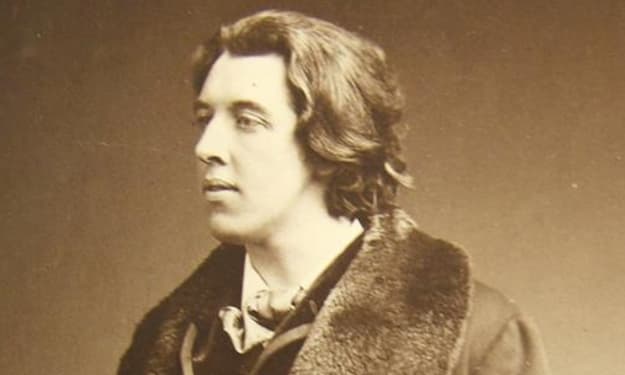
'The Picture of Dorian Gray' by Oscar Wilde (Pt. 3)
Now that we have gone through how Dorian's identity is changed and influenced, we are going to look through some lenses to do with the novel and the character of Dorian. The two lenses we will use are: orientalism and aestheticism. We will then contextually compare The Picture of Dorian Gray in terms of the protagonist's character, to a work written before it and therefore more traditionally gothic than Wilde's novel and then, a work written after it, and therefore more into the era of 20th Century Realism.
By Annie Kapur7 years ago in Geeks
'The Picture of Dorian Gray' by Oscar Wilde (Pt. 2)
We are now going to go through what circumstances, situations and events change and mould Dorian's personality. We will find this out by analysing the first few chapters and what they tell us about the authority of influence.
By Annie Kapur7 years ago in Geeks
An Introduction to William Wordsworth
Most commonly known as one of the greatest poets of the English Language, William Wordsworth was also a philosophical man, writing famously in his preface to the co-authored work The Lyrical Ballads that “our elementary feelings coexist in a state of greater simplicity.” In order to get the word across that he was attempting to write poetry for every type of person to read and understand, Wordsworth penned most of his poetry in normal standard English, as opposed to the more flowery language written by poets like Shelley, Byron, and before him, Pope. Wordsworth actually explained the difference between his own writing and the writing of more artistic and elaborate poets as:
By Annie Kapur7 years ago in Geeks
Machiavellian Authority on the Renaissance Stage
It is commonly interpreted in Early Modern Drama that Machiavelli "appears as the Devil incarnate, or at least as the incorporation of all hypocrisy" (Meyer, 1969). According to the Oxford English Dictionary (2012), a "Machiavellian" is defined as a "very cunning and deceitful" identity that was "brought on stage as an incarnation of villainy" (Meyer, 1969). Niccolo Machiavelli’s The Prince serves as the subversion, and the impression of villainy with the corruption of religion used as a guard. Thus forming the Early Modern attitude towards theatre being somewhat "ungodly," as the dishonest stigma attached to it was that there were plays containing these Machiavellian characters, or Machiavellian stereotypes.
By Annie Kapur7 years ago in Geeks
'The Picture of Dorian Gray' by Oscar Wilde
The Picture of Dorian Gray is possibly one of the most controversial and scandalous pieces of Victorian fiction. There are many reasons for this, and yet we need only explore one of them to get the notion of why exactly it was censored, banned, and eventually it would send its own author to prison for two years of hard labour. Published in Lippincott's Magazine in the July 1890, Oscar Wilde's The Picture of Dorian Gray made headlines with not only its gothic themes and twisted Greek mythology-inspired storyline, but also because of its homosexual undertones and prolific critique of 19th century high society. The most scandalous of all these begin with the identity of the three main characters: Dorian Gray, the young man who has his portrait painted; Basil Hallward, the painter; and finally, Lord Henry Wotton, the man who takes it upon himself to teach Dorian how he should live.
By Annie Kapur7 years ago in Geeks
'Jane Eyre' by Charlotte Bronte (Pt. 4)
A section of New Historicism regards the structure of the novel itself and the characters are secondary. Gretchen Brown's essay entitled, Untarnished Purity: Ethics, Agency and the Victorian Fallen Woman deals with the fact that both stories of women in the Victorian Era are incredibly predictable and pretty much, all the same. In one stance, we have the "Fallen Woman," which includes the characters of Aurora Floyd and Vixen by Mary Elizabeth Braddon, Bleak House by Charles Dickens, Adam Bede by George Eliot and the most famous Victorian Fallen Woman, Tess of the D'Urbervilles by Thomas Hardy. In another stance, we have the Victorian Woman's bildungsroman, or "coming-of-age" novel. This is defined by Brown as "a loving marriage with a preferred suitor and stable social participation." Thus, stating that no matter how hard Jane seems to rebel, since she is not a part of the social chasm of the Fallen Woman, she will have to divert her attention to a loving marriage and the "happy ending" archetype. In fact, it is the theory of the Fallen Woman's story being the direct opposite to the Bildungsroman that keeps Jane going.
By Annie Kapur7 years ago in Geeks
'Jane Eyre' by Charlotte Bronte (Pt. 3)
Now that we've covered what there is to cover of Jane's identity (in parts one and two) as a reliable or unreliable narrator—we must look now into theory and literary studies to find more descriptions and anecdotes of how she appears to a reader with a particular lens.
By Annie Kapur7 years ago in Geeks
'Jane Eyre' by Charlotte Bronte (Pt. 2)
I will be looking intertextually and using historicism and formalist criticism with additions of psychoanalysis, structuralism and ecocriticism in some places—in order to identify what is so enigmatic about Jane Eyre and why does she change so much through the space of one novel? [Note that these lenses of criticism may appear in future articles on Jane Eyre.]
By Annie Kapur7 years ago in Geeks
'Jane Eyre' by Charlotte Bronte
In 1852, the Literature Critic, George Henry Lewis, is sitting in his office and held spellbound by a work of semi-fiction by a man called Mr. C. Bell. He writes a lengthy piece of an article about it in The Quarterly Review and calls the book a "reality...a deep and significant reality." But who knew that this book was not actually written by Mr. C. Bell at all...?
By Annie Kapur7 years ago in Geeks
The Strength of a Tenacious Woman
People often play a crucial role in each others lives, which might not seem significant at the time. It might be a word, phrase, or statement which may seem insignificant, but a single action can change the course of a person's life. Everyone grows and develops a network in society, and these systems aid in allowing a person to become who they are. Similarly, throughout many works of literature, a novel’s minor characters support the main character rather significantly. These minor characters incorporate a key element from which the main character comes to be. The method in which they help the main character frequently varies due to the time and era of which the work takes place in. The Neo-Classicism era, also known as the restoration period, was a reaction against the Renaissance era. The Renaissance era was believed to be unsystematic, and humans had no rules in society. In the restoration period, literature was meant to be didactic. It was supposed to be teaching a moral value and preaching about living life properly. It pointed out the wrongdoings of society, from which came the Neo-Classicism era. Many works of literature came about in this era. Nathaniel Hawthorne, in his satirical novel The Scarlet Letter, presents a heroine ahead of her time through her struggles with her ostracization for having an illegitimate child, her abusive former husband, and her forbidden love affair with the Reverend—thus becoming ultimately stronger, despite her punitive society's attempt to break her.
By Muhammad Salmaan7 years ago in Geeks
9 YA Novel Clichés That Make Me Want to Stop Reading
Do you ever read a sentence of a book and just roll your eyes? Not because the character has done something stupid or embarrassing, or the plot has made a weird turn, but because you've read that somewhere before?
By Leah Phillips7 years ago in Geeks
Book Review: 'The Couple Next Door'
The Couple Next Door is the debut thriller from Shari Lapena, and my oh my, does it pack a punch! The book follows the lives of Anne and Marco—a suburban couple—through the most harrowing ordeal any parent could imagine: The Kidnap of their baby daughter. Lapena cleverly draws us into the seemingly pleasant world of middle America with a host of first-world problems appearing to be the only threats to this couple's marital and parental bliss. But even before the end of the first chapter, we see that things are perhaps not as they seem. Anne and Marco return home from their neighbour's dinner party to find the front door open and their baby, Cora, missing. They had checked on her only half an hour earlier, but now, she is gone.
By George Boundy7 years ago in Geeks