literature
Geek literature from the New York Times or the recesses of online. Our favorite stories showcase geeks.
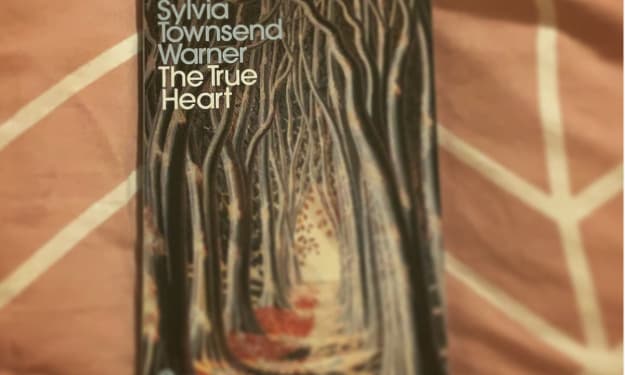
Book Review: "The True Heart" by Sylvia Townsend Warner
Romance novels are more than often, one-sided affairs with predictable lines and plots. There have been, though, some better ones of the last one hundred or so years but rarely are they appreciated as much as they should be. Romance novels that do not fit the same piece as being something by Nicholas Sparks and that genre are often ignored but, as I have found recently, there is an author who pretty much has the perfect blend between light and dark though some of the plot may be assumed cliché. The book in question is entitled, “The True Heart” by Sylvia Townsend Warner and it is one of the shorter books I have read this week as I wanted to have a nicer morning than my usual heavy reads. “The True Heart” is written incredibly cleverly and I have to say that the use of language is amazing for what it does for the atmosphere and characters. Though there are parts of the plot where I found myself guessing exactly what was going to happen next - the writing did shock me as something that was very different for its genre.
By Annie Kapur5 years ago in Geeks
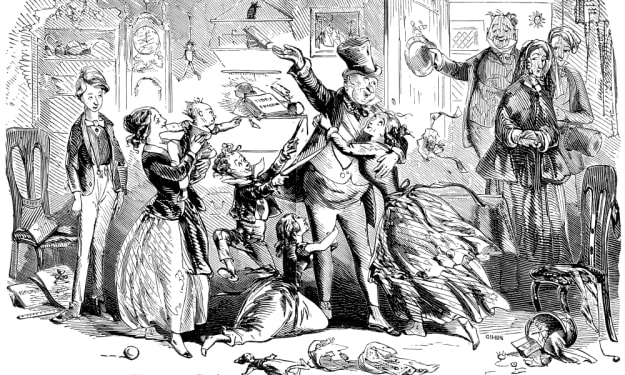
"David Copperfield", by Charles Dickens
David Copperfield was the novel of which Charles Dickens was most fond among his works, and it is not difficult to see why. It was the first of his novels to be told in the first person, and there are many elements of it that have parallels with his own life. However, it would be a mistake to regard this novel as a hidden autobiography, because there is much in the book that is pure fiction, and it is as such that it should be judged.
By John Welford5 years ago in Geeks
Book Review: "Burning Man" by Frances Wilson
I have read a number of author biographies over the years and honestly, there is nothing more refreshing than reading an author biography that does something different with the story. We are not talking about twisting facts into fiction but rather we speak of the way in which the biography is researched. Many biographies have a secondary source text or two that they will reference in accordance with making their own arguments, but less often is the researcher that goes out of their way to get into the minute details of the life of their subject. The book “Oscar Wilde” by Richard Ellman is a great example of the new-age author biography. Using several sources to make the arguments, tales of people who had seen or wrote about or even heard of Oscar Wilde litter the book and are under the critical eye of the author of the biography, an expert in the life and times of the subject. In this text entitled, “Burning Man” by Frances Wilson, we see a similar yet newer method in this practice.
By Annie Kapur5 years ago in Geeks
All Writers Are Out Of Their Tiny Little Minds
My first ever university seminar about Great Expectations by Charles Dickens, our tutor Vic Callaghan asked his first question; what is schizophrenia ?Needless to say we all looked somewhat confused. Nobody dared venture an answer.
By Liam Ireland5 years ago in Geeks
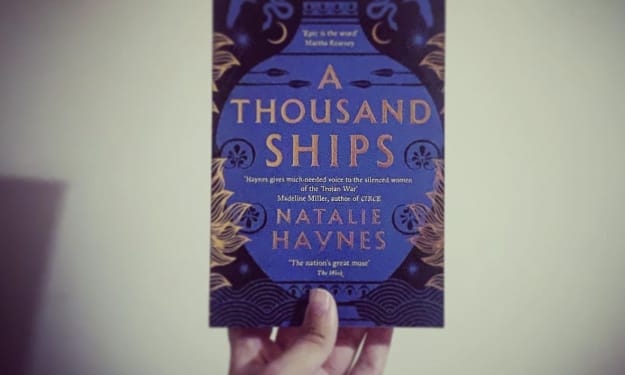
Book Review: "A Thousand Ships" by Natalie Haynes
When I read retellings of Ancient Greek Literature and Mythology, I am looking for one thing in particular - does it do anything differently and if it does, can I still see where the story is going? That is my idea of balance. These stories are thousands of years old and are known far and wide, loved by cultures and communities alike and so, to tackle them with a different perspective often can come out as self-righteous or even pompous. When I first tackled the writing of Natalie Haynes, the first book I read by her was “Pandora’s Jar” and honestly, I have to say that I was very impressed with the sheer amount of knowledge there was about these characters included within the text and then to use that to express them differently was a great idea. Characters such as Clytemnestra and Helen of Troy, The Amazonians and others were covered in vast amounts of detail. This second one I am reading entitled “A Thousand Ships” is about the sacking of Troy, the story told by the two remaining texts of the Trojan Cycle - The Iliad and The Odyssey. Two of my favourite epics of all time (if we exclude the Aeneid of course) retold from an all-female perspective.
By Annie Kapur5 years ago in Geeks
Book Review: "Albert and the Whale" by Philip Hoare
Sometimes, when you read a biography (especially when it is about someone quite far back into the previous centuries such as the teens) you are expecting a certain amount of difficulty in reading it as fact - you must instead read it as research. If the person is dead then you have to accept that something will be out of place or something will be missed or not investigated as much. When this happens, you have to step back and see how the writer fills it in, what the writer has investigated and why they have covered certain things and yet, not covered others as much or as well. In this case of this book, we have our artists - Dürer - and not only his life but the lives of those he took influence from and those who followed as well. The best thing about this book was learning about the entire world around him - it was a huge world in which many people influencers and influenced were involved and each component is important into the way in which we understand Dürer and his time period, art and life today. Honestly, not only did I think this book was pretty well-written for a biography but I also thought that had it been any longer, it probably would have been unbearable because of the way it weaves back and forth through history and artistic period.
By Annie Kapur5 years ago in Geeks
The Compelling Story of `Anne of Green Gables´
Not so long ago, a couple of years at the most, Netflix got out a series named “Anne with an E”. I, being not an english native speaker, had never heard of the story before, but as a good bookworm I instantly felt it was a story I would enjoy. I did love the Netflix show, and was very sorry to hear it is cancelled. Nevertheless, I had a notion that there were books about it and immediatly started looking for them.
By Mel Paczka5 years ago in Geeks
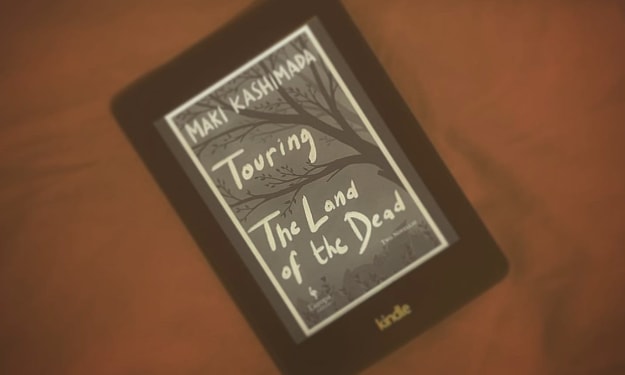
Book Review: "Touring the Land of the Dead" by Maki Kashimada
Some of the books I read can be quite upsetting though not a lot physically happens. The last book I read that was like this has to be some of the feminist Greek myth analytics I have been reading. Seeing how unfairly women are treated in Ancient Greek Myth really made me rethinking my stance on this literature and expanded my worldview of mythology all around. But, when it comes to dealing with death and/or Illness, there are not a great number of books in my peripheral that I have read in the last year or so. I think that there a requirement for modernist illness literature because the world is becoming more obsessed with perfection - imperfection needs to be represented especially in difference through people and the way we cannot control who we are or whether we are to get very sick in the near future. Many people have difficulties with their illnesses and feel as if they are a burden towards others. This book really does investigate some aspects of that in the midst of it being about this strange modernist love which almost seems completely lacking in romance and is almost entirely platonic from time to time.
By Annie Kapur5 years ago in Geeks
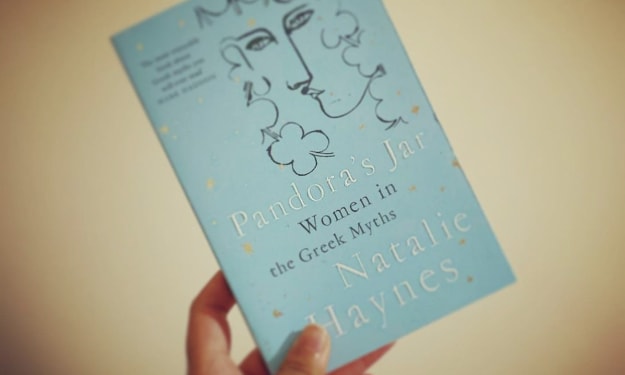
Book Review: "Pandora's Jar" by Natalie Haynes
There is a really odd story to how I came across Natalie Haynes’ “Pandora’s Jar” and it is something that I found incredibly wholesome. When I went to the shopping centre of my hometown, I was not really looking for anything in particular and had just gone to pick up some reading for my journeys ahead. A woman in the store came up to me and asked me if I had heard of this particular book and after I had said I had not, she persuaded me to read it. Speaking with a lot of passion about the novel, she got me very excited to see what it was all about and I can honestly say that it does not disappoint whatsoever. A brilliant mixture of Ancient Greek Myth and modernist writing styles, we get to examine the major women of the greek literary tradition through new and wider perspectives. We get to examine each character for who they are and not based on their connection to anyone else. Many of these times, women were treated terribly for things they could not control. For example: the fact that Poseidon raped Medusa in Athena’s temple meant that Medusa would be transformed into a very ugly woman whose look would turn men to stone. Another one is about Jocasta and how her fate was sealed by everyone around her but she did not really have a say in what was happening to her. Instead, she went along with it for years and years. It was absolutely horrifying the read, but it does teach you a lot about the sidelined narrative of women. When I got to the end of the book, I noticed how a lot of things I thought I knew about the politics of greek myths and gender were pretty much world known. Now that I have seen that brilliant book I can say that I really don’t but
By Annie Kapur5 years ago in Geeks
Book Review: "The Artful Dickens" by John Mullan
Charles Dickens is most commonly associated with making and bringing to life some of literature’s most incredibly complex child stars. From the friendship and politics of Oliver Twist and the Artful Dodger to the gothic pull of Pip’s “Great Expectations”, Dickens has created a world of amazing characters who move around the social ladder of London and the surrounding area. From his expansive bildungsroman, “David Copperfield” all the way through the the visitation of three ghosts in “A Christmas Carol”, Charles Dickens usually holds up this version of society that tries to stay as truthful as physically possible to what actually happens - dispelling any strange and unwanted myths that have arose in-between. There is a surge of electricity in these novels by the fact that Dickens’ characters almost undergo some sort of massive moment of great realisation - an epiphany that changes the course of everything from their story to their politics, their thoughts and their own personal prejudices. Once we see what the true value of life is to these characters, we learn moral lessons about Victorian England and many myths we once thought about social mobility have been dispelled.
By Annie Kapur5 years ago in Geeks
"After Easter": a play by Anne Devlin
“After Easter” is the final part of “The Belfast Trilogy”, a set of plays by the Northern Irish playwright Anne Devlin (born 1951). The subject matter of the plays is the “Troubles” of the 1970s and 1980s as seen from a female perspective. The plays therefore echo the “Dublin Trilogy” by Sean O’Casey (1880-1964) which were based on the events surrounding the Irish Revolution of 1916-21.
By John Welford5 years ago in Geeks
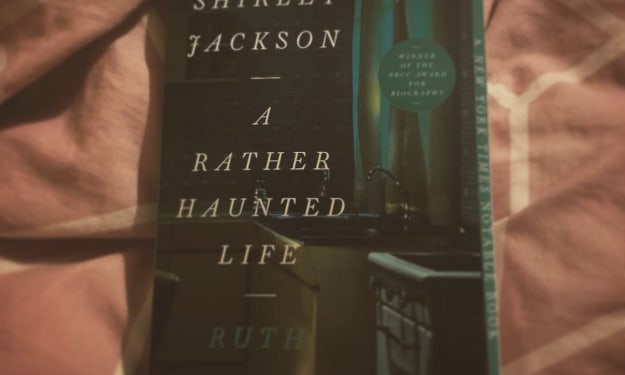
Book Review: "Shirley Jackson: A Rather Haunted Life" by Ruth Franklin
I love reading biographies when they are well written. I recently read a biography about Humphrey Bogart by A.M Sperber and Eric Lax. It was a brilliantly researched book with a great amount of personal insight into the life and tragedies of one of the world’s greatest actors in human history. I recently read “The Zhivago Affair” - a book about the life and banning of Dr. Zhivago and its author, Boris Pasternak. Another brilliant rendition of biography, draped across a political background of constant war and censorship. I read a book by Steve Thomas called “JonBenet” about the young beauty queen who was murdered at only six years’ old, her murder remaining unsolved to this day is haunting when you see just how small and adorable she was. It details her life in the industry and how she must have been pretty psychologically harmed by what she went through. From Vladimir Nabokov’s autobiography through to one of the best books I’ve read this year - Lucasta Miller’s “Keats” - this book on the legendary horror author, Shirley Jackson is the next book to be amongst them in great biographies.
By Annie Kapur5 years ago in Geeks