literature
Geek literature from the New York Times or the recesses of online. Our favorite stories showcase geeks.
Irvine Welsh and the Trainspotting-verse
Whenever anyone mentions Irvine Welsh, the first thing that probably springs to mind is Trainspotting, followed by Ewan McGregor crawling out of a dank dirty toilet bowl along with a pulsing pounding beat of ‘Lust for Life’ by Iggy Pop (fun fact also features backing vocals, and was co-written by David Bowie) followed by people sprinting down a high street. This imagery is striking, and even the mention of Trainspotting to anyone who has seen it will have them think of a ton of imagery audio or dialogue that comes from the movie. However, like all great movies (in my opinion) they are based on books.
By Gary Packer4 years ago in Geeks
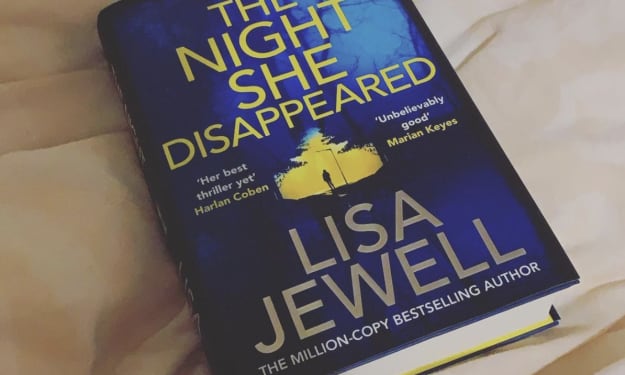
Book Review: "The Night She Disappeared" by Lisa Jewell
In my time, I have read an awful lot of crime and thriller novels. Being a person to shovel through the paperback bin in the WH Smith or the Asda, I have never turned away from those cheesy ‘chick-flick’ thrillers you find in the store for one or two pounds. I have also never turned away from an author’s next big novel. In the case of Lisa Jewell, the first novel I read by her was “The Family Upstairs” and I think it was a Reese Witherspoon’s Book Club Pick but don’t quote me on that. “The Family Upstairs” was one of those books where I thought I would never find out what was actually going on because of the way the story kept spinning around. However, with “The Night She Disappeared” I did not quite feel the same way. There are advantages and disadvantages to this book (but mainly advantages to be perfectly honest) and I won’t be taking away points for personal preference because that is not entirely fair. Lisa Jewell’s newest novel made me feel different, but not bad and with its very “Gone Girl” and “Girl on the Train” atmosphere, she is already establishing herself to be the new superpower of crime/thriller novels.
By Annie Kapur4 years ago in Geeks
10 best-selling books of all time
Books have always played an important role in our lives. Since we were children, we have been reading various stories from the worlds of fiction and nonfiction. Books, in all sizes, languages, colors, and patterns, have always been present.
By Michelle Morgan4 years ago in Geeks
Common Types of Vampires
I make it no secret that Anne Rice is my all time favorite author. Her work and story behind the work inspire me to no end. So today, in honor of the Vampire Chronicles adaptation by AMC (which I hold stock in), I have created a brief guide to vampires and the vampire hierarchy that is seen in popular fiction now, which we have Anne Rice to thank for (she also wrote some badass erotica but that’s another article for another day).
By Jessica Bugg4 years ago in Geeks
The Adventure of the Empty House, by Arthur Conan Doyle
The Adventure of the Empty House was first published in the Strand Magazine in October 1903 and later collected in The Return of Sherlock Holmes, published in 1905. Arthur Conan Doyle had “killed off” his famous detective Sherlock Holmes in The Final Problem, published in 1893, and finally gave way to public pressure to bring him back from the dead, which he did in this story.
By John Welford4 years ago in Geeks
10 Weird Books of 2021 (so far!). Top Story - August 2021.
Over the past year, I have focused on different types of reading including: folk horror, nonfiction and crime/thrillers of the Golden Age of British Crime Fiction. But, one thing that I have noticed along my reading is that there are books I would say are very 'weird' as in, I have not read anything quite like them before. The storylines shocked me, the characters enveloped me and there are tons of stuff about these books I would recommend (I'll be tagging my full reviews unless they contain spoilers) and tons of themes and symbols you can really get stuck into.
By Annie Kapur4 years ago in Geeks
"The Invisible Man", by G K Chesterton
Gilbert Keith Chesterton (1874-1936) was an English critic, poet and novelist who was well known as one of the most colourful and provocative writers of his day. He was seen by many as a latter-day Samuel Johnson, not only for his common sense and incisive wit, but also for his physically large appearance. His reputation has come under closer scrutiny in recent years due to his perceived anti-Semitism, but that does nothing to affect the quality or otherwise of his literary works.
By John Welford4 years ago in Geeks
Book Review: "The Casebook of Victor Frankenstein" by Peter Ackroyd
When it comes to books about Mary Shelley’s Frankenstein that either incorporate the main themes or rework the story, there are several that stand out to me as being brilliantly written and those include things like “Frankenstein in Baghdad” and obviously, Peter Ackroyd’s brilliant thriller of “The Casebook of Victor Frankenstein”. When we look at Peter Ackroyd’s writing one of the books we see is the great, dark and terrifying novel “Dan Leno and the Limehouse Golem” which is, in my opinion, one of his greatest achievements. About a killing spree done by the infamous ‘Limehouse Golem’ there is a lot of similarities in Peter Ackroyd’s writing style between that book and “The Casebook of Victor Frankenstein”. For example: both books employ a sense of punk violence. Someone is fighting a system of rules and so, the morality question gets underway - is this person in over their head or are they just trying to break the rigid rules of society by any means necessary? When does the reader decide that this has become far too much to handle? When does the character decide that they are going to be persecuted? Peter Ackroyd is the best person at asking these questions in extreme circumstances such as: arrest, isolation and situations in which the main character is running out of options.
By Annie Kapur4 years ago in Geeks
Book Review: "Christ Stopped at Eboli" by Carlo Levi
I have read some few books about exile in my lifetime and honestly, I have never read something as harrowing as this about exile. Normally, exile is something that is almost self-sustained, the protagonist just tries to get used to it whilst they wander around. In Shakespeare’s Richard II, we see that the exile of the two men impacts one far more than the other with Thomas Mowbray asking what this sentence is but death that ‘robs (him) from breathing native breath’ and Henry Bolingbroke accepting the circumstances of his exile for hurting the King’s feelings and disturbing the peace. In this novel though, Carlo Levi never really gets used to his exile, he seems to just go with it with each chapter offering something new and harrowing in every case. Every time something massively emotional pops up, we get these massive speeches about how religion and civilisation have stopped as if nothing of faith has ever been let into Eboli. It is a really upsetting book in my opinion and after reading it, I just had to stop for a bit because all of that was a bit much to take in at once.
By Annie Kapur4 years ago in Geeks