literature
Geek literature from the New York Times or the recesses of online. Our favorite stories showcase geeks.
How Tolstoy Battled His Depression
As Leo Tolstoy turned 50, he started experiencing an existential crisis and sank into a state of depression and melancholy. Despite being one of the wealthiest and most admired men in Russia, deep inside, he felt miserable. By this time, Tolstoy had already established his literary abilities and wrote two masterpieces War and Peace (1865–68) and Anna Karenina (1874–76). But he rejected his literary success and labeled his latter novel as "an abomination that no longer exists for me."
By Kamna Kirti4 years ago in Geeks
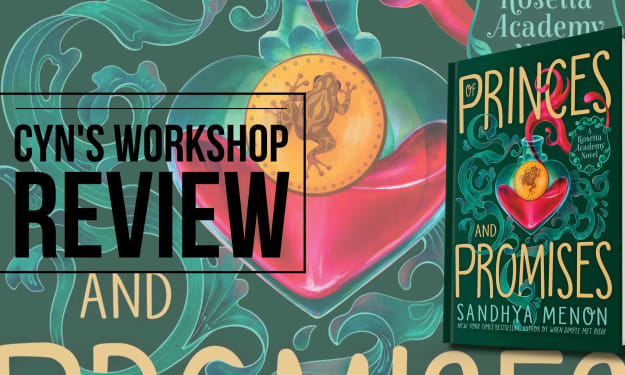
Review of '14 Ways to Die'
ONE KILLER. THIRTEEN VICTIMS. A MILLION VIEWS. A page-turning thriller for the social media age, perfect for fans of A Good Girl's Guide to Murder and One of Us Is Lying. A decade ago, Jess lost her mother to the Magpie Man, an infamous serial killer who is still at large and planning to kill again. Now, She's going to use her new platform as the star of a YouTube reality series to catch him. That is, if he doesn't catch her first. Jess's online show means that everyone is talking about her mother's murder case. But fame comes with its downsides. The whole world is watching her every move. And it's hard to know who she can trust. Could the Magpie Man be lurking closer to her than she thought? Is he watching her right now?
By Cyn's Workshop4 years ago in Geeks
Book Review: "Most Secret" by Nevil Shute
I have read many books by Nevil Shute in my time and honestly, I can say that he is possibly in my top twenty favourite writers at the moment, alongside his more post-modern counterpart, Ian McEwan. Nevil Shute is probably best known for his 1950 novel “A Town Like Alice” and his 1957 novel “On the Beach”. But there are more of his novels that are worth reading than just those. I remember when I read his early 1939 novel “What Happened to the Corbetts?” And I was absolutely taken. I proceeded to read books like “Landfall” and “Beyond the Black Stump”, “The Far Country” and one of my favourites, “Requiem for a Wren”. The last Nevil Shute book I read before this one was “Trustee from the Toolroom” and though that too, was just as good - I think it is safe to say that this next one I will be talking about is definitely in my top three Nevil Shute books of all time. Nevil Shute may not just be known for his ability to write so emotionally about the war times, but he is also known for making his novels’ characters especially heartbreaking and upsetting from time to time. But wherever there is heartbreak there is also hope afterwards, and that is something I love about these books.
By Annie Kapur4 years ago in Geeks
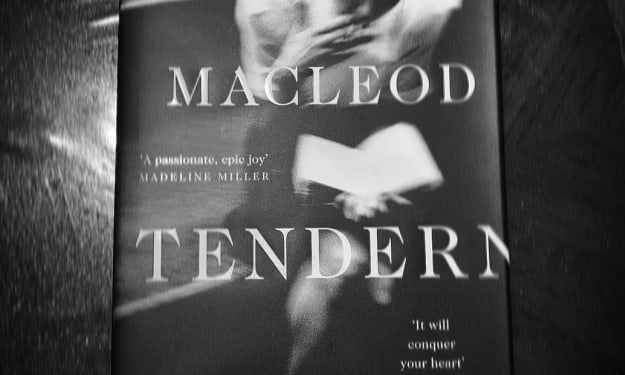
Book Review: "Tenderness" by Alison MacLeod
I have read some pretty good books about the impact other pieces of literature have on the world and some of these include the legendary “Reading Lolita in Tehran” by Azir Nafisi all the way down to Peter Ackroyd’s biography of William Shakespeare. The one thing I have always been surprised about is the constant way in which the authors reinvent the purpose of the writer’s life and works by establishing it in a different context. For example: the banned book “Lolita” has one context, but attempting to read it in Tehran has a whole different meaning altogether. Alison MacLeod attempts to do the same for the latter works of D.H Lawrence in her seminal work: “Tenderness”. A book about the exile of an author, she attempts to piece together the character of D.H Lawrence on his way out of life whilst also showing the impact his magnum opus and downfall: “Lady Chatterley’s Lover” had on the growing world. Especially looking at different times and places, this book is basically a testament not just to Lawrence’s own work but to the very nature of banned books themselves, showing that when literature becomes contraband, it just becomes more widely read amongst the public who wonder exactly what it could possibly do to us. When it came to “Lady Chatterley’s Lover” - well let’s just say there are still places where it is not entirely acceptable to be seen reading it, probably not banned but not socially accepted.
By Annie Kapur4 years ago in Geeks
Books Recommended by Joe Rogan
Joe Rogan is a popular American actor, comedian, and podcast host. He hosted a show entitled The Man Show with his friend Jimmy Kimmel. Also, they host a show together called 'Joe Rogan Experience' where he interviews famous personalities from around the world. In 2005, he became the host of Fear Factor-a reality TV show about the contestants who will perform stunts to avoid getting eliminated from the competition.
By Borba de Souza4 years ago in Geeks
NaNoWriMo is in the air!
We are just a couple weeks away from what many amateur writers call National Novel Writing Month! This is also affectionately dubbed, NaNoWriMo, and the people who choose to participate (choose! remember that!) are often called WriMos. What is NaNoWriMo, you might ask? It is only the greatest month of the year! Whether you've never written a single word of fiction in your life or you're a twenty-year writing pro, NaNoWriMo in November has something for you!
By Hannah Marie. 4 years ago in Geeks
Book Review: Long Overdue at the Lakeside Library by Holly Danvers
I was given a free e-copy of this novel by NetGalley in exchange for my honest opinion. A glowing wood stove, a cozy log cabin, and shelves full of books are all Rain Wilmot needs to ride out the Wisconsin winter, now that she's made her family's Lofty Pines library her year-round home. But the warm-hearted librarian's blood runs cold when local man, Wallace Benson, is found dead during the annual Ice Fishing Jamboree. After Benson's body is found in his ice shanty, Rain recalls that she recently saw the victim in her library, borrowing a few cookbooks to prepare for the fishing tournament's communal "chili dump." She later finds these same books returned to the library's drop box, with an enigmatic note from Benson to Rain. As Rain seeks to understand the message, the prime suspect becomes Rain's friend Nick, who was the last person to see Wallace alive and who returned to the Jamboree with a nasty cut on his hand. The knife found in his tackle box only makes Nick's troubles worse. But Rain keeps fishing for other suspects. Was the killer Danny, who lost his arm to a logging accident involving Wallace? Or Danny's bitter father, whose dreams of retirement were dashed by his son's accident? With the help of her friends Julia and Jace, Rain sets out to hook the real culprit and clear Nick's name. But can her sleuthing skills protect her from a killer who'd like to take her out of circulation? (Goodreads synopsis)
By Caitlin Gonya4 years ago in Geeks
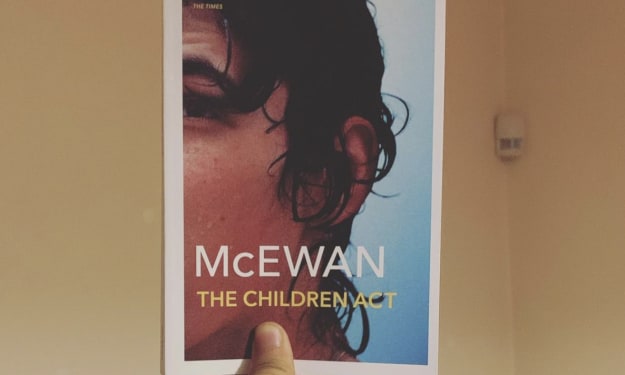
Book Review: "The Children Act" by Ian McEwan
I have spent a lot of my time this year reading books by different authors that I personally never would have read in my teen years. For example: when I was in my mid-teens, I read Ian McEwan’s book “Atonement”. I am not going to lie to you when I say that “Atonement” was one of the most boring books I had ever read. It was mainly because to me, it just did not feel realistic. I stuck it in the pile with other books I could not find any realism in though they claimed to depict realism - books such as: “The Unbearable Lightness of Being”. However, this year I have read so many books by Ian McEwan that eighteen year old me would be mad as hell if she saw this. I did try to read “Atonement” again but I just think that I personally don’t like that book. But books such as “The Cement Garden” and “On Chesil Beach” have been great reads to get stuck into. Often dark and tragic with an underlying extended metaphor of some kind, I really grew to appreciate the writing of Ian McEwan and his attempts to make a very literary kind of fiction where the main factors are the emotions that we cannot articulate for they are so complex.
By Annie Kapur4 years ago in Geeks
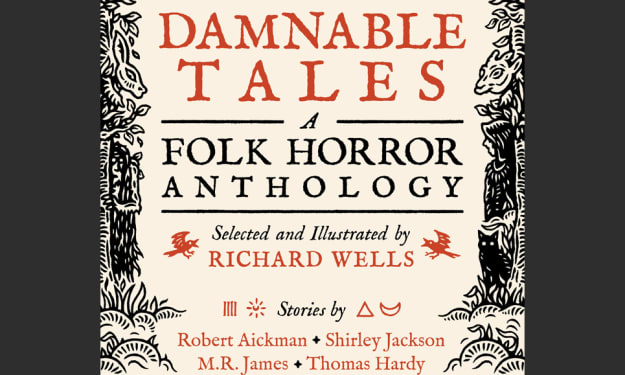
Book Review: "Damnable Tales: A Folk Horror Anthology" ed. by Richard Wells
You all know how I feel about folk horror. You all know that I sit there on a rainy day with a cup of coffee and a glass of Soya Milk, watching “The Wicker Man” over and over again. You all know how I feel about everything from Daniel Kehlmann’s “Tyll” to Mikael Niemi’s “To Cook a Bear”. You are aware of my ramblings about the films of Ari Aster and movies like “Onibaba” and “Kwaidan” by the Japanese. Anyways, you get it - folk horror is my all-time favourite genre of anything ever. When it comes to folk horror you need a few things to make it just right: strange belief systems, odd almost folklore characters, weird behaviours that are seen as normal to the character performing them, signs and symbols that represent some sort of repressed thought and if you want to push the barriers, pick up your copy of “The Republic” by Plato and toss it out of the window because everything here is a representation of something. The almost ethereal and threatening quality of a folk horror piece is what keeps it alive. The idea that something that is considered so normal by the folk performing it is actually incredibly dangerous to an outsider can be absolutely terrifying. From black magic to the black plague, from maidens to the maypole and all the way down to the very creatures that walk with them - this anthology of folk horror leaves no gaps and is illustrated brilliantly.
By Annie Kapur4 years ago in Geeks