art
Artistic, musical, creative, and entertaining topics of art about all things geek.
Terminator Dark Fate review: Please terminate this franchise
Well, he did say he’d be back. Arnold Schwarzenegger made that promise in The Terminator in 1984, little realising that “I’ll be back” would become his most famous line of dialogue, or that the homicidal cyborg he was playing would become his defining role. True to his word, he was back for Terminator 2: Judgment Day in 1991, along with the original film’s writer-director, James Cameron, and its co-star, Linda Hamilton. After that, Schwarzenegger was back for Terminator 3: Rise of the Machines in 2003, Terminator Salvation in 2009, and Terminator Genisys in 2015, but they wandered further and further from the lean, mean high-concept thrills of the 1984 classic. And now he is back again in Terminator Dark Fate.
By Many A-Sun3 years ago in Geeks
The King review: ‘Diary of a wimpy king’
This story was originally published on 3 September 2019, when The King premiered at the Venice Film Festival. Timothée Chalamet’s Oscar-nominated turn in Call Me by Your Name made him the poster boy for masculinity at its most delicate and sensitive: his cry-athon over the closing credits made sure of that. But he is even more delicate and sensitive as King Henry V in David Michôd’s sombre historical drama, The King. Never mind that the Prince Hal in Shakespeare’s plays started off a hard-drinking party animal. In The King, he is updated to become Emo Hal.
By Alessandro Algardi3 years ago in Geeks
Is The Irishman the end of the gangster movie as we know it?
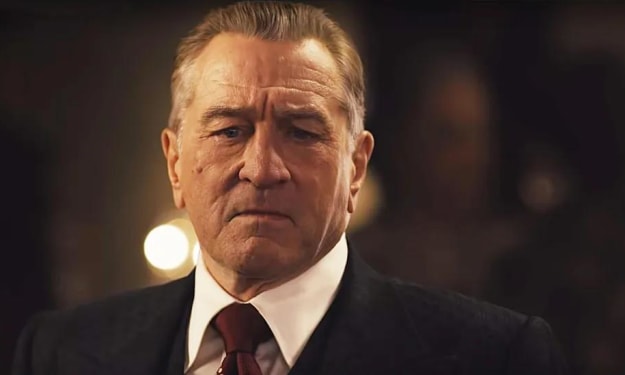
or Martin Scorsese – a filmmaker whose work has so often been characterised by a rollicking, nervous vitality – The Irishman is as sedate a gangster movie as they come. His glacial three-and-a-half-hour epic sprawls to cover the Kennedy assassination and the creeping corruption of the American labour movement, and all within a loose framework that brings together the great actors of the US crime-thriller genre: Robert De Niro, Harvey Keitel, Joe Pesci, and for the first time, Al Pacino.
By Mao Jiao Li3 years ago in Geeks
A cultural history of gaslighting
In her Oscar-winning performance in the 1944 movie Gaslight, Ingrid Bergman plays a young opera singer, Paula, traumatised by the death of the aunt who raised her, but swept into a whirlwind marriage to a charming musician (Charles Boyer). We watch as Paula becomes increasingly isolated and disorientated, convinced by her husband that she is losing her mind: items disappear; strange noises seep from a locked attic; the gas-fuelled house lighting mysteriously fades and glowers. We realise, before Paula does, that it is her husband creating these head-spinning disturbances; in one scene, she entreats him: “Are you trying to tell me I’m insane?” Her husband retorts: “Now, perhaps you will understand why I cannot let you meet people.”
By Many A-Sun3 years ago in Geeks
Cinema still needs to make space for queer women
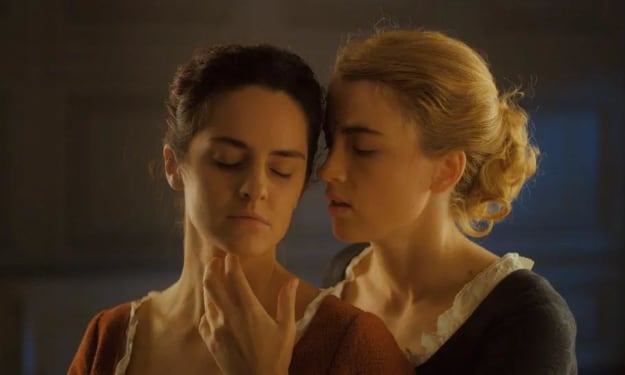
henever minority voices in the field of film criticism or even the general movie-going public talk about expanding the canon, or even going as far as destroying it, we’re arguing for our place at the table. It is not breaking news to say that the film industry has been dominated by white men for over 100 years at this point.
By Mao Jiao Li3 years ago in Geeks
Why The Piano is the greatest film directed by a woman
In 1993, Jane Campion made history when she became the first woman (and the first New Zealander) to receive the prestigious Palme d’Or at the Cannes Film Festival. Her haunting period romance The Piano shared the award with Chen Kaige's Farewell My Concubine, but in BBC Culture’s critics’ poll of the 100 greatest films by women, Campion doesn’t have to share the prize a second time: The Piano was chosen as the number one film in a remarkable list that showcases more than 100 years of female filmmaking.
By Alessandro Algardi3 years ago in Geeks
Top 100 films directed by women: What is ‘misogynoir’?
Magical Negro Rehab is a satirical sketch for new TV comedy series Astronomy Club. The skit brings together the traumatised supporting black cast from Driving Miss Daisy, The Green Mile and Ghost, among other films. Without a central white character in their lives, the kind-hearted and meek group struggles to find meaning in their own lives.
By Many A-Sun3 years ago in Geeks
Will disabled people ever get the stories they deserve?
Diversity has become a buzzword in the entertainment industries – and if there’s still debate about how much things are really changing, or if moves towards greater representation are too often mere lip service or box ticking, the diversity conversation is at least being had. Do badly, and it will get called out. And there genuinely do seem to be signs of change, whether that’s British theatre embracing gender-fluid casting, or Hollywood learning the lessons of Black Panther and Crazy Rich Asians, that ethnically diverse casting and storytelling can help the industry reach new audiences – and net new profits.
By Alessandro Algardi3 years ago in Geeks
The bold pioneers of cinema who paved the way
Cleo Madison’s name is little known now, catchy though it is, but in 1916 she was a popular screen actress making the transition to writer and director. Asked years later if she had been afraid to direct, she reportedly said, “Why should I be? I had seen men with less brains than I had getting away with it.”
By Mao Jiao Li3 years ago in Geeks