
Spider_Man: No Way Home a Metamodern Superhero Film
Peter Parker and The Ruins of Postmodern

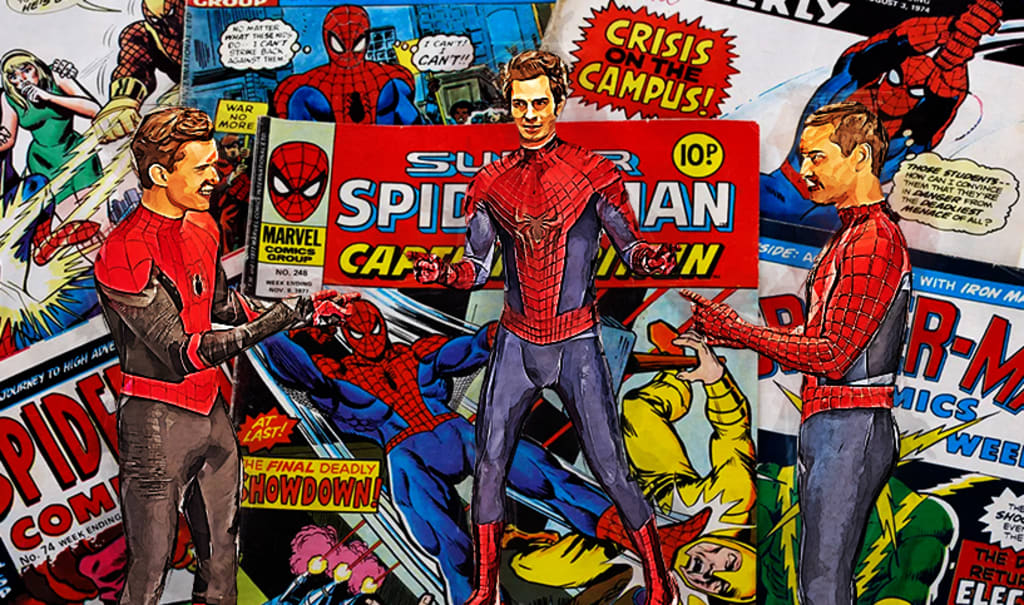
Spider-Man: No Way Home is a metamodernist film. That may sound confusing to some, so let's go through why this film is one of the metamodern superhero films of 2021. What exactly is metamodernism? Metamodernism, an alternative to post modernism, took form over the internet in the early 2000s especially on websites such as 4chan and reddit. It involves a self awareness of irony along with the seriousness that led to post modernism becoming relevant as different ways of comprehending society's shifting modes of communication and identity. Those that use technology to explore their consciousness and express thoughts in various forms of media inspired this movement. Today, shortly after the release of Spider-Man: No Way Home, another film that embraces meta treatments in the pop culture realm by telling a story about the millennial generation, we will be exploring why No Way Home can be understood as a metamodern superhero film

In the already super crowded superhero film universe, where will we find uniqueness? Spider-Man: No Way Home, with its metamodernist messages and themes, is a breath of fresh air. Spider-Man: No Way Home is an excellent example of a film that lyrically illustrates the disjunction between our perceptions and our beliefs, an interminable question asked by metamodernism. The theme of metamodernism in Spider-Man: No Way Home revolves around the character's perception versus his own reality.
The 21st century has seen the superhero genre become a dominant force in Hollywood. The Marvel Cinematic Universe (MCU) has brought together an interconnected collection of comic book characters to theaters near you, while other productions such as Batman, Superman, Hellboy and more are constantly being rebooted. It's hard to pin down exactly what separates this new crop of super-movies from their predecessors, but one thing is clear: the super-genre has developed a cohesiveness that was simply not there years ago. These films have taken decades (and millions) worth of comics and boiled them down into a coherent tapestry that makes sense for every viewer — it's a casual entry point for those who want to get involved in the world of comic books. But at the same time, thanks to directors like Joss Whedon and Christopher Nolan, these films have plenty of layers to peel back if you decide to dig deeper.
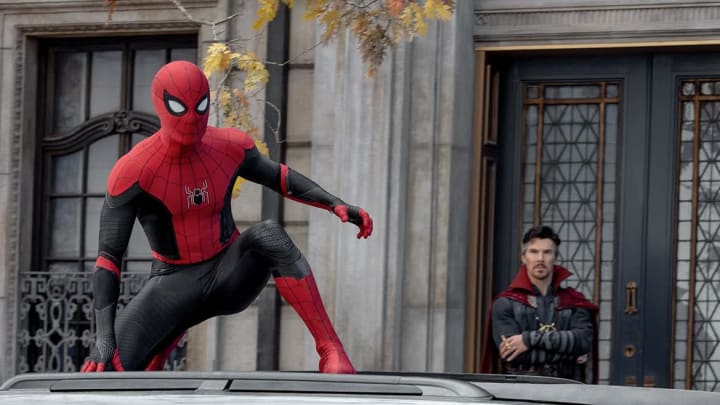
There was a time when films were just films. Sure, they had their tropes and cliche moments, but there was a certain innocence to them. A hero's journey, told in three acts and ending in a resolution of good winning over evil — at least until the next film started. But then something happened — the paradigm began shifting; a new breed of film emerged. The world has moved on — but the good guys have yet to catch up. Spider-Man: No Way Home is a film that is rooted in its time but also attempting to catch up with its predecessors. About how Spider-Man: No Way Home(NWH) isn't so much a three-part series as it is an exploration of today's reality and the way superheroes are viewed. Today we live in a reality where the heroes aren't really heroes. They're flawed and when we look at them, all we can see is the flaws that play out in our very own lives. We blame reality for us not achieving our dreams and view those who are anti-reality as heroes because they somehow managed to succeed despite their circumstances.
The film is postmodern in the sense that it recognizes the problems with traditional superhero storytelling and works to explore those problems. The film reflects on the tropes of superhero films, including the protagonist’s reluctant heroics, his love interest, and the villain who wants to see him dead. However, rather than simply criticizing these tropes, Spider-Man: No Way Home also strives to answer them. Throughout the film, Peter Parker constantly questions his role as a hero, which is highlighted in several emotional scenes where he goes through an existential crisis.
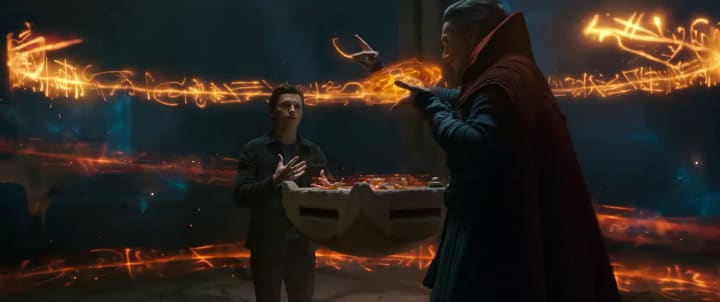
Spider-Man: No Way Home is the first Marvel Cinematic Universe film to be a Metamodernist work. By effectively deconstructing and reconstructing the superhero genre, it comes closer than any other MCU film to being a truly successful Metamodernist work.
Metamodernism has been described as an "oscillatory state" between modernism and postmodernism. It has three components: irony/satire, sincerity, and hope (Roorda). While modernism focuses on originality and breaking with tradition, postmodernism focuses on pastiche and nostalgia. Metamodernism combines these two extremes, creating something that is both new and nostalgic at once (Bucher).
In order for Spider-Man: No Way Home to be Metamodernist, it must blend what came before with something new in a way that captures the audience's interest without losing their affection for the past. In other words, it must use elements from previous Spider-Man films in order to simultaneously satirize them while sincerely evoking nostalgia for them.
And that's exactly what Spider-Man: No Way Home does it challenges the status quo by deconstructing and reconstructing elements of Spide-man. It's an aesthetic that used to be impossible to pull off in a superhero flick, but Spider-Man: No Way Home manages to do it flawlessly.

Spider-Man: No Way Home deconstructs and reconstructs what we see as the standard narrative of a superhero movie. It does this by building on previous films that took place in this universe and exalting them as they are while simultaneously undermining their meaning by including characters from past and related movies that challenge our understanding of the events within this world and complicating our idea of what is real with its inclusion of time travel, alternate dimensions, and multiple character versions.

In the postmodern era, we saw the death of grand narratives. Science and psychology were used to find these overarching truths in everything. The age of enlightenment was replaced by an age of skepticism. We started to question everything—even our own senses. The web-slinger's history reflects metamodernism in many ways. In the postmodern period, we saw a deconstruction of identity in Andrew Garfield's portrayal of Peter Parker. In that vein, I would argue that Andrew Garfield’s Spider-Man is the perfect embodiment of postmodernism with his series left off on the nihilistic the death of Gwen Stacey.

In the early 2000s, Tobey Maguire's Spider-Man represented an old-fashioned modernist superhero: hopeful and romantic, with a sense of affect, and a belief in the potential for grand narratives and universal truths.
With its earnestness and innocence, this genre coincided with the hopefulness of the new millennium. There was a belief in progress, or moving forward. But as time went on, society became more cynical about these ideals. And after world events some viewers felt that these stories had no place in our world anymore.
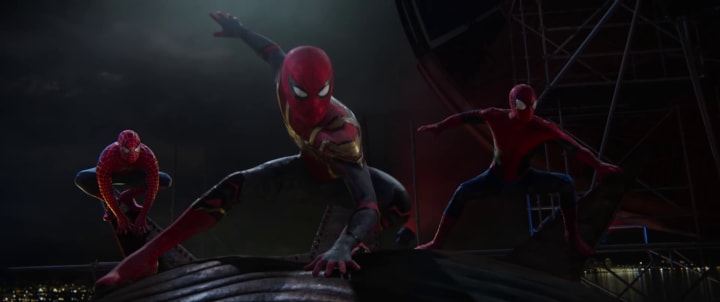
But now, there is a resurgence of sincerity, hope, romanticism, affect, and the potential for grand narratives and universal truths, whilst not forfeiting all that we’ve learnt from postmodernism. This is Spider-Man: No Way Home.

Additionally, the film features complex themes and metaphors. For example, it features an exploration of regret and trying to atone for your past mistakes.
I've been trying to pinpoint why the film felt so different, so unique and, ultimately, so refreshing. The answer is that like all great art, it reflects the society that produced it. In this case, a society of millennials dealing with tremendous social pressures and family issues.
We feel that, when it comes to fighting evil, there is a need for optimism, hope and good will. Spider-Man: no way home is the first metamodern superhero film which realizes this—a change from the dark and gritty big-budget blockbusters of yesteryear. It manages to have a happy ending and doesn’t end with everyone dying, which shows that we can make a difference—even if it is just in our own little corner of the world. In conclusion: in the current postmodern era, we are starting to see the emergence of meta-modernism. The film studies community has been torn for a long time between postmodern deconstructionalism (which tries to find the flaws in everything) and modernist nostalgia (which seeks to regurgitate outdated techniques and values), however; there has been a move towards what you might call 'metamodernism' recently. This refers to an acknowledgement that both 'grand narratives' (read: metanarratives) can be good things (as long as they are leavened with some self-awareness) as well as self-reflexivity—you might think of metamodernism as postmodernism.
Films like Spider-Man: no way home are the beginning of a new phase of superhero films. These films have set the stage for a burgeoning era of metamodernism aesthetics. One day soon, we may see the emergence of a truly mature generation of comic book films that realize what made the comics so popular in the first place: beautiful artwork and compelling storylines.
About the Creator
tacaj25
Spent a year buying and selling plush toys for no pay. Trained in the art of merchandising inflatable dolls in Los Angeles, CA. Spent childhood working on action figures in Orlando, FL.
Marty Supreme Review: Timothée Chalamet Is Excellent, The Movie… Not So Much
⭐ Rating: 2 out of 5 stars Marty Supreme Directed by Josh Safdie Written by Josh Safdie, Ronald Bronstein Starring Timothee Chalamet, Gwyneth Paltrow, Tyler The Creator, Odessa A'zion
By Sean Patrickabout a month ago in Geeks
Y: Marshals Season 1 Review
In a television landscape crowded with crime procedurals and law-enforcement dramas, Y: Marshals arrives with a clear intention: to slow things down, dig deeper, and ask harder questions about justice, loyalty, and authority. Season 1 sets the tone for what could become a standout series, blending tense action with thoughtful character work. Rather than relying solely on high-speed chases and shootouts, Y: Marshals focuses on the human cost of the badge and the moral gray areas faced by those tasked with upholding the law.
By David Cook6 days ago in Geeks


Comments
There are no comments for this story
Be the first to respond and start the conversation.