
Revisiting Heat: Why Michael Mann's Classic Still Thrills
An in-depth retrospective review of Michael Mann's masterpiece on its 30th anniversary

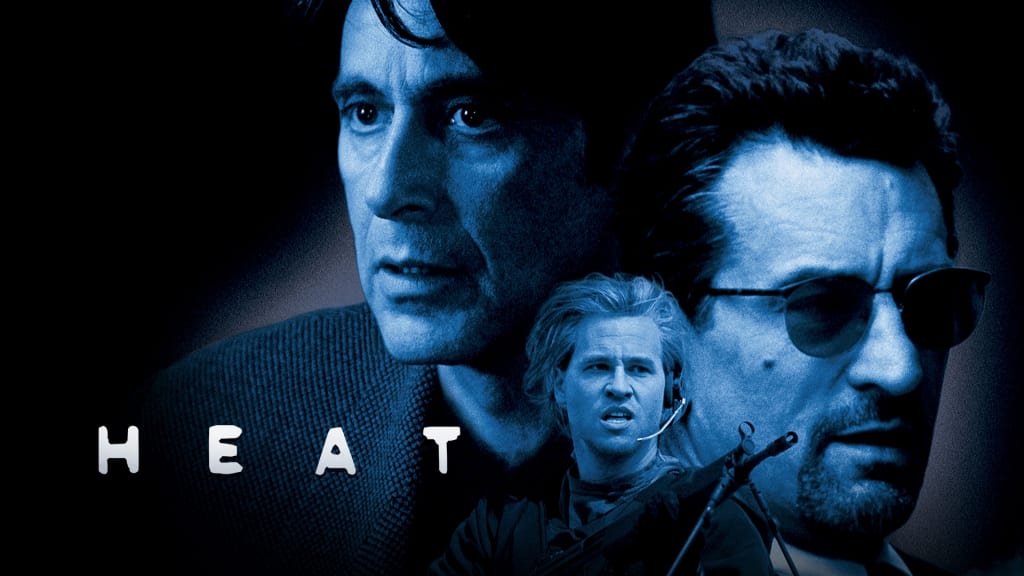
Plot Summary
Heat revolves around a LAPD lieutenant named Vincent Hannah trying to stop a notorious criminal enterprise led by the meticulous Neil McCauley and his right-hand man, Chris Shiherlis. Hanna's tireless pursuit of justice comes at a personal price, as it strains his marriage and highlighting the sacrifices demanded by a profession consumed by duty.
Outstanding Performances from the Cast
Al Pacino delivers a remarkable performance as Lieutenant Vincent Hanna, depicting a persistent law enforcement officer whose ambition and determination make him a gripping presence on screen. Robert De Niro is equally transfixing as Neil McCauley, a cold and calculating thief whose focal point and exactitude distinguish him. Although McCauley is a criminal, he does not t0lerate recklessness, a trait emphasized in how he dealt with Waingro, highlighting how even villains have boundaries they refuse cross.
Val Kilmer brings depth as Chris Shiherlis, McCauley's loyal but unpredictable right-hand man, contributing tension and uncertainty to the crew's energy. Jon Voight excels as Nate, an entrusted middleman who provides backup and essentials for McCauley's crew. Danny Trejo makes a small yet memorable appearance, adding realism to the film's criminal environment. Together, the ensemble cast upraises Heat, demonstrating performances that bring Michael Mann's well-crafted characters to life.
Best Moments from The Movie
Heat is filled with exciting moments that display Michael Mann's proficiency in tension and character-oriented storytelling. Among the movie's sensational, the heist at the Far East National Bank remains a highlight. The carefully planned out robbery with focus by McCauley and his crew, is confronted by the relentless pursuit of Vincent Hanna and the LAPD. This scene combines masterful camera work, a tense, heart-pounding shootout, and a brutal portrayal of violence, creating both suspense and adrenaline while emphasizing the cat-and-mouse nature that drives the plot.
However, the movie's most memorable moment is the coffee shop conversation between Hanna and McCauley. In this firm, tension-filled scene, Al Pacino and Robert DeNiro deliver a masterstroke in acting. There are no guns or explosions --- just two men on opposite sides discussing life, crime, and their personal philosophies. This scene highlights the thin line separating cop and criminal while manifesting mutual respect and rivalry in a subtle, powerful way.
Another unforgettable sequence is the high-speed freeway chase, where Hanna pursues McCauley through the streets of Los Angeles. Mann's utilization of real locations, excellent editing, and impressive camera work makes the chase feel both amazing and grounded. Beyond the set pieces, small moments -- like Chris Shiherlis's volatility during heists or Hanna's emotional turbulence -- add depth and realism, showing that every choice carries consequences.
What makes every scene in Heat so unforgettable is the balance between action and storytelling. From the thrilling bank heist to the unyielding tensity of the coffee shop, each scene blends emotion, suspense, and character insight, creating a cinematic experience that has captivated audiences for thirty years.
Behind The Scenes Facts About Heat
Heat is full of fascinating details that show just how much care went into the production. Initially, in the original script, Vincent Hanna was written as a cocaine addict. According to an article on Screen Rant, Al Pacino said this explained Hanna's frequent outbursts and strange delivery of lines. Even though the movie does not explicitly depict him with a drug addiction, Pacino admitted in an interview with Christopher Nolan that he still portrayed Hanna with that backstory in mind.
Here's an interesting fact: Don Johnson, star of Miami Vice, was considered as a backup for both Robert De Niro and Al Pacino, in case either of them declined the roles. Michael Mann had worked with Johnson on that show, so he knew the actor could step in if necessary. Thankfully, both legends signed on --- however, Johnson had taken the role, the movie would have been different.
Michael Mann did not plan on directing Heat. He simply wanted the script to be made into a movie and originally hired Walter Hill, known for 48 Hours and The Warriors. When Hill declined it, Mann took on the director's chair himself, creating the precise, tense style that is synonymous with the movie.
To prepare, the cast immersed themselves in Los Angeles's real criminal and law enforcement environments. Visiting restaurants and hangouts frequented by LAPD criminals and officers provided them insights into dialogue, behavior and movement -- details that make Heat make feek genuine three decades later.
Analyzing the Movie's Themes
At its heart, Heat touches on the enduring conflict between crime and justice. Vincent Hanna represents law and order, motivated by a strong dedication to fighting crime at all costs while Neil McCauley and his right-hand man, Chris Shiherlis, represent crime and chaos. What makes this conflict fascinating is the movie does not portray either side as clearly good or evil. Hanna and McCauley both adhere to strict personal codes and are willing to give up everything to reach their objectives.
Another major theme is the struggle to balance personal life with professional obsession. Hanna is so determined to bring McCauley and his cronies to justice that his marriage deteriorates as a result. His commitment to the job leaves little time for emotional stability, showing the consequences of being consumed by one's profession. McCauley faces a similar dilemma. Although he succeeds as a professional thief, his relationship with Eady challenges his belief that emotional attachments are weaknesses.
Through these parallel struggles, Heat portrays the consequences of obsession, regardless of which side of the law someone is on. By comparing Hanna and McCauley's lives, the movie suggests that their differences are insignificant compared to the sacrifices and choices they make.
The Enduring Legacy of Heat
Heat is not just a crime thriller -- it's an exploration of obsession, sacrifice, and the human cost of the paths we choose. Michael Mann combines unforgettable performances, heart-pounding action, and a city that feels alive to create a movie that's much about character as it is about law and order. Hanna and McCauley may be on opposite sides, but their struggles mirror one another, showing that every action has consequences. Decades later, Heat captivates because it thrills, resonates and leaves a strong impact.
About the Creator
TheScreenAnalyst
I am a passionate movie and TV enthusiast, devoted to analyzing storytelling, characters, visuals, and performances. I provide thoughtful critiques and insights, exploring both mainstream and independent works to engage audiences.
Keep reading
More stories from TheScreenAnalyst and writers in Geeks and other communities.
Spies Like Us at 40: Why This Cult Classic Endures
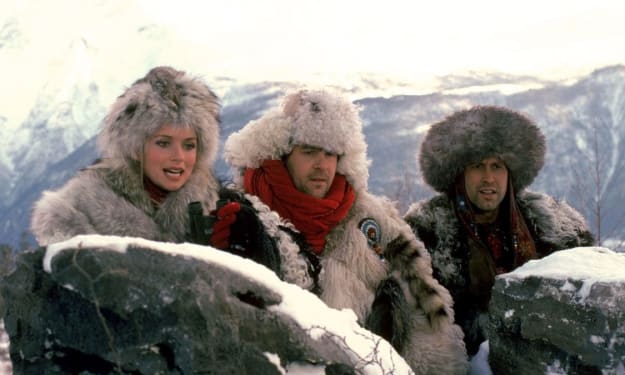
Plot Summary Spies Like Us follows Emmett Fitz-Hume and Austin Millbarge, two incompetent US government who fail their Foreign Service Board Exam and are chosen by the CIA for a secret mission. Little do they know, they are not actually agents, but decoys meant to distract a Soviet team from doing a nuclear operation in Central Asia. Completely unprepared, Emmett and Austin must improvise their way through chaos, espionage, and danger as they unwittingly prevent a nuclear war.
By TheScreenAnalyst3 months ago in Geeks
Spogebob Review
“SpongeBob SquarePants” aired its whimsical installment “Opposite Day,” an episode that flipped the familiar rhythm of Bikini Bottom on its head. The story opens with Squidward’s melodramatic proclamation that the town will observe “Opposite Day,” prompting an absurd inversion of everyday norms: whereas he is anything but grumpy and more cheerful than usual, while SpongeBob, ever the optimist, dutifully recites a litany of pessimistic affirmations. The episode’s premise, simple yet subversive, is framed by a rapid-fire dialogue that showcases the series’ hallmark wit, while its animation subtly accentuates the visual irony through exaggerated facial expressions and color palettes that shift from bright to muted tones as the day progresses.
By Forest Green7 days ago in Geeks
me, me, me
when i read back my poetry it screams “me, me, me” on my screen in bold letters and i can’t shut it up — most days, i cannot make any other words out; i want to throttle a thousand versions of the me gone by, i want to throw myself from a figurative balcony, i want to sink a sword into every pen i’ve held
By angela hepworth2 days ago in Poets

Comments
There are no comments for this story
Be the first to respond and start the conversation.