
"Pensées" by Blaise Pascal
First Impressions (Pt.16)

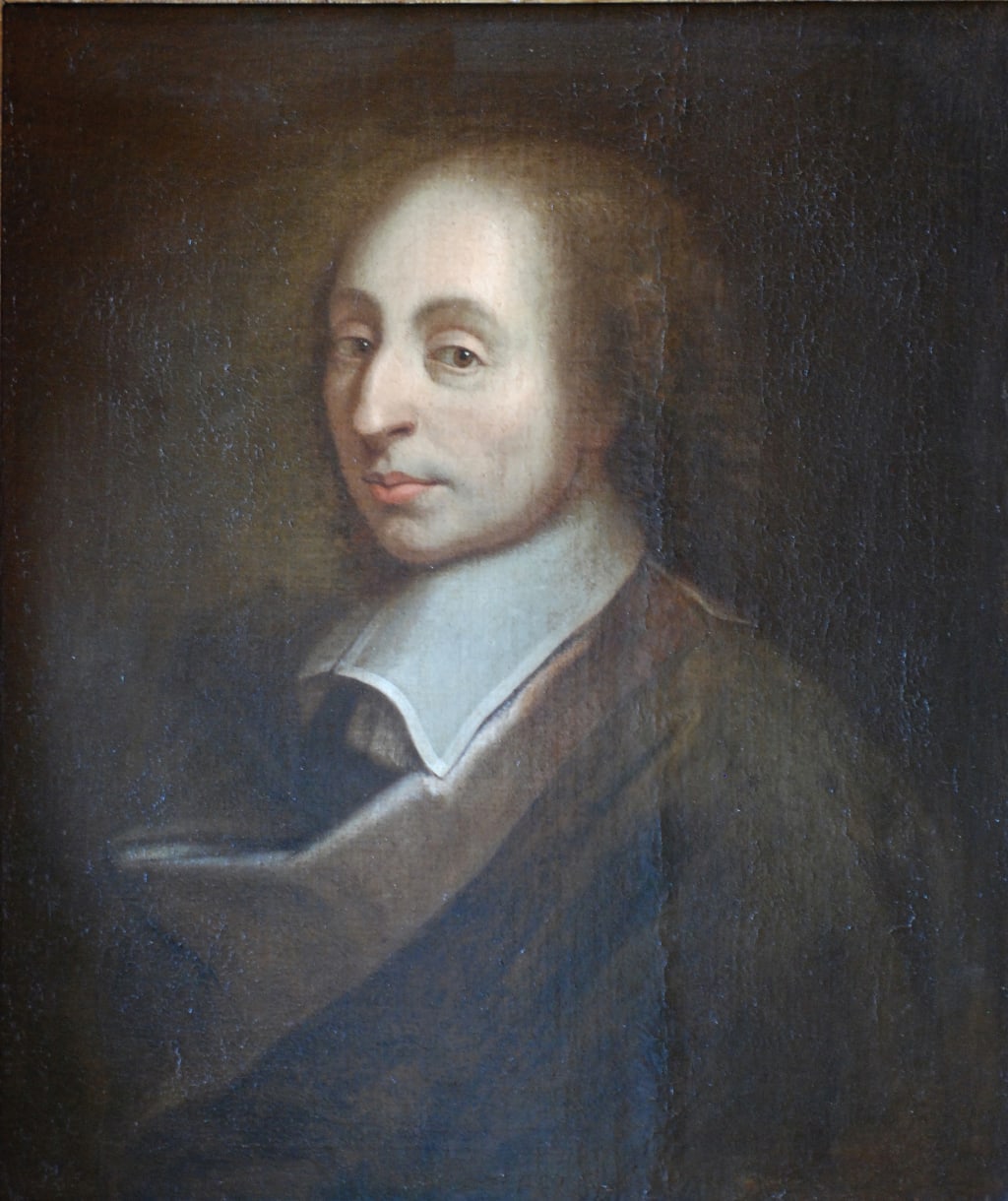
Pensées by Blaise Pascal, also known as “thoughts” in English, is one of the most heavily disputed texts in the history of Catholic Theology. This is mostly because of the order of the text since it was published after the death of its author. Initially, the second and complete edition was first published in 1670 but the more popular translation of the text into English by WF Trotter was published in 1958 and there have been other translations in between, each with their own approach to not only the translations of certain more philosophical French phrases, but they also have differentiating interpretations of the order of the text and the way in which they are organised.
The text to my understanding, was the result of Pascal’s religious conversion and following this he led an ascetic lifestyle, writing this book on the conclusion of the two changes in his life. Pascal’s wager is the argument and concept that is famed to have come from this work. It is the question of human morality and whether the positive inclination to perform morality is higher with the belief in the existence of a higher power and therefore the human performs morality in hope of getting something in return. On the other hand, it is also the argument that if morality is higher in the atheist then is it truly a better form of morality for the expectation of something in return is clearly non-existent since there is no belief in a higher power. It is more a paradox than a wager, but I have managed to find many arguments that lead the reader to believe that Pascal is truly helping them to lead a better life. The 17th Century Philosopher mentions various concepts dealing with judgement, justice, greatness and legacy, each concerning the human being, whether our own focus on death takes away from the experience of life and happiness and that the very thought that we are going to expire whether we know the time or not takes over our lives and we therefore become focused on our own reason and legacy in hopes of leaving something upon the earth. Pascal argues that instead, we should be focused on what awaits us afterwards for the sake of our own morality and salvation. It is a strong argument, but weakly worded in various sentences and paragraph paradoxes.
From start to finish, the text attempts to rationalise the human experience into a performance of morality only attainable in goodness if the morality is performed for the sake of God. Whereas, at the same time it also argues that the human experience should not be expectant of reward. A contradiction that is both incomprehensible and yet, completely understandable. Be that as it may, it is only understandable in the context in which the text is written. Without the rest of the text, the argument loses a lot of its meaning. It is a fault and one of the only faults of Pascal’s argument.
Pascal’s main concern about the mentality of humans is that we strive for happiness for the totality of our lives. Our life goals depend and are conceivably achieved when we are ‘happy’ or when we confirm that we are ‘happy’ and therefore, we have a basis of achievement and have ‘goodness’. Pascal’s argument is that in reality, this never happens. When humans strive for happiness, they achieve one goal and then, notice that there is a higher place in the system with ‘more’ of something and therefore, they begin to want that - thinking that happiness can only be achieved at yet another level above themselves. Therefore, happiness is, in Pascal’s view, a wicked way of living and should not be life’s main concern:
“We search for truth and only find uncertainty within ourselves. We search for happiness and find only wretchedness and death. We are unable not to want truth and happiness and are incapable of either certainty or happiness. This desire has been left in us as much to punish us as to make us realise where we have fallen from.” (p.8)
When Pascal discusses reason and passion, there is a definite divide in what man must do in order to live and what man wants to do in order to achieve happiness. These are, in Pascal’s view, two entirely different things. Man is constantly looking to complete tasks set to reason but, by his mind and his soul (in the text, called the “esteem”), he is pulled towards completing his passions which, through boredom in completing them, only lead to new passions and then, through noticing that more is better, lead to even more passions. Thus, man can never be happy and thus, the soul will constantly be in peril:
“We have such a high idea of a man’s soul that we cannot bear to think that this idea is wrong and therefore to be without this esteem for it. The whole of man’s happiness lies in this esteem.” (p.9)
Pascal gives reason to why happiness is unattainable without using passion, reason or religion in his argument but instead, using the way in which humans live their lives and how life normally plays out for us all. Pascal argues that life is a number of steps forwards and setbacks and so, in order for happiness to keep us trapped within the pursuit of passion as opposed to the requirement for reason and necessity, we must have these setbacks in place in order to create the illusion of movement towards the unnecessary goal:
“Man’s nature is not to go forward all the time. It has its toings and froings. Fever has its shivers and high temperatures. And the cold shows the height of the fever’s temperature as well as the heat itself. The same is true of man’s inventions from century to century. The goodness and malice of the world likewise…” (p.14)
But apart from happiness, Pascal makes a case for the past, the present and the future, with the future being the largest part defining the pursuit of true happiness. Pascal also argues that not only is it passionate pursuits that stop us from living but also the fact that it is within the nature of humans to concentrate on their expiration and so, concentrating on the future means that humans never truly live in the present moment in which they exist now. Instead we are focused on what can be done in the time we have left and are worried about the future events that we still perceive that we can change by acting upon the forces that be. This brings to the argument of whether action upon the forces changed the outcome or the outcome was the way it was because the human acted upon it and would not have happened otherwise. Pascal’s argument is that concentration on futures like this is harmful to existence and the nature of man:
“Everyone should study their thoughts. They will find them all centred on the past or the future. We almost never think of the present, and if we do it is simply to shed some light on the future. The present is never our end. Past and present are our means, only the future is our end. And so, we never actually live, though we hope to, and in constantly striving for happiness it is inevitable that we will never achieve it…” (p.21)
The argument for unhappiness is put by Pascal as a boredom and states that unhappiness is caused by the boredom that is normally chosen by the person themselves as opposed to being imposed upon them and so, this is the polar opposite side of the pursuit of passion-based happiness being completely irrelevant to the truth of the human experience. Whereas the previous argument dealt with over-action, this is an argument that deals with the harsh realities and reasons for inaction:
“Human beings are so unhappy they would be bored even if they had no reason for boredom, simply because of their nature. They are so vain that with thousands of legitimate reasons for boredom the slightest thing like tapping a billiard ball with a cue is enough to distract them (p.47)
In conclusion, it is entirely true that Pascal’s argument centres around morality and the requirement for religion, but the main argument is that human pursuits of passion are pointless if the pursuit does not involve hardship, knowledge and the remedy for true boredom and distraction. Human pursuits of passion therefore, should work to better the nature of human beings and should not lead to the pursuit of idealism, happiness or anything else that is entirely unattainable.
Citation:
Pascal, B (2008). Pensées. 2nd ed. UK: Oxford World's Classics.
About the Creator
Annie Kapur
I am:
🙋🏽♀️ Annie
📚 Avid Reader
📝 Reviewer and Commentator
🎓 Post-Grad Millennial (M.A)
***
I have:
📖 280K+ reads on Vocal
🫶🏼 Love for reading & research
🦋/X @AnnieWithBooks
***
🏡 UK
Keep reading
More stories from Annie Kapur and writers in Geeks and other communities.
“The Heart is a Lonely Hunter” by Carson McCullers
I first read this book in my teens after finding it in the local library and I was absolutely enamoured with it. I fell in love with the book almost immediately and there was something incredibly inspiring about it. Carson McCullers is an incredible writer and her style of prose has always been so emotionally driven that she is possibly one of my favourite writers of all time. My first reading experience of this book was sublime. I didn’t need anyone to tell me to read it or recommend it to me, I found it and it was well worth the find. I felt like I’d stumbled across a goldmine. It totally changed my opinion of American Literature, I realised that there was a whole world out there I hadn’t read yet and that Carson McCullers was one of the authors who started the process for me. You would not believe how happy I was.
By Annie Kapur6 years ago in Geeks
Marvel Zombie
The last entry into our 2025 superhero projects catalogue is Marvel Zombies. This was a show that was anticipated by absolutely no one and it disappeared from the public consciousness as quickly as it was released. There was nothing special about the project that made it a must see, or a must remember. In fact if anything it's a must forget.
By Alexandrea Callaghan25 days ago in Geeks
Agnes Abdullahu's DiaMondaine Diamantaires Club partners with Isis Fashion Awards (Brings Diamonds, Luxury and Deluxe Dubai Flair to Amsterdam)
In the glittering world of high-end jewelry and haute couture, there are those who simply attend events, and then there are those who weave the very fabric of the experience. As the calendar turned toward the highly anticipated 4th edition of the Isis Fashion Awards (IFA) on May 6th, a new and formidable alliance began to take shape.
By postworldview4 days ago in Geeks
Smart phones, Humans and Aliens.
WARNING. I will be tapping into one of your favorite creative tensions: The absurdity of humans worshipping their glowing rectangles as if they were tiny oracles. There’s something deliciously poetic about that contradiction, and it lends itself beautifully to an instructive proviso.
By Novel Allen4 days ago in Poets


Comments
There are no comments for this story
Be the first to respond and start the conversation.