
Pac-Man is turning 45yo
What a Yellow Circle Can Teach Us About Surviving the Modern Work Game

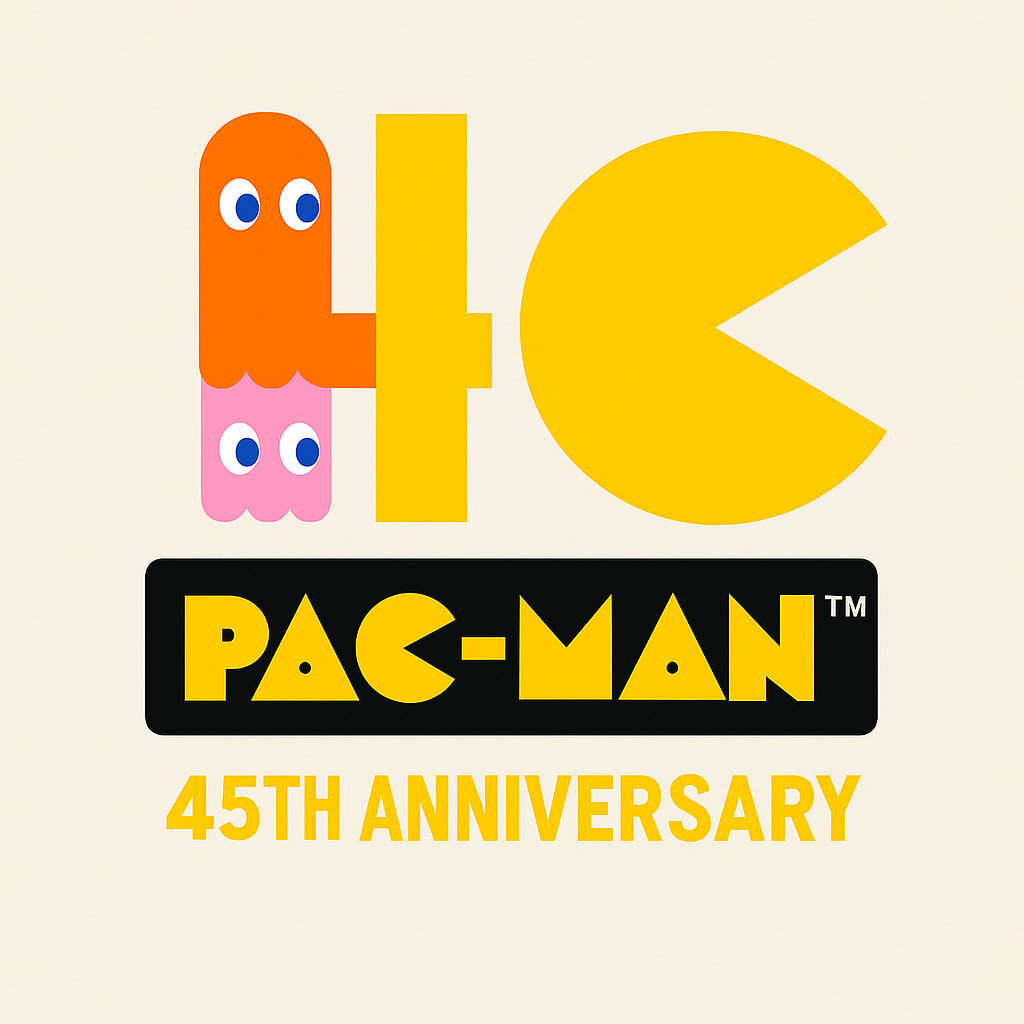
Back in May 1980, a hungry yellow dot started chasing pellets on a black screen. No backstory. No upgrades. Just a maze, four ghosts, and a simple mission: eat, avoid, repeat.
Forty-five years later, Pac-Man is still running.
And, whether we realized it or not, we kind of are too.
In a world of email loops, tab overload, Zoom fatigue, burnout cycles, and shifting algorithms, the most accurate metaphor for modern work life might still be a 2D arcade classic with 8-bit sound and no pause button.
________________________________________
Welcome to the Maze
Every day starts at the same screen.
We move along familiar paths — inbox, calendar, “quick” Slack reply, another file upload, another call.
Nothing changes. And yet, everything feels slightly more intense each time.
The maze doesn’t move. But the ghosts do.
This is the reality of work in 2025: predictable structures, unpredictable pressures.
And like Pac-Man, we keep navigating, hoping for timing more than tactics.
________________________________________
The Ghosts Got Smarter
Back then they were Blinky, Pinky, Inky, and Clyde.
Now? They're called notifications, deadlines, context switching, Zoom fatigue.
They still chase you, corner you, and make you loop until you slip up.
You can’t delete them. But you can learn their patterns.
You can plan your turns in advance.
You can pause — not in the game, but in your approach.
________________________________________
Cherries Still Drop (But Only If You're Looking)
There’s a weird joy in catching a bonus you didn’t expect.
In Pac-Man, it’s a random fruit that boosts your score.
In real life, it’s that unplanned win: a day without interruption, a project that clicks, a client who recommends you without being asked.
Those moments are rare. They disappear fast.
But if you learn to notice them, they change how you play.
________________________________________
The UI Was Always a UX Map
Pac-Man was more than a game. It was an interface lesson.
Minimal, rhythmic, efficient.
It anticipated the grid logic of today’s content layouts, dashboard designs, and interaction flows.
Decades later, that same design grammar echoes in the way we build digital ecosystems—quietly, elegantly—especially in places where craft meets code.
Some of the most thoughtful frameworks I’ve seen? Conceived under the Mediterranean sun, with a flair for structure that feels more like architecture than software.
There’s a name for it: digital artisanship—a way of designing systems that balance logic, beauty, and intent, with the care of a handmade object.
________________________________________
Don’t Just Move. Read the Tempo.
You can rush through the maze. But you’ll lose.
The real winners play by rhythm. They pause, wait, change direction at the last second.
They don’t chase every point.
They know when to let one go to save a life.
Modern work asks the same.
Not more hustle. Just smarter pacing.
________________________________________
The Real Game Never Ended
Pac-Man never had a final level. Neither does life.
There are no end credits, no boss fights, no big payoffs.
Just loops.
But inside those loops, we make decisions.
Tiny ones. Strategic ones. Sometimes invisible ones.
And with enough of those, we learn how to move without getting stuck.
Forty-five years later, Pac-Man isn’t retro.
It’s a survival manual.
About the Creator
Mary Loprete
Marketing nerd, board game lover, yoga & nature fan. I write about digital trends, strategy & animals.
12 Years in UK: From Leeds [UK] to Tuscany—now working at InYourLife, Florence. Coffee’s always brewing. - Follow me on LinkedIn.
Keep reading
More stories from Mary Loprete and writers in Geeks and other communities.
The Podcast Renaissance: When Board Games Hit the Mic
Once upon a time, all you needed was a wooden table, a few dice, some character sheets—and your imagination. Today, it’s headsets, HD cameras, millions of streams, and global communities tuning in to every session like it’s the next Netflix drop.
By Mary Loprete9 months ago in Geeks
The Rachels - 2025
Much to my surprise, I have kept a list of the films I‘ve seen this year. I daresay it isn’t complete. There will be films that snuck in on a late night in front of the TV that I would’ve forgotten to note. Or others, that I went to watch at the cinema, but then had a red wine and promptly forgotten about. But it’s not a bad approximation of the films I’ve seen this year. In total, there are 53 films listed, so an average of one a week and one for good luck.
By Rachel Robbins20 days ago in Geeks
The Tragic Heart of Tristan and Isolde: Revisiting the 2006 Movie
Plot Summary Set during the Dark Ages, Tristan & Isolde follows the story of Tristan, a loyal knight, and Isolde, an Irish princess whose marriage is meant to unite divided kingdoms. When fate brings them together, they fall in love, challenging loyalty, honor, and duty. Torn between passion and obligation, they must navigate political intrigue, betrayal and rigid expectations of their society.
By TheScreenAnalyst6 days ago in Geeks


Comments
There are no comments for this story
Be the first to respond and start the conversation.