
One Man's Villain Is Another Man's Hero
The Movies Where the Villain Wins, and Why It Is Important to Sometimes Kill Your Heroes (SPOILERS!)

The world of film lives and breathes on a bare blueprint of stories based on archetypes and stereotypes, and built upon the bones of myth, legend, and history.
As such, to tell any decent story well, you need strong protagonists and stronger antagonists.
From the gods and goddesses of the ancient Greek fables—villains and antagonists on the most part with duplicitous reasoning and nefariously complex motivations—to the tragic heroes and villains of comic book lore, all stories revolve around six or seven formats as old as storytelling itself; from cave paintings to the earliest folk tales and fairy stories—and almost all involve a good guy and a bad guy in some way or another.
In film, villains usually fall under two categories: the ones who grandstand and are denied victory by the way of their own hubris, or the super-villains who enjoy victory through crafty master-plans usually designed toward bringing the hero to the point of collapse, resignation, and literal abandonment of their ideals, principles, and values, making them no better than the villain they face off against.
To this end, we now take a look at the villains who make the movie and— despite all the protagonists’ best efforts—see out the movies and films victorious at the heroes' expense.Beware: Past this point—SPOILERS.
'The Dark Knight' (2008)
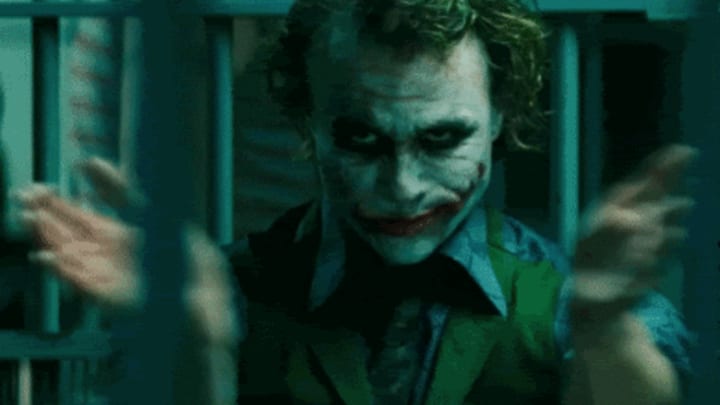
Director:Christopher NolanVillain: Joker (Heath Ledger.)
Was it really almost ten years ago that the most Shakespearian of comic book movies was released upon the silver screen, depicting what could well be THE defining portrayal of the classic four colour villain?
The Dark Knight is famous for a number of reasons as both a comic book movie and also a treatise in the downfall of proud, good men.
Jokers masterpiece of a plan is the testing of a mans patience, willpower and ethics until they break, or, they die trying to maintain their stance. He doesn’t care if he lives or dies. Indeed, on several occasions, he tests other characters' resolve, putting his own life, and therefore his entire plan, directly on the line as a pawn on a living, breathing chessboard.
(See the scene where he first meets the heads of the families and reveals his grenade-laden jacket, or, when he allows a coin flip to seal his fate in the hospital.)
At no point does Heath Ledger's Joker ever care if he lives or dies. He dances merrily through the story, giddy on chaos and allowing the chips to fall as they may, not interested in money, fame, or advancing his standing among the families—No, his one and only reason for being is the insemination of anarchy upon the cast of characters around him.
Yes, you could argue he hopes that Batman will kill. He hopes that the ship's crews will decide to execute one or the other, but you sense that he knows in this man he has met the wall that will not fall, and the other is a minor flaw in a plan where his end game is met otherwise without any hitch. The hero of the tale—Harvey Dent, the white knight of Gotham—well and truly broken and becoming the villain he had predicted all good men will become if they outlive their use as a hero.
The Joker may be caught, incarcerated, and locked away in Black Gate, but at the end, swinging as he is from the end of the rope, laughing away at the world he has unleashed, watching the Batman fall into the darkness he has allowed inside, the Joker is indeed victorious.
'Nightcrawler'

Director: Dan GilroyVillain:Louis Bloom (Jake Gyllenhaal)
Arguably Gyllenhaal’s greatest role—Lou Bloom is a shitty person trapped in a spiral of shitty actions and shitty jobs trying to carve a living in a world that doesn’t really give a shit about him.
He is a grifter, a thief, and a conniving pseudo con-man who takes advantage of situations to try and find a pot of gold in every situation and dead end he finds himself in. With a few minor characteristic shifts, he could be an amazing antihero—a Robin Hood character that is lovable and easy to root for with cloudy but noble intentions—instead, Gyllenhaal takes the road less traveled and revels in creating a character who is extremely unlikable, utterly dripping in disdain, and has no discernible traits.
Lou Bloom is a villain; make no mistake.
His shift from common grafter to ambulance chasing opportunistic sociopath is one that is truly compelling in its raw honesty that this is a man who could be anyone of us. His descent into true villainy is one that is laid out in three steps.
- Find a niche someone has made their own and is benefiting from.
- Steal the idea and twist it to your own means.
- Lose yourself to the process at the expense of common sense and regard for the law of man—without technically ever breaking any laws yourself.
I say TECHNICALLY because it wouldn’t take a genius lawyer to prosecute against his actions, as despicable as they are; nor would it take a hotshot lawyer to exonerate him. His crimes once he is thrust into the murky world of chasing ambulances, police, and accidents, after all, are misdemeanors at the very least—and arguably negligent at worst.
Right up until the house…
He watches his driver die, filming it as he does. He breaks into a house with multiple murders and rearranges the scene to sensationalize the footage.
But his worst crime is the way he manipulates the people around him to his own end and builds his empire on the actions of the network who buy his footage and deal with him. Soon, lines between the people steering the narrative and those who are manipulating the narrative blur so much that there are no good guys and bad guys, there are only grey people involved in grey acts of horrendous ugliness.
In the middle orchestrating everything is Lou.
Devoid of soul, conscious, and reason. To the end making a quick buck off the misery of others.
A villain reveling with an absolute lack of joy in his own success.
'Oldboy' (2003)

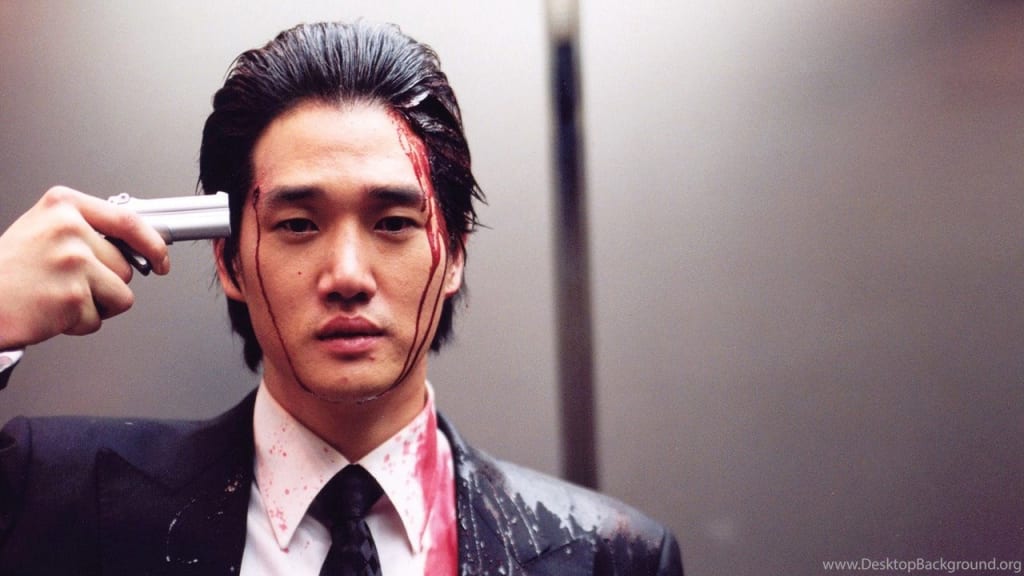
DIRECTOR:Chan-Wook ParkVILLAIN:Woo-Jin Lee - Ji-Tae Yu
The thing about Oldboy, both the original Korean masterpiece and Spike Lee’s well-intentioned but sadly flawed remake is this…
There is no good guy.
They are all villains.
Now, I know there are others who will fight me and argue that Min-Sik Choi’s Dae-Su is a hero of sorts, but he really isn’t. At the start of the film he is a flawed, broken lump of a man, drunk and arguably a failed husband and father. He is a man burdened by his past and simultaneously living off the back of his past glories as a popular kid at school. He is a failure as a man and regardless of his arc as a character post-kidnap, he is never a hero, rather a broadly painted Anti-hero who fulfills the classic redemption archetype well—but who falls someway short of being reborn in pearly white heroes garb.
No. He is as much a villain as the film's ultimate big bad.
However, where he is living off the fumes of past glory, the real villain of the piece is largely absent throughout the entire film until the end of the final third act, but his fingerprints are indelible from the start and his plan has a numbing, brutalist finality to it that means that we are passengers in a train hurtling headlong into a ending that will ruin all involved.
Woo-Jin Lee is a masterclass in villainy.
His plan is both heartbreaking poignant and simple, his reasoning is deadly and unwavering, his motivation is depressingly sad and understandable, as much as it is repulsive and alien.
He is a perfect foil for the reborn, newly motivated Dae-Su, who after 15 years of captivity, daily work out, and strict diet has become a clockwork machine of revenge and nothing else. Dae-Su has one motivation: to find the man who held him from his family for 15 years and to find his daughter. Drip-fed information about his family by constant TV reports beamed directly into his prison room, no context and no filter or substance of what is real or fantasy—he is convinced he knows the story of his daughter…instead… he is set upon a path, wandering wildly into a perfect trap from the man whose life he effected so long ago.To watch as one man's life is so devoutly ruined, unwound, and dissembled by a villain who is always watching, but never actively, physically tussling with the protagonist is a brave and unique move.To see his masterplan aim toward a truly harrowing conclusion is a dark, testing watch, but from a cinematic point of view, it's a beautiful unveiling with a brilliantly bleak finality.The film is a winding, serpentine two hour reveal. The villain is a shadowy playboy who appears briefly and leaves a bitter, violent conclusion, which leaves a horrendous taste that lingers for days after the closing credits.Our "protagonist" is left altered forever by the "antagonist," and the villain most definitely wins, even if it is after a fashion.His victory is sealed the minute the penny drops, and when it does, the breath will leave your body cold and viciously.Beware.
'The Usual Suspects' (1995)


About the Creator
Andi James Chamberlain
Leicester, UK based author of novel "ONE MAN AND HIS DOGMA" released in Sept 2015, and short story collection "10 SHORT OF 31" released in Sept 2016.
He lives in exile with an order of Anxious Tantric Clowns and makes epic shit happen.
Keep reading
More stories from Andi James Chamberlain and writers in Geeks and other communities.
The Hidden Gems of Netflix
It seems crazy that in its short few years since finding its place online in the wake of Blockbusters becoming a dinosaur and eventually closing and companies like Lovefilm losing ground in its attempt at revolutionizing the entertainment-at-your-fingertips industry, Netflix has become a household name – and more – a meme. However – it doesn’t take a genius or an archaeologist to dig very far to find some absolute gold on the site.
By Andi James Chamberlain8 years ago in Geeks
The Politics of Playing Dress-Up
Well, to start off I'd like to say a happy world book day to all who celebrate. I know I haven't really posted anything on my socials about it but I'm not a jubilant kind of person. I lay low most of the time. Let's start off with a popular anecdote from the vaults...
By Annie Kapur2 days ago in Geeks
Neve Campbell's Still A Scream Baby
Scream 7 Do you like scary movies? But the voice is the famous graveled voice of Ghost Face! Meaning, once again, the goofy faced killer is back for another round of slashing and slicing through teenagers and anyone that get's in his, or her, way? Yep, as the Scream series has proven, you never know if it's a lady or a not-so-gentleman behind the mask.
By Jason Ray Morton 3 days ago in Geeks
The BAFTA Awards
By now, in a stunning departure from recent years, most of the world is aware of what happened at the BAFTA film awards. Social Media Headlines will tell you the bare bones: that John Davidson, a Tourette's Syndrome advocate, shouted a racial slur at two Actors of Colour, Michael B Jordan and Delroy Lindo.
By Natasja Rose4 days ago in Psyche


Comments
There are no comments for this story
Be the first to respond and start the conversation.