
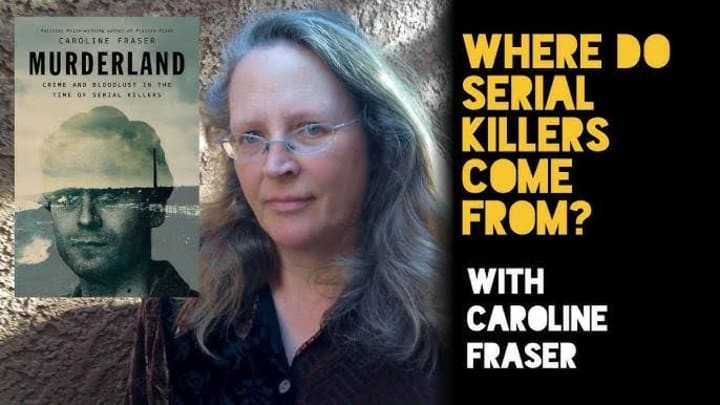
MURDERLAND: Crime and BloodLust in the Time of Serial Killers
Exploring the Link Between Industrial Pollution and Serial Killers in the Pacific Northwest

Overview
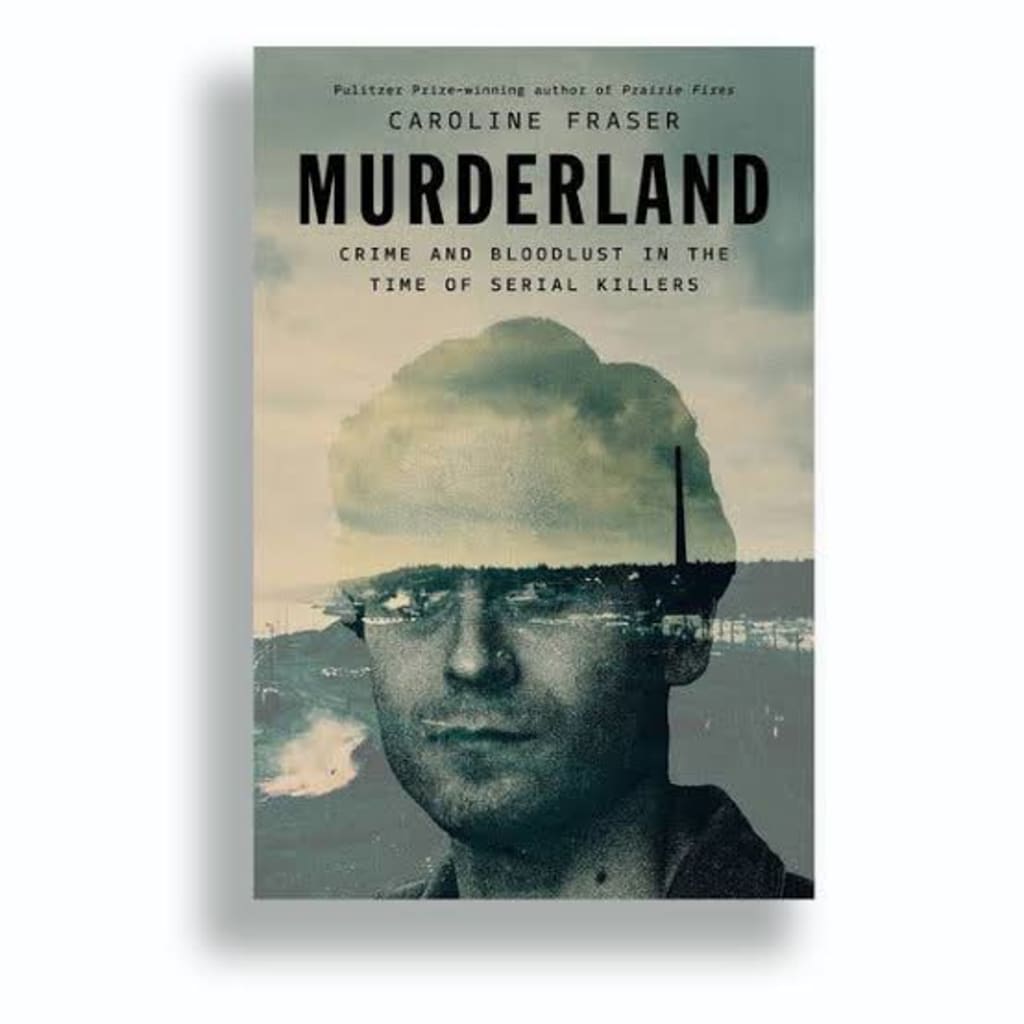
Murderland: Crime and Bloodlust in the Time of Serial Killers by Pulitzer Prize-winning author Caroline Fraser is a gripping nonfiction work that blends true crime, environmental history, and memoir to explore the chilling proliferation of serial killers in the Pacific Northwest during the 1970s and 1980s. Published on June 10, 2025, by Penguin Press, this 466-page book delves into why this region became a breeding ground for some of America’s most notorious murderers, including Ted Bundy, Gary Ridgway (the Green River Killer), and others. Fraser, who grew up in Seattle’s Mercer Island during this era, proposes a provocative thesis: the toxic industrial pollution, particularly from lead and arsenic smelters like the ASARCO plant in Tacoma, Washington, may have contributed to the psychological and behavioral disorders that fueled this epidemic of violence. The book transcends traditional true-crime narratives by weaving together personal reflection, scientific inquiry, and social critique to examine the interplay between environmental degradation and human depravity.
Summary
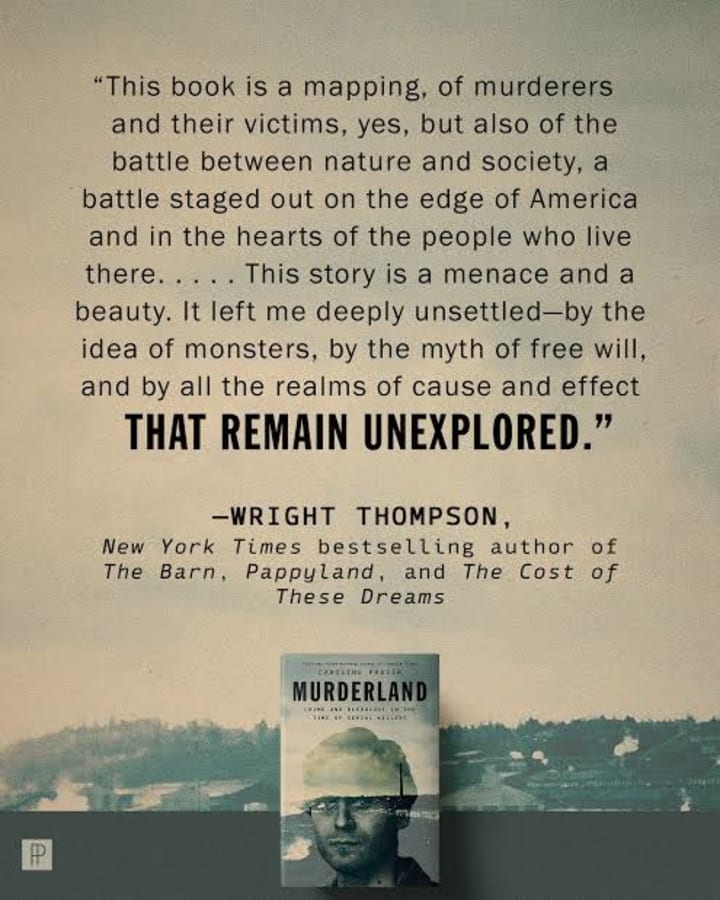
Fraser begins Murderland by setting the scene in the Pacific Northwest, a region known for its lush landscapes but also for its dark underbelly of serial violence during the mid-20th century. She focuses on the unusually high number of serial killers operating in this area, including Ted Bundy, who grew up near the ASARCO smelter in Tacoma, and others like the I-5 Killer, the Night Stalker, the Hillside Strangler, and even Charles Manson, who spent time in the region. Fraser questions why this region produced so many gruesome killers and why their crimes peaked and then declined. Her investigation leads her to the lead-crime hypothesis, which suggests that exposure to heavy metals, particularly lead, can cause neurological damage linked to aggression, impulsivity, and psychopathy.
The book is structured thematically, intertwining three major threads: the gruesome details of serial killings, the environmental history of industrial pollution, and Fraser’s personal memoir of growing up in a region marked by violence and under the influence of a strict Christian Scientist father she despised. She vividly describes the ASARCO smelter, which released massive amounts of lead and arsenic into the air, soil, and water, polluting over 1,000 square miles of Puget Sound. Fraser argues that these toxins, combined with social factors like poverty and trauma, may have “warped young minds,” contributing to the rise of serial killers. She supports this with studies linking lead exposure to behavioral issues and crime, though she acknowledges that correlation does not equal causation and calls for further research.
Fraser’s narrative is both haunting and analytical, detailing the horrific acts of killers while critiquing the industrial greed that allowed smelters to operate with minimal regulation. She highlights corporate negligence, such as Gulf Resources’ decision to prioritize profits over safety at the Bunker Hill smelter in Idaho, and the lasting environmental damage in places like Tacoma’s Dune Peninsula, built on a toxic slag heap. Her personal reflections add emotional depth, as she recounts her own fantasies of violence against her abusive father and the pervasive sense of dread in her community, heightened by the region’s deadly infrastructure, like the accident-prone I-90 floating bridge.
Key Points
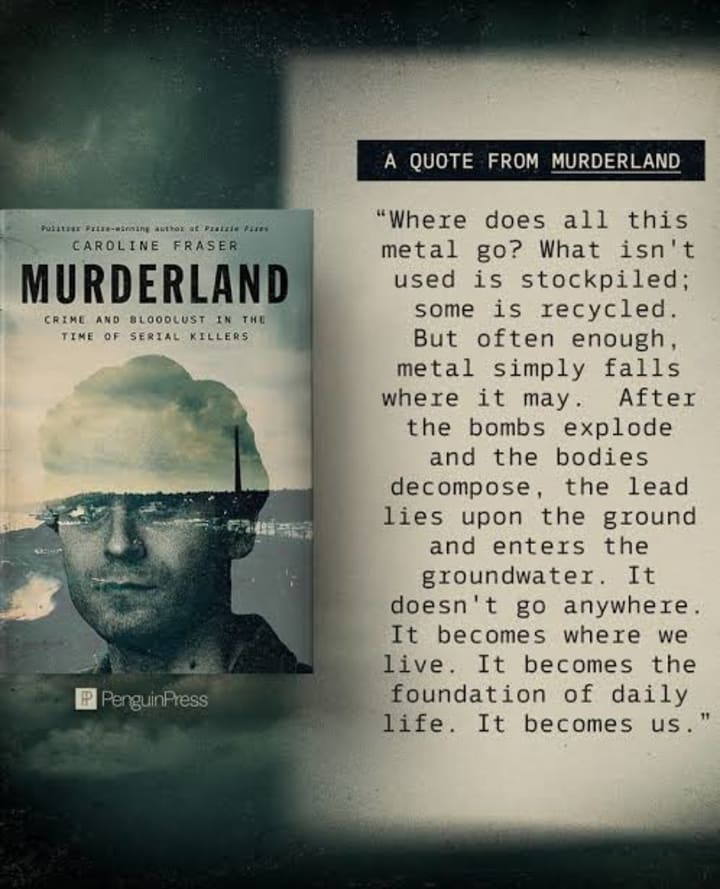
Lead-Crime Hypothesis: Fraser posits that exposure to lead and arsenic from industrial smelters may have contributed to neurological damage, increasing aggression and psychopathy in individuals who became serial killers. Studies cited in the book link childhood lead exposure to behavioral issues and higher crime rates.
Pacific Northwest as a Hotspot: The region, particularly Tacoma and Seattle, saw an “uncanny explosion” of serial killings in the 1970s and 1980s, with killers like Ted Bundy, Gary Ridgway, and others operating in areas heavily polluted by smelters.
Environmental Devastation: The ASARCO smelter in Tacoma, owned by the Guggenheim family, released hundreds of tons of lead and arsenic annually, contaminating air, water, and soil, with effects lingering in sites like Lake Coeur d’Alene and Dune Peninsula.
Memoir and Social Critique: Fraser’s personal story of growing up in a toxic environment, both literally and emotionally, underscores her broader critique of industrial greed and societal indifference to pollution’s human toll.
Cultural Context: The book examines how media sensationalism and law enforcement failures, such as Ted Bundy’s multiple escapes, exacerbated the terror of the era, while also critiquing the mythologizing of serial killers.
Reception and Impact
Critics have praised Murderland for its bold thesis and compelling prose, with outlets like The New York Times and Kirkus Reviews calling it a “propulsive nonfiction thriller” that transcends true-crime voyeurism. Reviewers note Fraser’s ability to blend meticulous research with vivid storytelling, though some, like The Atlantic, point out that the focus on figures like Bundy can overshadow the environmental argument and the victims’ stories. Others, such as Booklist, commend the book’s “damning” case for linking pollution to violence, though they note the need for more expert validation of the lead-crime hypothesis.
Murderland is a disturbing yet captivating read that challenges readers to consider the hidden costs of industrial progress. Fraser’s work is not just a chronicle of crime but a call to recognize how environmental harm can shape human behavior in profound and terrifying ways. It is a must-read for those interested in true crime, environmental history, and the complex interplay of nature and nurture in shaping human darkness.
About the Creator
Am@n Khan
I'm educational storyteller passionate about turning knowledge into engaging narratives.
I write about topics like science, history and life skills.
Contact
WhatsApp : +923336369634
History of The Three Stooges (Part I: The Beginnings and Columbia Pictures - 1920s-1936)
I have been itching to write about The Three Stooges on Vocal for close to two years, but I couldn't figure out how to do it. I wanted to do it by third Stooge, but that's a bit complicated. I know this much. I was about eight or nine years old when I first saw The Three Stooges. I remember one of my local channels had the Stooges on for hours, and I tried my damnedest to be up for those shorts. I remember that the Family Channel actually had an hour of the Stooges on from 11PM to midnight, and it was the entire library on during that time.
By Clyde E. Dawkins4 days ago in Geeks



Comments (1)
Great Book 📚