
Luc Besson Takes on Dracula… Again! Dracula 2026 Review
Is Dracula 2026 Good?

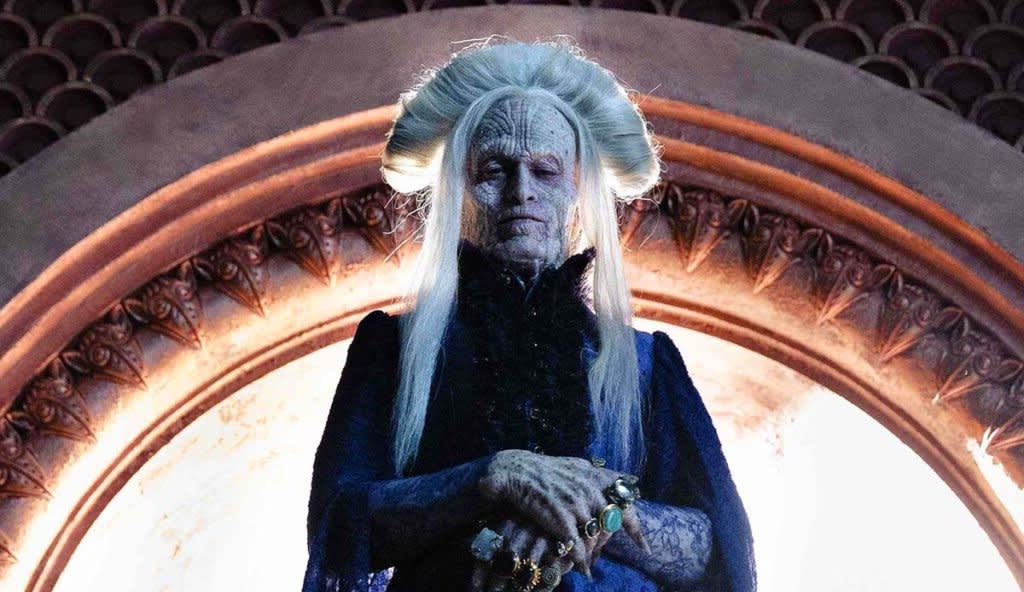
Luc Besson - the filmmaker behind Léon: The Professional, La Femme Nikita, and The Fifth Element - has turned his attention to a story that cinema simply refuses to let die: Dracula.
So the big question is…
Is this version immortal?
Or does it completely suck?
Yes, the vampire puns were inevitable. I regret nothing.
The Story: A Familiar Curse With a Romantic Twist
The setup is classic gothic tragedy. In the 15th century, a grieving prince loses his beloved wife and, in his despair, denounces God. That single act seals his fate. He’s cursed with eternal life and reborn as Dracula, doomed to wander through centuries of time with only one guiding hope: reuniting with the love he lost.
The film stars Caleb Landry Jones as the Count, alongside Christoph Waltz and Zoë Bleu. While it does dip into the blood-soaked traditions of the vampire genre, this isn’t a horror-first experience. Instead, it aims for a stylized, melancholic romance wrapped in gothic aesthetics.
Romance First, Horror Second (Way Second)
Fast forward several hundred years. Dracula is still searching, still pining, still tragically undead. Then comes Mina, a young woman who looks exactly like his long-dead wife. Cue the faint flicker of hope.
If you’re going into this movie expecting sharp scares, pulse-pounding tension, or even a healthy dose of vampire thrills, do yourself a favor and watch literally any other vampire movie.
This film is slow. Patient. Heavily dramatic. Romance is the priority, not horror.
Yes, there are violent moments. Yes, we see fanged creatures feeding on mortals. But they’re sparse, and often the camera politely turns away just as things get intense. It’s less bloodbath, more brooding sigh.
Runtime and Pacing: Two Hours of Eternal Suffering
At two hours and nine minutes, this movie feels less like an epic and more like a punishment.
The story jumps around awkwardly, creating scenes that feel disconnected and poorly contextualized. Instead of building a cohesive narrative, it lurches from moment to moment, often without emotional payoff.
Even worse, the tone is wildly inconsistent.
Dialogue That Doesn’t Know What Movie It’s In
Much of the dialogue left me wondering:
Is this supposed to be sarcastic comedy? Dry wit? Gothic seriousness?
Because whatever it’s aiming for, it misses.
The humor feels misplaced and undercuts the somber tone the film is clearly trying to establish. And when it’s not tonally confused, the writing itself feels shockingly underdeveloped, like it was lifted straight from a very early draft.
When Foreshadowing Becomes a Sledgehammer
Early in the film, Dracula explicitly tells a priest that nothing matters more than his wife’s safety. God must protect her at all costs.
Sure, you could call that foreshadowing.
But foreshadowing implies subtlety. This is more like dropping a piano on the audience’s head and yelling, “THIS WILL BE IMPORTANT LATER.”
And it doesn’t improve from there.
Christoph Waltz Deserved Better
Christoph Waltz plays a priest who has been tracking vampire lore for years. On paper, that sounds compelling.
In execution? Not so much.
His line delivery comes off smug and flippant, but not in a charming or quirky way. It feels like he’s performing in a completely different movie, one that just happens to share the same subject matter.
When his scenes appear, it’s like someone cut footage from another Dracula film and awkwardly spliced it into this one.
Exposition: The Movie
This film could have easily been titled “Exposition: The Movie.”
So many scenes consist of characters talking about actions instead of actually doing anything. And no, I’m not asking for over-the-top action sequences or wire-fu acrobatics.
But cinema is a visual medium.
If you can show something instead of explaining it in flat dialogue, you probably should. This movie repeatedly ignores that rule.
The Visuals: Some Style, Some Whiplash
From a technical standpoint, there are moments of creativity. Transitions between time periods are handled with visual flair, and some effects genuinely look good.
There’s even a beautifully choreographed dance sequence that symbolizes the passage of time and Dracula’s endless search. This is one of the rare moments where the visuals actually enhance the story instead of dragging it down.
Some of the practical effects - wounds, impacts, physical movement - are surprisingly effective. There are also CGI creatures roaming Dracula’s castle, and while they look decent, they raise a massive issue.
CGI Creatures With Zero Explanation
Here’s my biggest problem:
There is absolutely no explanation for these creatures.
They just… exist.
We’re suddenly inside Dracula’s castle, and there are strange beings wandering around like it’s totally normal. No backstory. No lore. No context.
It’s the cinematic equivalent of a Smurf casually strolling across the set, waving at Dracula, and nobody acknowledging it.
And just when you think it can’t get more confusing, the final act introduces these creatures again, only now they look different. Why? How? What changed?
The film never bothers to explain, and it absolutely matters.
Circular Logic and a Broken Romance
This movie frames itself as a tragic love story: one man enduring centuries of loneliness to reunite with his lost love. That’s a solid foundation.
But when the story reaches what should be its emotional climax, it collapses under its own logic.
Without spoiling specifics, the narrative uses a circular justification for key decisions. Characters take actions that are presented as noble or compassionate, yet those actions cause unnecessary suffering and loss.
What makes it worse is that the same outcome could have occurred without those actions - quickly, cleanly, and without conflict.
It’s storytelling that actively sabotages itself.
Final Verdict: A Stylish Miss
I get what Luc Besson was aiming for.
This is a modernized, stylized take on Dracula. The Count is portrayed as melancholic and emotionally exhausted rather than monstrous. That part is new, and occasionally interesting.
Caleb Landry Jones isn’t bad. He captures the depression and weariness well. But the overly simplistic dialogue, slapped-together structure, unexplained story elements, and glacial pacing make this a chore to sit through.
There’s very little here that justifies the runtime.
There’s sex (but no nudity), minimal profanity, and some violence. And that’s about it.
Rating: 1.5 Out of 5
Honestly?
I’d rather rewatch every Twilight movie back to back than experience this again.
And that’s saying something.
About the Creator
Bella Anderson
I love talking about what I do every day, about earning money online, etc. Follow me if you want to learn how to make easy money.
Keep reading
More stories from Bella Anderson and writers in Geeks and other communities.
Fallout Season 2 Finale Review: Every Major Season 3 Teaser Explained
Fallout Season 2 has officially wrapped up, and wow — the finale didn’t hold back. We got massive cliffhangers across nearly every storyline, long-running mysteries from Season 1 that still haven’t been fully paid off, and a whole lot of setup for what looks like a huge Season 3.
By Bella Anderson3 days ago in Geeks
Not Just For Clean Up: A History Of The MCU's Department of Damage Control
Initially an organisation that seemed to exist to help the heroes of the Marvel Cinematic Universe, from Phase Four onwards, the Department of Damage Control has shifted into a more antagonistic role. Most recently seen in the Wonder Man series, the current incarnation of Damage Control seems to target superpowered individuals, regardless of whether that person poses an active or intentional threat.
By Kristy Anderson7 days ago in Geeks
Self Help: Grifters' Gospel
On Self-Help, Snake Oil, and the Illusion of Change Psychology professionals and students can be imagined on two opposite sides of a line called self-help books: likely a larger group opposes pop-science and step-by-step manuals filled with talk of success, journaling, and not giving a f**k; others love them, but they aren’t many.
By Avocado Nunzella BSc (Psych) -- M.A.P 6 days ago in BookClub



Comments
There are no comments for this story
Be the first to respond and start the conversation.