
John Amos, actor in groundbreaking TV roles, dies at 84
He played the stoic patriarch in “Good Times” and the adult Kunta Kinte in the miniseries “Roots.” He was also a fast-food entrepreneur in “Coming to America.”
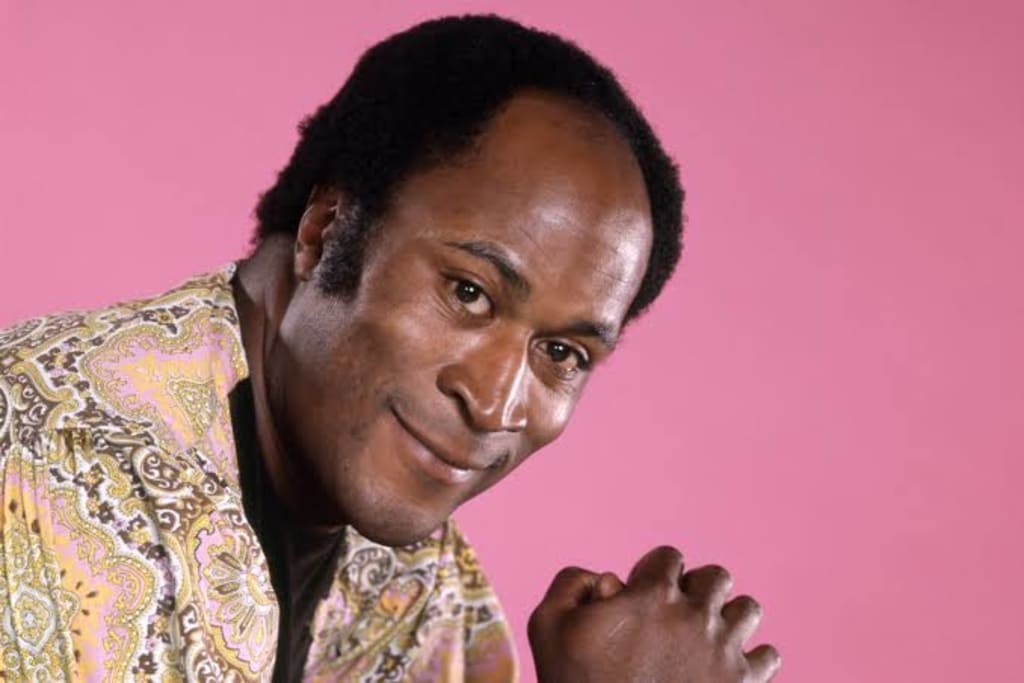
John Amos, a running back turned actor who appeared in scores of TV shows — including groundbreaking 1970s programs such as the sitcom “Good Times” and the epic miniseries “Roots” — and risked his career to protest demeaning portrayals of Black characters, died Aug. 21 in Los Angeles. He was 84.
The talent agency Buchwald, which represented him, announced the death but did not provide a specific cause. It was unclear why the family waited weeks after his death to make it public.
After being cut by 13 professional and minor-league football teams in his 20s, often because of injuries, Mr. Amos supported himself variously as a ditch-digger, lumberjack, restaurant manager, social worker and advertising copywriter. With a self-confessed short fuse and a flair for showmanship, he found an outlet for his frustration and creativity writing jokes that he performed in nightclubs.
He enjoyed the applause and, he later said, found that being onstage “allowed me to be other people without getting in trouble.”
Settling in Los Angeles, he tried to break into TV by pitching ideas for comic sketches. “I’d go in when I first started in the business, trying to get a job as a writer, and they’d see a Black guy with 19-inch neck,” he recalled to Newsday. The reaction he got, he said, was, “What the hell could you know about comedy?”
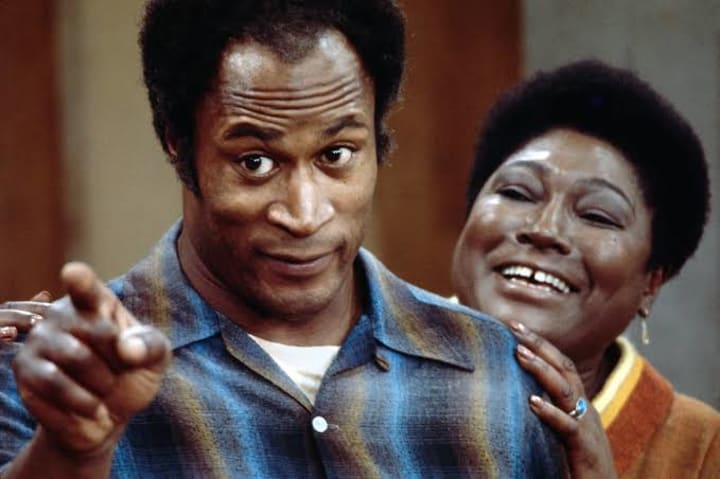
His breakthrough came in 1969, when he became one of the first African Americans to write on staff for a network program (CBS’s “The Leslie Uggams Show”). Having impressed executives with his comic timing, he soon began performing on camera.
In the popular Eddie Murphy movie comedy “Coming to America” (1988), Mr. Amos was the self-important fast-food restaurant owner who insists that his McDowell’s — home of the “Big Mick” sandwich and the “Golden Arcs” — is not a copy of McDonald’s because “my buns have no seeds.”
He played a brutal prison guard in the Sylvester Stallone film “Lock Up” (1989) and a renegade Special Forces officer in the Bruce Willis action hit “Die Hard 2” (1990). But by the end of his career, he was best known for his steady run of TV roles.
His career was at times hindered by his admittedly “hardheaded” disposition, which he traced to his upbringing in New Jersey by a single mother who taught him to stand up for himself as he helped integrate classrooms in the 1940s and 1950s. During his years in Hollywood, he campaigned for acting opportunities for Black actors beyond the pimps and drug pushers they were often consigned to play.
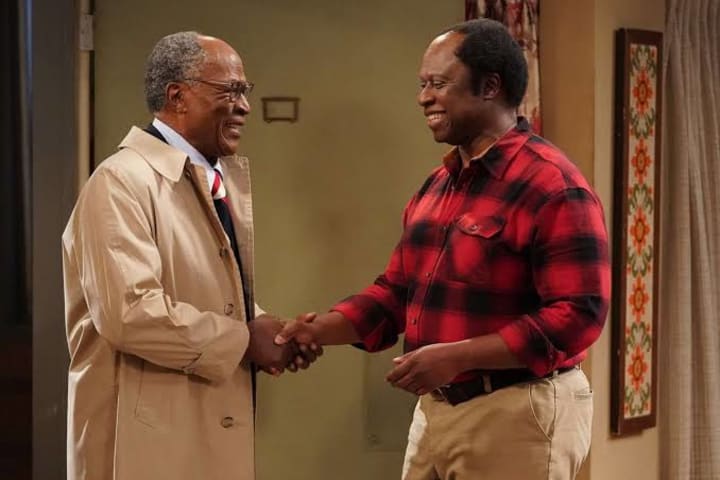
In 1970, he landed a recurring guest spot as Gordy the weatherman on “The Mary Tyler Moore Show,” the acclaimed CBS sitcom set in a Minneapolis TV station. He said he was grateful that the writers did not typecast him as a sportscaster but instead presented him as a dapper, self-assured meteorologist who, as Mr. Amos put it, “could think beyond X’s and O’s.”
His career received another boost in 1973 when producer Norman Lear cast Mr. Amos as the underemployed husband of Maude Findlay’s maid — played by Esther Rolle — on the sitcom “Maude,” which had Bea Arthur in the title role.
Conflict over ‘Good Times’
The next year, he and Rolle starred in a spinoff, “Good Times,” also developed by Lear, which aired on CBS until 1979. The show was considered a breakthrough for its portrayal of a loving two-parent Black family — headed by James and Florida Evans — trying to make ends meet while living in a high-rise housing project in Chicago.
“I was carrying the weight of being the first Black father of a complete family,” Mr. Amos told the website Vulture in 2015, “and I carried that responsibility seriously. Maybe too much so. … I knew that millions of Black people were watching. I knew that my own father was watching. My own children were watching. And I was not going to portray something that was less than redeeming.”

Amid traditional sitcom high jinks, the show addressed gang violence and teen pregnancy, among other social issues. But Mr. Amos routinely clashed with the all-White writing staff, and with Lear, over what he considered the dilution of serious topical matters to focus on the antics of his fast-talking screen son J.J., played by the wiry comedian Jimmie Walker.
Mr. Amos found the emphasis on Walker’s silly strut and wardrobe, “dy-no-mite” catch phrase and shady, get-rich-quick schemes offensive. He contended that more attention should have been paid to his character’s two other children, who aspired to be a doctor and a lawyer. He and Rolle, reportedly aghast at Walker’s breakout stardom and the example he set for Black youths, had little on-set interaction with him.
Mr. Amos, who had angrily protested the show’s direction, was fired by Lear over the phone in 1976, and the James Evans character was killed off in a car accident. The writers, Mr. Amos recalled decades later, “got tired of having their lives threatened over jokes.”
Soon after departing “Good Times,” Mr. Amos was cast as the adult Kunta Kinte on “Roots,” the landmark 1977 ABC miniseries. The TV show, based on Alex Haley’s best-selling book of the same name, traces the impact of slavery on a Black family across generations.
The production ran eight nights and reached 130 million viewers, making it one of the highest-rated programs in television history. “Roots” provided a rare high-profile dramatic outlet for Black actors, including LeVar Burton (as the younger Kunta Kinte), Louis Gossett Jr., Cicely Tyson and Ben Vereen. It swept the Emmy Awards, and Mr. Amos received a nomination for his role.
But the performance did not translate into bigger or better roles for him. He turned down a part in “Roots: The Next Generations” (1979), saying that contemporizing the story reduced the characters to soap-opera figures. He declined other roles he found stereotyped or degrading. He preferred to wait, he told the San Francisco Examiner, “for the chance to do things I could be proud of.”
Starting in 1984, he spent a year playing the hard-driving police captain on the NBC drama “Hunter” opposite Fred Dryer, but he again ran into conflicts with producers. Mr. Amos argued that his character — a Black role model — should be calmly in control, not the angry man the writers had envisioned.
read this entire article and write a unique article over 2000 words using same information, make sure to use simple language, engaging tone, don't use hard words
About the Creator
The Rachels - 2025
Much to my surprise, I have kept a list of the films I‘ve seen this year. I daresay it isn’t complete. There will be films that snuck in on a late night in front of the TV that I would’ve forgotten to note. Or others, that I went to watch at the cinema, but then had a red wine and promptly forgotten about. But it’s not a bad approximation of the films I’ve seen this year. In total, there are 53 films listed, so an average of one a week and one for good luck.
By Rachel Robbins18 days ago in Geeks


Comments
There are no comments for this story
Be the first to respond and start the conversation.