
Jane Goodall: A Life Dedicated to Understanding and Protecting Chimpanzees
Jane Goodall: A Life Dedicated


Jane Goodall: A Life Dedicated to Understanding and Protecting Chimpanzees
--- Who Is Jane Goodall?
Jane Goodall is one of the most influential primatologists and conservationists in the world. Born in London on April 3, 1934, Goodall grew up fascinated by animals and nature. Unlike many scientists who began their studies in universities, her path was unconventional. From a young age, she displayed curiosity and patience, two qualities that later became crucial in her groundbreaking research.
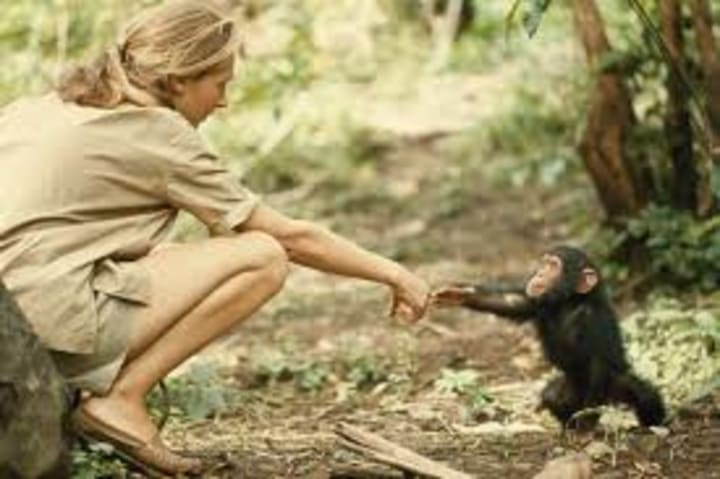
Goodall first rose to international prominence for her pioneering work with wild chimpanzees in Tanzania. Her observations transformed our understanding of primates, reshaped the way science perceived the connection between humans and animals, and inspired generations of environmental activists. Today, she is regarded not only as a scientist but also as a global advocate for conservation and humanitarian causes.
--
How Did Jane Goodall Begin Her Journey Into Primatology?
Jane Goodall’s journey began not in a laboratory, but with a childhood dream. She loved reading stories like *Tarzan of the Apes* and imagined herself living in the African forests. Without formal training in primatology or zoology, she moved to Kenya in the late 1950s, where she met the famous archaeologist and paleontologist Louis Leakey.

Leakey recognized her potential and passion, and in 1960, he sent Goodall to Tanzania (then Tanganyika) to study chimpanzees in the Gombe Stream National Park. At the time, the idea of sending a young woman without a university degree to conduct such research was revolutionary. Yet Goodall’s patience, determination, and empathetic approach to animals soon proved Leakey right.
--What Were Jane Goodall’s Major Discoveries About Chimpanzees?
Jane Goodall’s discoveries completely changed the scientific view of chimpanzees and their relationship to humans. Before her research, chimpanzees were thought to be simple creatures with limited intelligence. Goodall proved otherwise.
1.Tool Use:** She observed chimpanzees stripping twigs of their leaves to use them for fishing termites out of mounds. This showed that chimpanzees could make and use tools, a trait previously believed to be unique to humans.

2. Complex Social Structures:** Goodall documented that chimpanzees live in communities with intricate hierarchies, alliances, and friendships. She also noted acts of aggression and even warfare between groups, demonstrating that chimpanzees’ behavior was far more complex than assumed.
3. *Emotional Depth:** Her observations revealed that chimpanzees experience emotions such as grief, joy, and affection. Mothers showed deep bonds with their infants, and individuals mourned when companions died.
These findings blurred the line between humans and animals, forcing scientists to reconsider definitions of intelligence, culture, and society.
---
How Did Jane Goodall Change the Way Science Is Done?
Jane Goodall’s methods differed from the traditional scientific practices of her time. Instead of numbering the chimpanzees as anonymous study subjects, she gave them names such as David Greybeard, Flo, and Flint. This practice was criticized early on as “unscientific,” but it allowed her to notice personalities, emotions, and relationships that would otherwise have been overlooked.
Her empathetic approach bridged the gap between science and compassion. She demonstrated that emotional connection does not compromise objectivity but can enrich understanding. Today, many field researchers adopt similar methods, acknowledging individuality and emotional depth in the animals they study.
---
What Role Did Jane Goodall Play in Conservation?
By the 1980s, Jane Goodall shifted from research to conservation. As deforestation, poaching, and habitat destruction began threatening chimpanzees, she realized her work in Gombe was not enough. She founded the **Jane Goodall Institute in 1977**, dedicated to wildlife research, education, and conservation.
In 1991, she launched **Roots & Shoots**, a global youth program that empowers young people to take action for animals, the environment, and human communities. The program now exists in over 100 countries and has inspired countless young leaders to work toward a sustainable future.
Goodall also travels extensively, giving lectures and raising awareness about environmental issues such as climate change, deforestation, and unsustainable consumer habits. Her voice is one of hope, urging people to recognize their power to make a difference.
---
How Has Jane Goodall Inspired the World?
Jane Goodall’s story is more than just about science—it is about perseverance, empathy, and hope. She broke barriers as a woman in science at a time when the field was dominated by men. Her discoveries changed how humans see themselves in relation to nature, reminding us that we are not separate from the animal kingdom but part of it.
Goodall has received numerous awards, including being named a **Dame Commander of the Order of the British Empire** and a **United Nations Messenger of Peace**. Her books, such as *In the Shadow of Man* and *Reason for Hope*, continue to inspire new generations.
Her philosophy is simple yet profound: every individual matters, every individual has a role to play, and every individual makes a difference.

---
What Is Jane Goodall’s Legacy Today?
Today, Jane Goodall is celebrated not only as a primatologist but also as a moral leader for conservation and humanitarian causes. Her legacy lives in:
*Scientific Contributions:** Redefining our understanding of chimpanzees and their connection to humans.
* **Conservation Efforts:** Protecting wildlife and habitats worldwide through the Jane Goodall Institute.
* Youth Empowerment:** Inspiring millions of young people to act through Roots & Shoots.
* **Global Awareness:** Advocating for a sustainable relationship between humans and the natural world.
Jane Goodall’s work continues to remind us of the urgent need to protect our planet. More importantly, it teaches us to approach nature with empathy, respect, and humility.
---
Conclusion
Jane Goodall’s life proves that passion and determination can change the world. From a young girl dreaming of Africa to a world-renowned scientist and activist, she has shown that the bond between humans and animals is deeper than we once imagined. Her discoveries redefined science, her activism reshaped conservation, and her message continues to inspire humanity to live in harmony with nature.
In the end, Jane Goodall is not just a scientist—she is a voice for the voiceless, a bridge between species, and a symbol of hope for a better world
About the Creator
America today
Breaking news, political insights, real-time analysis, U.S. politics, global politics, elections, government policies, international relations, diplomacy, political debates, trending political stories, expert commentary, factual reporting,.
Keep reading
More stories from America today and writers in Geeks and other communities.
Bad Bunny: The Global Icon of Latin Music
Bad Bunny: The Global Icon of Latin Music In the world of contemporary music, few artists have reshaped the global stage as profoundly as **Bad Bunny**. Born Benito Antonio Martínez Ocasio in Puerto Rico on March 10, 1994, Bad Bunny has become more than just a reggaeton and Latin trap star—he is a cultural force, a voice of a generation, and a symbol of authenticity. His journey from uploading songs on SoundCloud to becoming one of the most streamed artists in the world highlights not only his talent but also the power of perseverance, innovation, and staying true to one’s identity.
By America today 5 months ago in Geeks
The Politics of Playing Dress-Up
Well, to start off I'd like to say a happy world book day to all who celebrate. I know I haven't really posted anything on my socials about it but I'm not a jubilant kind of person. I lay low most of the time. Let's start off with a popular anecdote from the vaults...
By Annie Kapur4 days ago in Geeks
30 Years of 'Pokemon': A Look Back At The Most Memorable/Iconic Pokemon Of The Kanto Region
2026 marks the 30th anniversary of the original Pokemon games, Pokemon Red, Pokemon Blue, and Pokemon Green (a Japanese exclusive) in Japan. An unexpected success arriving late in the lifespan of the original Game Boy, the first batch of Pokemon games, now referred to as Generation 1 or Gen 1, are RPGs taking place in the Kanto region, following a young boy embarking on the journey to become a Pokemon Trainer (later games, and Gen 1 remakes FireRed and LeafGreen, give the option of a female Player Character). This journey involves collecting eight Gym Badges to earn the right to battle Kanto's Elite Four, and being drawn into a battle against the evil Team Rocket.
By Kristy Andersona day ago in Geeks


Comments
There are no comments for this story
Be the first to respond and start the conversation.