
Jacob’s Room by Virginia Woolf
Why It's a Masterpiece (Week 99)

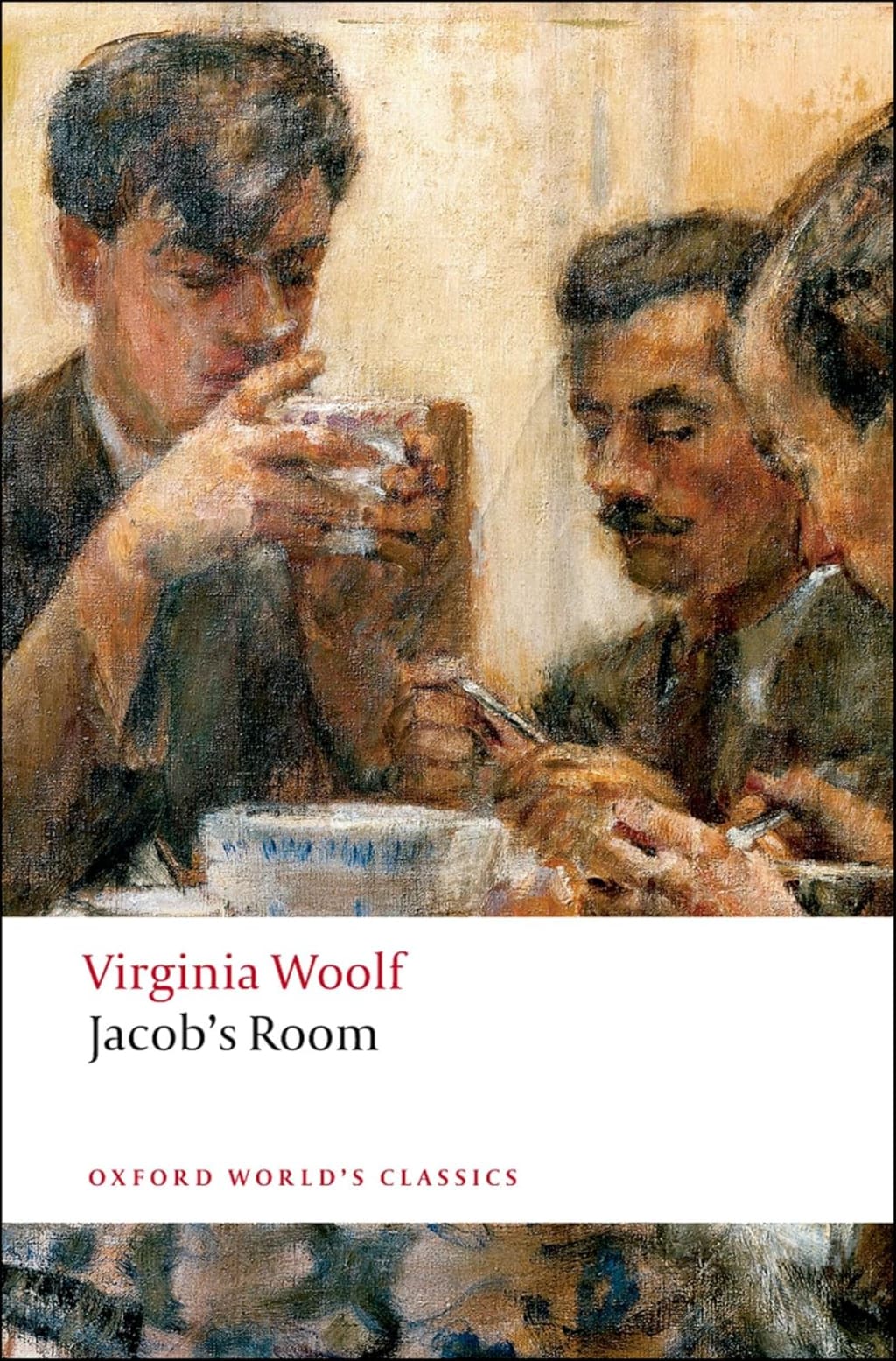
Published in 1922, Jacob’s Room was Virginia Woolf’s third novel and marked a significant departure from her earlier, more traditional narratives. The book is considered Woolf’s first major experimental work, foreshadowing the stream-of-consciousness style that would define Mrs Dalloway (1925) and To the Lighthouse (1927). Jacob’s Room was published by the Hogarth Press, the small publishing house founded by Woolf and her husband, Leonard Woolf.
Jacob's Room is perhaps my personal favourite Virginia Woolf book and was written and published in 1922. It would be the first book to define Woolf's signature style of the stream-of-consciousness ultra-realism writing that was slowly gaining traction. The other books written later would be the famous Mrs Dalloway in 1925 and To the Lighthouse in 1927. Published by Hogarth Press founded by her and her husband, it was heavily influenced by the realist culture around. These include not only everyday life that was changing, but also other writers that were changing with it: James Joyce, TS Eliot, and more. Woolf herself wanted to explore the fluidity of memory and how we perceive time - but on the other hand the book is also influenced by the memory of her brother, Thoby Stephen, who died in 1906 of Typhoid Fever. It devastated her and so, the book also deals with grief.
The book may have received mixed reviews, but it certainly created a mythical figure of Woolf herself, one that would define modernist literature 1922 and beyond.
Plot
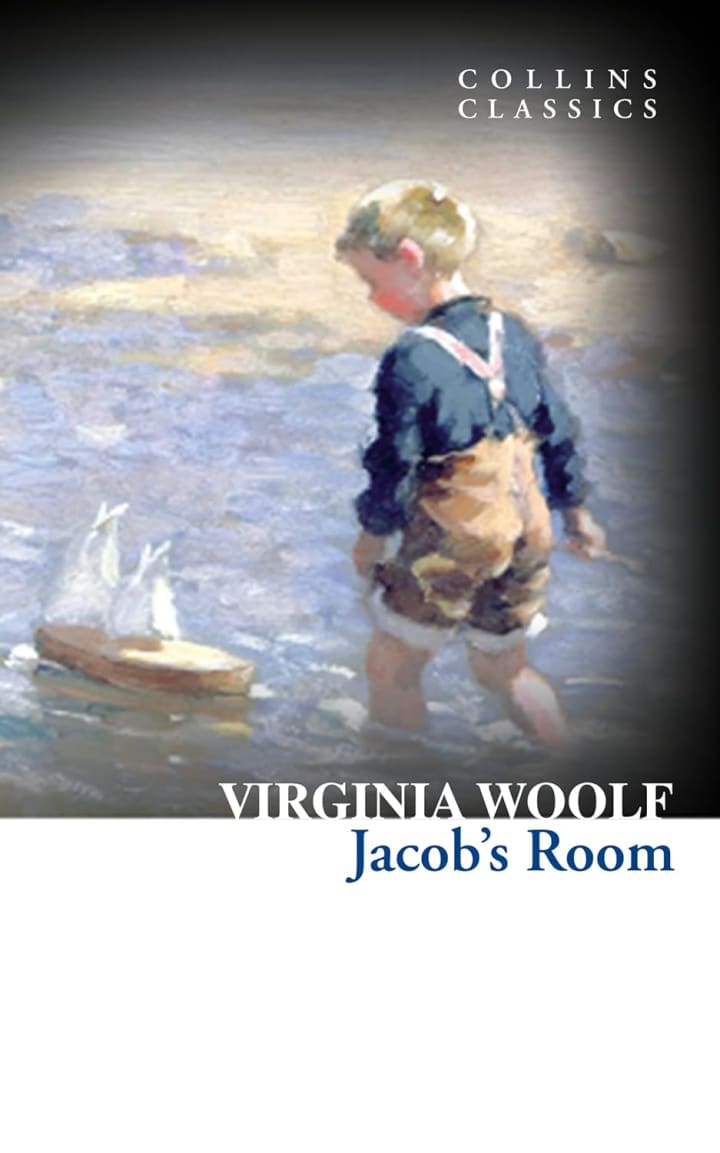
Unlike traditional novels, Jacob’s Room does not have a clear, structured plot. Instead, it presents a series of fragmented impressions that collectively form a portrait of Jacob Flanders, a young man who grows up, goes to Cambridge, experiences love and intellectual exploration, and eventually dies in World War I.
As a series of fragmented stories, we are at the receiving end of a portrait of Jacob Flanders. He grows up and goes to Cambridge to experience love and intellectual passion. Unfortunately, he dies in World War One - much to the grief of the reader.
The book opens with some scenes from a childhood lived in Cornwall where he is raised by his widowed mother, Betty. Jacob is playful and curious but his mother is concerned about his future. Jacob eventually develops a deep appreciation for literature which causes him to move away to study at Cambridge University - there, he interacts with masses of intellectuals and artists, yet he remains somewhat elusive himself as a character.
Jacob is presented as portraits by others, perceptions by people who knew him including: his mother, his friends, his lovers and even some passing strangers. It paints the fact that although he was greatly loved, he was ultimately unknowable and yet, still is able to make connection with the reader to some degree.
He goes to London, experiences romantic affairs with women named Clara and Florinda, he also manages to get himself to Greece to observe the nature of existence and civilisation. But the book itself ends rather abruptly in which Jacob's room is empty after his death (suggested to have occurred during the war). His absence ripples outwards and the message, I believe, is that no matter how much you think you know someone - you never really know them at all.
Into the Book
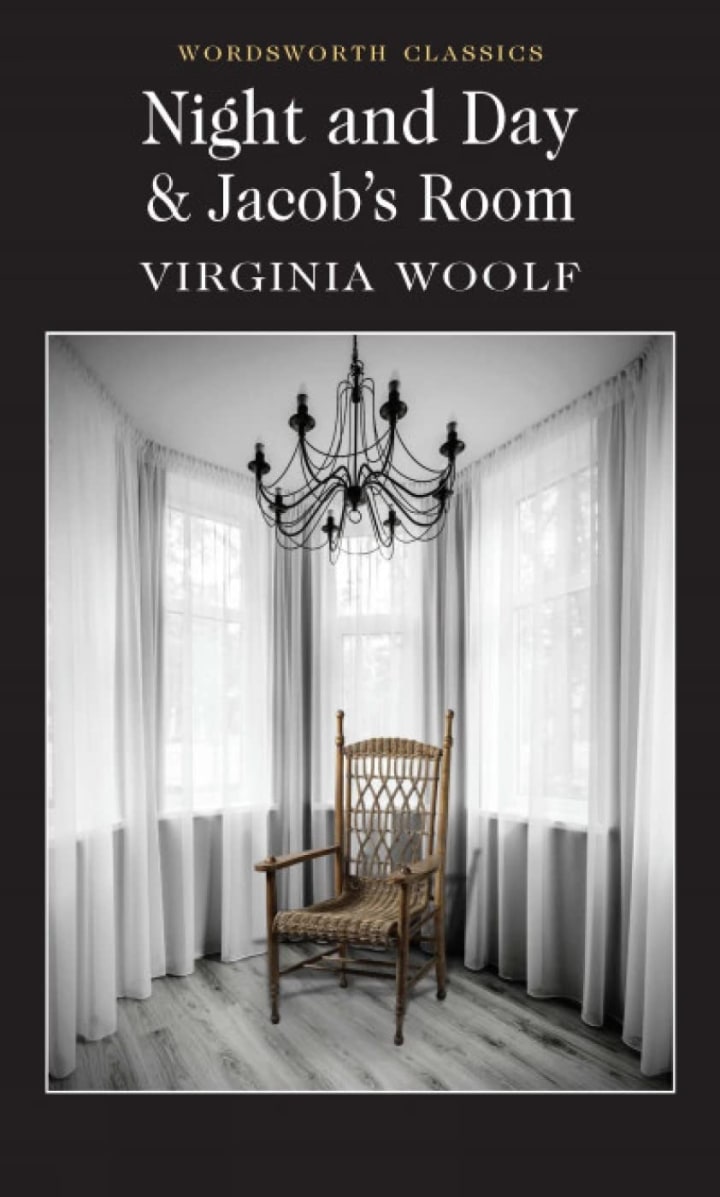
Virginia Woolf's Refusal to Present Jacob as 'Fully-Realised':
One of Woolf’s most striking ideas in Jacob’s Room is her refusal to present Jacob as a fully developed character with an interior monologue. Instead, she constructs him through the observations of others, highlighting the fragmented nature of identity. This technique shows the idea that no single perspective can fully capture the essence of an individual.
Throughout the novel, Jacob is described differently depending on who perceives him. His mother sees him as a promising young man, his university friends view him as intelligent but distant, and his lovers interpret him through their own desires. Yet, at no point does Woolf allow the reader direct access to Jacob’s inner thoughts, reinforcing the theme of the unknowability of the self.
Woolf captures this theme through moments of fleeting, impressionistic narration. It depicts the novel’s resistance to tradition, suggesting that people can never be fully understood, only glimpsed in fragments.
“It is no use trying to sum people up. One must follow hints, not exactly what is said, nor yet entirely what is done.”
- Jacob's Room by Virginia Woolf
The Passing of Time and How it Impacts Human Life:
Like much of Woolf’s work, Jacob’s Room is preoccupied with the passage of time and its effect on human lives. The novel’s structure: jumping from one scene to another, often skipping large portions of Jacob’s life, reflects the fluid and often disorienting nature of time. Moments of youth, love, and intellectual excitement are juxtaposed with inevitable loss and death.
Jacob’s journey to Greece becomes a meditation on the transience of existence. As he marvels at ancient ruins, Woolf contrasts the endurance of civilisation with the fleeting nature of individual lives. This suggests that time is constantly shifting, and that human lives are swept away in its current.
Jacob’s untimely death in World War I is barely described, reinforcing the randomness and inevitability of death. Instead of a dramatic war scene, Woolf presents only an empty room, with objects left behind as silent witnesses to a life that has ended. This absence is more powerful than any explicit depiction of Jacob’s fate, forcing the reader to confront the fragility of existence.
“The past only comes back when the present runs so smoothly that it is like the sliding surface of a deep river.”
- Jacob's Room by Virginia Woolf
Women and Society:
Though Jacob is the novel’s central figure, the women in his life: particularly Betty Flanders, Clara Durrant, and Florinda, play crucial roles in shaping our understanding of him. Woolf uses their perspectives to explore societal expectations of gender and relationships.
Jacob’s mother, Betty, represents the traditional role of women as caregivers, worrying about her son’s future and writing letters that go largely unanswered. Clara Durrant, the daughter of a respectable family, symbolises the conventional path of marriage and domesticity, yet Jacob remains emotionally distant from her. In contrast, Florinda, a free-spirited woman, embodies sexual and personal liberation, but her relationship with Jacob is ultimately fleeting.
Woolf critiques the limited roles available to women in this era. One of the novel’s most important moments comes when Clara Durrant reflects on her position in society. Her internal conflict between societal expectation and personal desire highlights the restrictions placed on women’s autonomy.
“Why should one wait? Why should one hesitate? Why not cut the knot? She wanted to see Jacob.”
- Jacob's Room by Virginia Woolf
Why It's a Masterpiece

Jacob’s Room is a masterpiece because it revolutionised the novel form, rejecting traditional narrative structures in favour of a fragmented, modernist approach. Woolf’s use of impressionistic prose and shifting perspectives captures the complexity of human existence in a way few novels had before.
We can sit here and discuss how Virginia Woolf changed the very essence of the novel through the rejection of traditional structures and narratives in favour of a modernist approach. But another thing she does is she does not glamorise or romanticise the image in any way. Jacob's death is barely touched upon, it is just abrupt, sad and distant. It feels like a second. We don't even know the details of his fate - we just have an empty room. A moment of grief. This experimental form showcases Woolf's brilliances: her attention to detail when it comes to loss and time are particularly important as they will arise in her later novels as well.
Conclusion
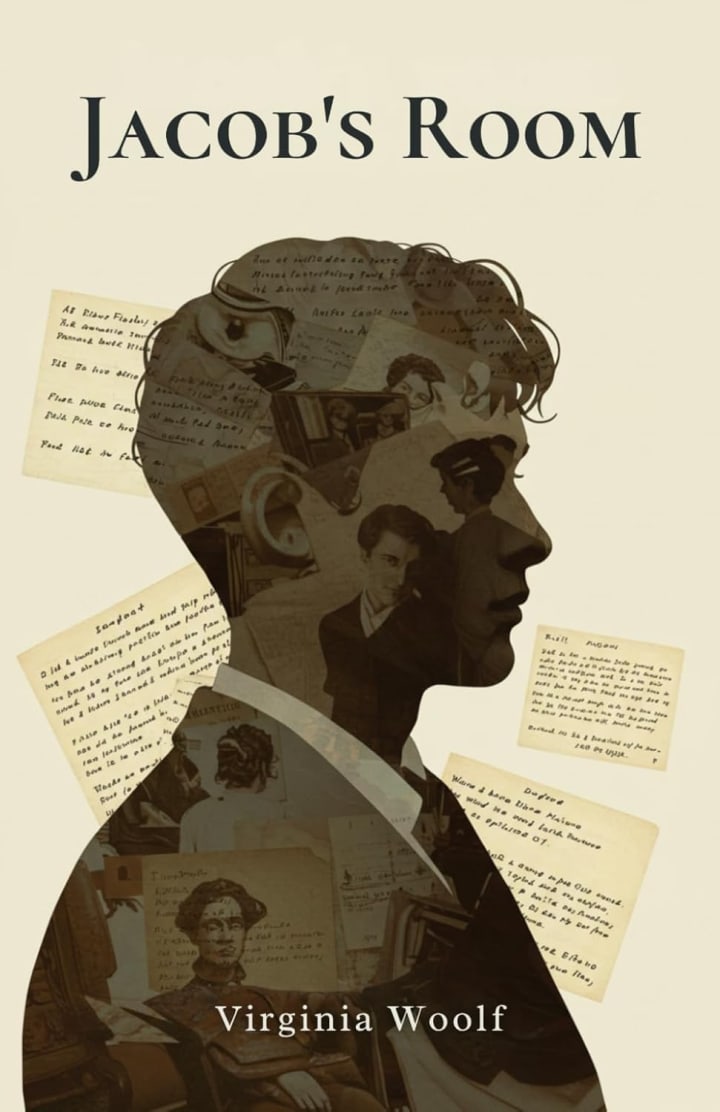
It is undoubtedly my favourite Virginia Woolf novel because of how raw and strange it is. There is nothing normal about it and it isn't like anything you've ever read. Some call the book odd, or difficult - but it is massively rewarding as you seek to understand this woman's incredible writing.
Next Week: "Why It's a Masterpiece" at 100 Weeks
About the Creator
Annie Kapur
I am:
🙋🏽♀️ Annie
📚 Avid Reader
📝 Reviewer and Commentator
🎓 Post-Grad Millennial (M.A)
***
I have:
📖 280K+ reads on Vocal
🫶🏼 Love for reading & research
🦋/X @AnnieWithBooks
***
🏡 UK
Keep reading
More stories from Annie Kapur and writers in Geeks and other communities.
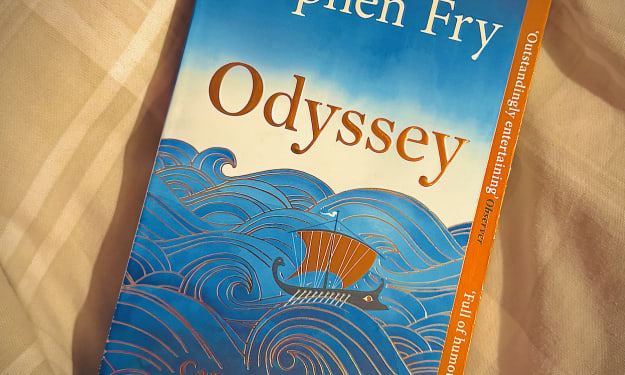
Book Review: "Odyssey" by Stephen Fry
If you know anything about me you will know that Stephen Fry is one of my favourite people on this earth. He's a proper polymath and has a great personality with it - he also reminds me of Oscar Wilde in some ways. I've read the other books in the series but this is the one I was truly waiting for because I love the story of the Odyssey. I've read different translations over the years and of course, we all remember it being included in the 2016 Nobel Prize Lecture by Bob Dylan - it is truly one of the most impactful stories of all time. No wonder Christopher Nolan is currently directing the anticipated movie.
By Annie Kapurabout 11 hours ago in Geeks
Silver Screen Magic with Mae West
American actress and singer Mae West became a popular film actress during the Great Depression. She started entertaining in vaudeville, then performed on Broadway, and finally went to Hollywood. She signed up with Paramount Pictures and made her debut in the 1932 film “Night After Night.” She also starred in musicals, comedies, and crime dramas. The American Film Institute named her one of the best classic Hollywood actresses.
By Rasma Raisters4 days ago in Geeks
Bobby Deol faced THIS irritation during Shah Rukh Khan’s son The Bads of Bollywood: ‘Aryan Khan is…’
Do you know Bobby Deol was irritated during The Bads of Bollywood? Find the reason inside. In the glitzy and glamorous world of Bollywood, we usually see star kids following in the footsteps of their parents and carrying forward their legacy. But there are a few rare gems who choose to carve their own identity and walk a path that is uniquely theirs. One such case is Shah Rukh Khan’s son, Aryan Khan. While he stepped into the world of showbiz, his path was different from his father’s. Instead of being in front of the camera, he wanted to create magic from behind it. Choosing direction and storytelling over stardom, Aryan decided to build his journey on his own terms. He made his directorial debut with The Bads of Bollywood, which created a huge buzz as soon as it came out. Viewers not only appreciated the show for its storyline, but even the cast and industry pioneers spoke about Aryan’s clarity, dedication, and promising approach to his craft.
By Dena Falken Esq6 days ago in Geeks



Comments
There are no comments for this story
Be the first to respond and start the conversation.