
Is the BBC Still Worth the Licence Fee?
Is the BBC Still Worth the Licence Fee? The Debate Over Quality, Cost, and the Future of Public Broadcasting

The BBC has been a cornerstone of British culture for over a century, funded by the TV licence fee—a system that has long sparked debate. But as the broadcaster faces criticism over the quality of its output, rising costs, and competition from streaming giants like Netflix, questions grow louder: Does the BBC still justify its £174.50 annual fee? .
This article explores the challenges the BBC faces, from budget cuts affecting flagship shows to the existential threat posed by its funding model. We’ll break down why the licence fee is controversial, how it impacts households, and what the future might hold for Britain’s most iconic broadcaster.
1. The Rising Cost of the Licence Fee
The BBC licence fee has climbed to £174.50 per year as of April 2025, up from £169.50 in 2024 . This increase, tied to inflation, adds pressure to households already grappling with soaring living costs. For context, the fee has risen by £15 since 2021, a jump that critics argue outpaces the BBC’s ability to deliver "value for money" .
The licence fee funds the BBC’s TV, radio, and online services, including global operations like the BBC World Service and Welsh-language channel S4C . However, with 23.9 million licences in force as of March 2024—down from a peak of 26.2 million in 2018—the BBC is losing subscribers to streaming platforms .
Key Issue
Flat-rate fee: Critics argue it unfairly burdens low-income households, as both the richest and poorest pay the same amount .
- Enforcement: Over 40,000 people were prosecuted for non-payment in 2022, with fines averaging £202 .
2. The Quality Debate: Is BBC Output Still Worth It?
The BBC has produced iconic shows like Doctor Who, The Village, and adaptations like Howards End. But recent years have seen complaints about declining quality, repetitive formats, and a failure to innovate.
Budget Cuts Bite
The BBC’s income has been frozen since 2022, forcing cuts to programming. By 2027, the broadcaster must find savings of hundreds of millions . This has led to:
- Fewer high-cost dramas: Expensive productions are being scaled back in favor of cheaper reality TV or repeats .
- Reduced sports coverage: Major events are lost to rivals like Sky and Amazon Prime .
- Channel closures: Rumors persist about shutting niche services to focus on core offerings .
Viewer Backlash
Social media is flooded with frustration. One user tweeted: “The BBC TV licence is a scam… we don’t need TV anymore” . Others argue the BBC’s news coverage suffers from perceived bias, further eroding trust .
3. The Streaming Threat and the Fight for Relevance
Netflix, Disney+, and Amazon Prime have transformed viewing habits. Unlike the BBC, these platforms operate on subscriptions or ads—models that let users pay only for what they watch.
The Numbers
- A household subscribing to all major ad-free streaming services (Netflix, Disney+, Prime, etc.) pays £881 annually. Adding the BBC fee pushes this to over £1,000 .
- 500,000 households cancelled their TV licences in 2023 alone, opting for streaming alternatives .
BBC’s Response
The BBC has expanded its commercial arm, BBC Studios, aiming to double its revenue to £3.2 billion by 2028 . Initiatives include:
- Selling shows like Blue Planet to international streamers.
- Introducing ads on BBC podcasts hosted on Spotify .
But critics warn this risks diluting the BBC’s public service ethos. As one analyst noted: “A commercial BBC would compete for ads, hurting rivals and reducing UK content diversity” .
4. What Could Replace the Licence Fee?
With the current funding model guaranteed only until 2027, the government is exploring alternatives:
Option 1: Subscription Model
- Charge users for BBC iPlayer or specific channels.
- Problem: Terrestrial TV and radio can’t be put behind a paywall, leaving older audiences stranded .
Option 2: Broadband Tax
- Add a levy to internet bills to fund the BBC.
- Criticism: Seen as a “stealth tax” that still penalizes non-viewers .
Option 3: Government Funding
- Fund the BBC via general taxation.
- Risk: Undermines editorial independence. As Culture Secretary Lisa Nandy warned: “State-controlled media harms democracy” .
Option 4: Advertising
- Introduce ads on BBC channels.
- Challenge: Could destabilize commercial rivals like ITV and Channel 4 .
5. Public Opinion: Anger, Resignation, and Hope
The debate splits the nation:
- Anti-fee camp: “Why pay for BBC when I watch Netflix?” .
- Pro-BBC camp: “The BBC unites the country with events like Strictly or the Olympics” .
Many agree the current system is broken. A 2024 survey found:
- 62% support scrapping criminal penalties for non-payment .
- 45% want the fee tied to income .
Conclusion: A Crossroads for the BBC
The BBC stands at a critical juncture. To survive, it must balance its public service mission with financial reality. While the licence fee’s days seem numbered, finding a fair replacement is fraught with challenges.
As Director General Tim Davie admits: “We must reform to stay relevant” . Whether that means embracing ads, subscriptions, or taxpayer funding, one thing is clear—the BBC’s next chapter will define British culture for decades.
About the Creator
A Knight of the Seven Kingdoms Series Review (Season 1)
As one of the biggest properties in fantasy, A Song of Ice and Fire remains immensely popular with audiences. After reaching far into the past with House of the Dragon, a second spin-off was on the cards. A Knight of the Seven Kingdoms serves up a bite-sized slice of action and drama, but it still claims a spot among the best small-screen titles.
By Robert Cain6 days ago in Geeks
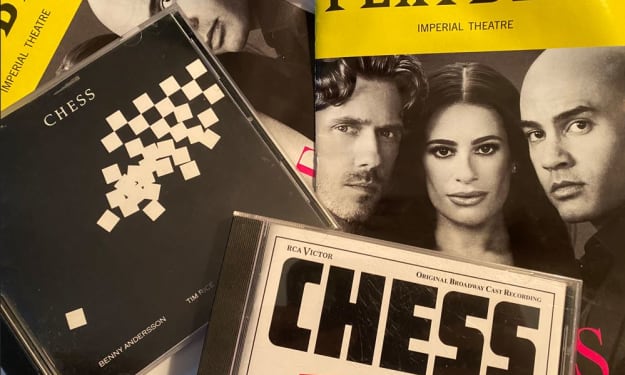
Chess the Musical Back on Broadway!
Have I ever mentioned how much of a fan of the musical Chess I am? I know the answer is “No,” because if it were “Yes,” this one-off story of my day, taking a nibble out of the Big Apple, would become Chapter 327 of my new novel Bishop’s Gamble: The Chess Variations of the ABBA Musical.
By Meredith Harmonabout 9 hours ago in Geeks
Tatt~Master
— Assembly Line Tatt Machine ~ Impressions to Impress — As I begin to understand more about the Tattoo Phenomenon. I've written silly, yet verbatim, dating site anecdotes in 'Frazzled.' So let me ask you: Would you be More attracted to someone slathered with tattoos, or Less?
By Jay Kantor5 days ago in Humor



Comments
There are no comments for this story
Be the first to respond and start the conversation.