


Artists draw inspiration from their surroundings and directed observations of subjects interacting with the same space. The human form, a significant subject found in visual arts, has been rendered by artists using a variety of media since the creation of man. These likenesses have served as didactic tools, portraitures, historical markers, as well as references to the ideal.
The student of studio arts may participate in the instruction of human anatomy and form while observing the form of a nude model. The naked body has been depicted as early as the Early Paleolithic period as evidenced through the discovery of the Venus of Willendorf (aka Woman of Willendorf).
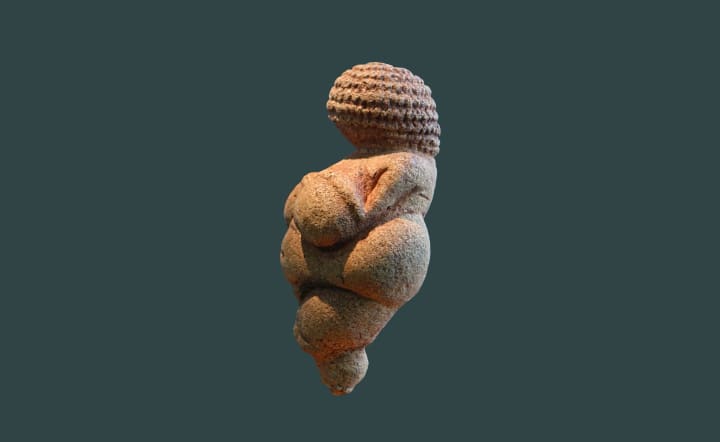
This handheld carving exhibits exaggerated breasts and abdomen; a representation of fertility. Other works of art aren’t quite as explicit. Marcel Duchamp’s Nude Descending A Staircase (1912) contains hints of Cubism and Futurism. While these two examples are vastly different, the human body continues to be the subject of art as well as the artwork and the canvas.
The naked and the nude have been frequent subjects for art throughout the history of human creation, and also the frequent subject of censorship. Marcel Duchamp’s work was rejected by the hanging committee of the 1912 Salon des Independants exhibition in Paris because “A nude never descends the stairs - a nude reclines.” However, it is likely that nudes were reclining because any other type of pose would have been incredibly tiring for the model, whose breaks were infrequent and short. Duchamp challenged the expectations of what was expected of the nude. This challenge invited artists since his time to explore other possibilities, such as the body as art.
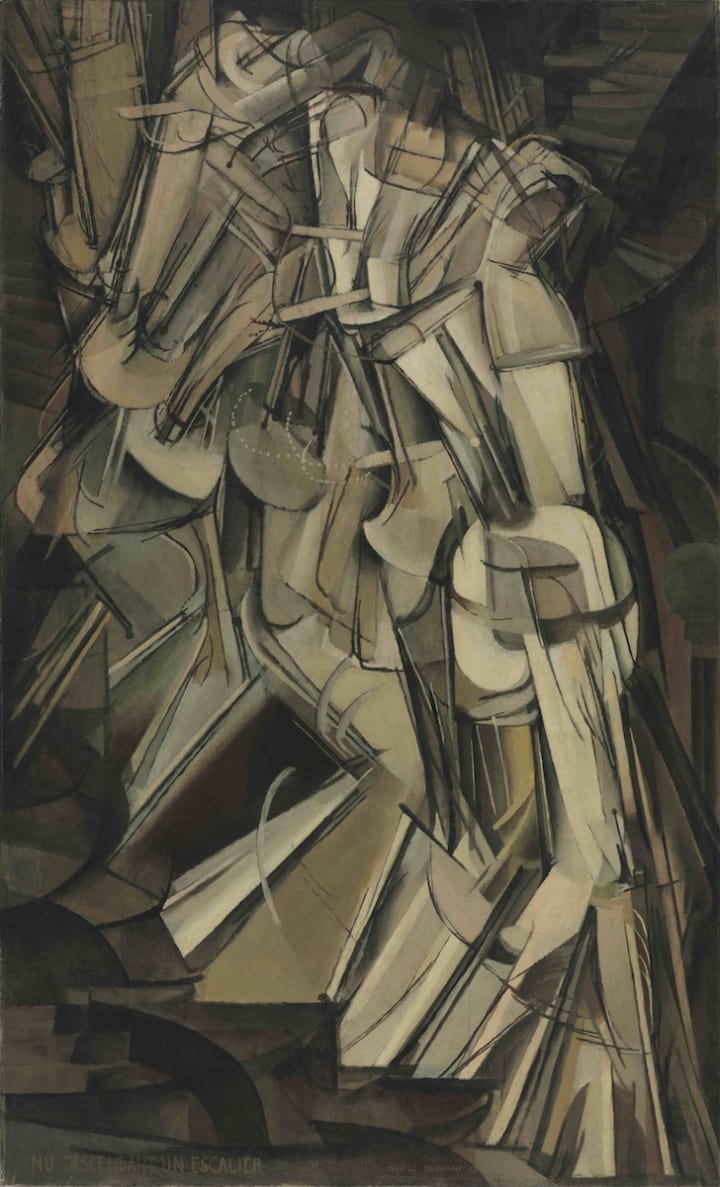
When the French artist Marcel Duchamp arrived by ship to New York in 1915, his reputation, as the saying goes, preceded him. Two years earlier, in 1913, after an inauspicious debut in France, Duchamp sent his painting Nude Descending a Staircase (No. 2) to America. His now famous depiction of a body in motion walking down a narrow stairway quickly drew outrage from a public unfamiliar with current trends in European art, and became a succès de scandale (success from scandal) that launched Duchamp into the American spotlight. But why was the painting so shocking? - (Khan Academy)
Artist movements of the body can be found in dance and performance and we accept those valuable expressions of the human form. However, there have been other artists who have pushed the boundaries to include works like James Luna's Artifact Piece (1987), where the artist, Luna, is the work of art placed inside a display box. This was performance art to express personal and cultural identity.

Ana Mendieta uses her body to leave silhouettes behind in nature. The Siluetas Series (1973) features silhouettes in the sand with red pigment, silhouettes made of snow, and forms set on fire. And in some instances her own body is used to blend into the natural environment using mud and leaves; becoming a part of the art. The most permanent expression of the artist and art becoming one can be found when the body is painted.

Over the last several decades, more and more individuals have embellished their bodies with body art. This body art includes piercings, plugs, and tattoos. My youngest daughter has designed tattoos for herself and others. The body becomes the canvas or the framework for permanent art. Most tattoos applied to the body hold great significance to the wearer, often representing identity, culture, history, and connection.
Whether representative, idealistic, or conceptual, the human body will continue to be the subject or the medium of expression. There will always be individuals who enjoy the work as much as there will always be individuals who do not.
References:
This work at the Philadelphia Museum of Art
Marcel Duchamp on the Metropolitan Museum of Art’s Heilbrunn Timeline of Art History
Calvin Tomkins, Duchamp: A Biography (New York: Henry Holt and Company), 1996.
About the Creator
Rebecca A Hyde Gonzales
I love to write. I have a deep love for words and language; a budding philologist (a late bloomer according to my father). I have been fascinated with the construction of sentences and how meaning is derived from the order of words.
Keep reading
More stories from Rebecca A Hyde Gonzales and writers in Geeks and other communities.
Plain as the Alphabet
"It is my design to make those who can scarcely read understand." - Thomas Paine As I continued to read Thomas Paine's reflection on his own writing style, contained in The Norton Anthology of American Literature, I couldn't help but recall a similar comment made by William Wordsworth a quarter of a century later when he wrote the Preface to Lyrical Ballads (published 1801). When studying British Literature, I came across an article written by Tom Thompson, "The State of the Preface Address: on Wordsworth and Common Speech." According to Thompson:
By Rebecca A Hyde Gonzales4 years ago in Geeks
A Knight of the Seven Kingdoms Series Review (Season 1)
As one of the biggest properties in fantasy, A Song of Ice and Fire remains immensely popular with audiences. After reaching far into the past with House of the Dragon, a second spin-off was on the cards. A Knight of the Seven Kingdoms serves up a bite-sized slice of action and drama, but it still claims a spot among the best small-screen titles.
By Robert Cain13 days ago in Geeks
Venonat Exposed: The Bug Pokémon That Turns Tiny Fuzzballs Into Poisonous Powerhouses
Venonat is one of the most underestimated Pokémon in the series, often mistaken for a simple, harmless bug due to its round, fuzzy body and large, bright eyes. However, beneath its soft exterior lies a creature capable of considerable battlefield influence through status effects, toxic attacks, and surprising tactical adaptability. Its combination of Bug- and Poison-type abilities allows it to exploit weaknesses in a variety of opponents, making Venonat a versatile addition to any trainer’s team who understands how to leverage its unique attributes.
By Lukáš Hrdlička3 days ago in Geeks



Comments
There are no comments for this story
Be the first to respond and start the conversation.