
How to Organize Your Digital Life and Boost Focus
Clear the noise, sharpen your edge - transform your devices into a sanctuary of focus


It started with a single folder.
One evening, after yet another day where my mind felt like a cluttered inbox half-written emails, scattered notes, and 37 tabs open like a digital crime scene I decided I’d had enough. The glow of my laptop was the only light in the room. I dragged one file, then another, into a single folder titled Reset. That was all it took for the momentum to shift.
Most people think their lack of focus is a discipline problem. It’s not. It’s clutter digital clutter, silent but suffocating. The chaos of unmanaged files, endless notifications, and social feeds quietly erodes your ability to think deeply. But there’s a way out, and it’s not just about “decluttering.” It’s about reclaiming your mind.
This guide isn’t for the faint-hearted. It’s for those who understand that mental clarity is the new luxury.
1. Audit Your Digital Landscape
Before you “organize,” you must see the mess for what it is.
Spend 30 minutes scanning your laptop, phone, and cloud storage. Count your open browser tabs, note every app you haven’t touched in six months, and list where your files live.
When I did this, I found over 11,000 screenshots scattered across my devices tiny fragments of ideas I’d never revisited. Seeing the chaos laid bare was the wake-up call I needed.
Insider Tip: Use a tool like CleanMyMac or CCleaner for your computer. For your phone, delete apps ruthlessly. Every icon you swipe past daily costs you focus.
2. The Rule of Three Spaces
Most people organize files like hoarders organize garages: everything is everywhere. I use the Rule of Three Spaces:
• Work: Files, tools, and resources strictly for professional use.
• Personal: Family, hobbies, finances, and memories.
• Archive: Completed projects, photos, and documents I don’t need but can’t delete.
This mental model reduces decision fatigue. Every file has a home, and so does every thought.
3. The Digital Declutter Ritual
Pick one evening each week to reset your devices. My ritual is on Sunday night. I light a candle, make tea, and clean my digital slate: empty downloads, archive emails, and clear desktops.
This isn’t just organization it’s ceremony. A signal to your brain that your week begins clean and focused.
4. Turn Off the Noise
Digital minimalism is about subtraction.
Start with notifications. If your phone lights up for every email, you’re training your brain to crave interruptions.
I turned off every single app notification except calls and texts. The first week felt like silence after a storm. By week two, my attention span felt like it belonged to someone else someone smarter, calmer, sharper.
5. One Inbox to Rule Them All
Fragmentation destroys focus. If you juggle multiple email accounts, feeds, and to-do apps, consolidate them. Tools like Notion, ClickUp, or Spark can centralize your chaos into a single hub.
Your mind relaxes when it knows where to find everything.
6. Automate the Mundane
Set up rules for repetitive tasks. I have email filters that automatically label invoices, a Dropbox folder that sorts screenshots by month, and an app that backs up photos to a hard drive at midnight.
This isn’t laziness. It’s leverage. The energy you save is better spent creating something that matters.
7. The Luxury of Digital Clarity
The truth is, few people will ever have a truly organized digital life. And that’s your edge. Focus is rare now, almost decadent.
When your devices are clean, your notifications silenced, and your mind calm, you become impossible to ignore. You think better. You move faster. You feel lighter.
Because clarity true clarity is a competitive advantage.
And it begins with that first folder.
About the Creator
Prince Esien
Storyteller at the intersection of tech and truth. Exploring AI, culture, and the human edge of innovation.
Keep reading
More stories from Prince Esien and writers in Geeks and other communities.
7 Time Management Tools That Are Actually Worth Using
It’s a strange thing, time. The wealthiest people in the world can’t buy more of it, yet they seem to possess it in abundance. Watch closely, and you’ll notice something: they’re not moving faster; they’re moving with precision. Their calendars aren’t cluttered. Their devices aren’t drowning them in notifications. They’ve mastered time not by force, but by design.
By Prince Esien6 months ago in Motivation
A Knight of the Seven Kingdoms Series Review (Season 1)
As one of the biggest properties in fantasy, A Song of Ice and Fire remains immensely popular with audiences. After reaching far into the past with House of the Dragon, a second spin-off was on the cards. A Knight of the Seven Kingdoms serves up a bite-sized slice of action and drama, but it still claims a spot among the best small-screen titles.
By Robert Cain6 days ago in Geeks
Spongebob Review
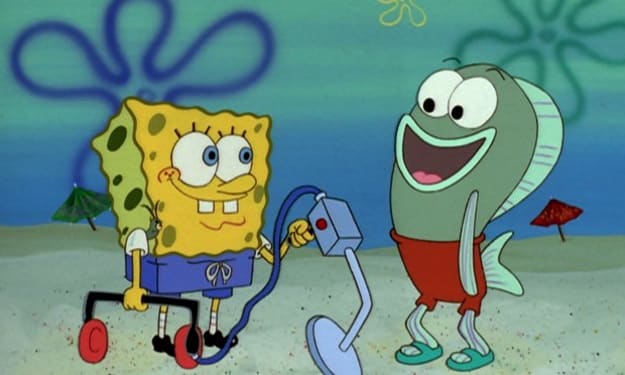
The episode “Walking Small” opens with a sun‑drenched panorama of Goo Lagoon, the golden sand glittering like powdered sugar under a cloudless sky, and the playful chatter of Bikini Bottom’s residents echoing across the waves. From the very first frame, the animation captures the carefree rhythm of a typical day at the beach, yet a subtle tension is already bubbling beneath the surface as Plankton slides into view, his tiny silhouette a dark crescent against the bright horizon. The writers cleverly juxtapose the idyllic setting with Plankton’s scheming grin, foreshadowing the paradoxical lesson that will unfold: the transformation of SpongeBob from his usual bubbly innocence into a surprisingly assertive beach‑goer. The visual palette—turquoise water, amber sun, and the occasional flash of a distant jellyfish—serves as a vivid backdrop for the episode’s central conflict, immersing the audience in a world that feels both familiar and slightly off‑kilter, as if the sand itself is waiting for a ripple that will reshape the familiar rhythm of beach life.
By Forest Green5 days ago in Geeks
Tatt~Master
— Assembly Line Tatt Machine ~ Impressions to Impress — As I begin to understand more about the Tattoo Phenomenon. I've written silly, yet verbatim, dating site anecdotes in 'Frazzled.' So let me ask you: Would you be More attracted to someone slathered with tattoos, or Less?
By Jay Kantor5 days ago in Humor



Comments
There are no comments for this story
Be the first to respond and start the conversation.