
How Everyone Misunderstood Joker: Folie à Deux and the Ideology Behind the Joker
Spoilers Ahead

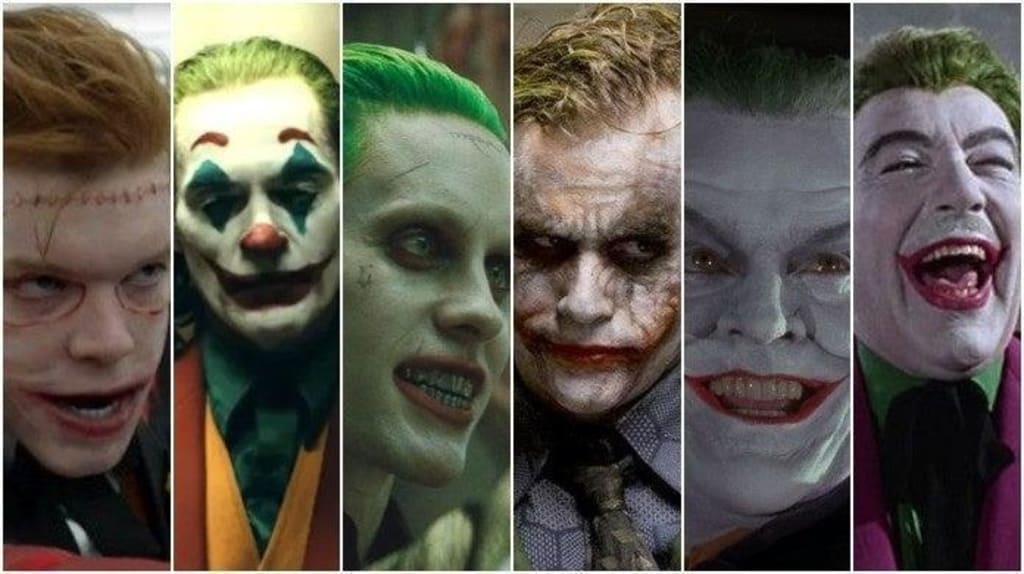
Since its announcement, *Joker: Folie à Deux*, the sequel to Todd Phillips’ critically acclaimed *Joker* (2019), has generated controversy and debate among fans and critics alike. Much of the backlash centers around rumors that the film might “erase” the first movie or shift the iconic role of the Joker to someone else by its conclusion. These anxieties seem to stem from a misunderstanding of the Joker as a character, as well as from expectations based on conventional comic book and superhero narratives. However, viewing *Joker: Folie à Deux* through the lens of ideology, rather than a simplistic continuation of a single character’s journey, allows for a deeper and more nuanced appreciation of its potential thematic direction.
The Joker as an Ideology: Beyond the Individual
At the heart of much of the backlash is the assumption that Arthur Fleck (portrayed by Joaquin Phoenix in the 2019 film) is the *Joker*, a singular, definitive embodiment of the character. In this view, the Joker is a person—a man who, through a series of tragic and violent events, transforms into Batman’s greatest adversary. This perspective tends to follow the typical superhero genre conventions, where characters are unique, singular individuals with a fixed identity. However, this conception of the Joker misses a crucial point: the Joker is less an individual person and more a symbol of chaos, nihilism, and the rejection of societal structures.
Throughout his many iterations in comics, film, and television, the Joker has always been a malleable figure. His backstory shifts depending on the medium or writer, his personality changes, and he often serves as a mirror to the specific societal anxieties of the time. In *The Dark Knight* (2008), the Joker was an anarchist, a symbol of moral chaos in an era defined by concerns over terrorism and the fragility of social order. In *Joker* (2019), Arthur Fleck’s Joker emerges as a response to societal alienation and systemic neglect. He is not merely a villain; he is an idea—a critique of a society that marginalizes its most vulnerable members, leading them to rebellion and violence.
The Backlash: Misunderstanding What Joker: Folie à Deux Represents
The concerns about *Joker: Folie à Deux* erasing the first movie or passing the mantle of the Joker to another character overlook the ideological nature of the Joker himself. One of the defining characteristics of the Joker is that he is not fixed in one form. He is not simply Arthur Fleck, and to assume that his journey ends with Phoenix’s portrayal is to miss the point of the character’s symbolic role in the broader cultural landscape.
Todd Phillips’ *Joker* was never about the creation of a singular supervillain in the traditional sense. It was about the creation of an idea—an idea that chaos and violence can arise from societal neglect and the breakdown of social contracts. In this sense, the Joker as a person is almost irrelevant; what matters is the ideology he represents. If *Joker: Folie à Deux* chooses to “pass the mantle” to another character, this would not be a betrayal of the first film, but rather a continuation of its central theme. The Joker, as an idea, can inhabit anyone. In a world where societal collapse and disillusionment with authority are widespread, the Joker’s chaotic philosophy can take root in multiple individuals.
Musical Experimentation and Expanding the Joker Mythos
Additionally, *Joker: Folie à Deux* is a musical—a creative choice that has fueled even more skepticism. Yet, dismissing this decision as a frivolous departure from the original is shortsighted. Musical films have long been a tool for exploring internal emotions, psychological complexity, and surreal landscapes. By integrating musical elements, Phillips could further emphasize the psychological disintegration of the characters and explore the ideological implications of the Joker’s philosophy through a heightened, almost operatic lens. The Joker’s chaotic nature aligns with the musical genre’s ability to break narrative conventions and explore the abstract.
Moreover, the musical format could offer a commentary on the performative nature of the Joker’s ideology. The Joker, in many of his incarnations, revels in performance—whether as a clown, a terrorist, or a symbol of rebellion. His entire existence is a dark performance, an act of defiance against the very notion of stable identity and morality. By framing *Folie à Deux* as a musical, the film might be drawing attention to this performative aspect of the Joker's character. Chaos, in this sense, is not just destructive; it is theatrical, seductive, and contagious.
The Fear of Erasure: Why Audiences Resist
Many fans fear that by potentially shifting the focus away from Arthur Fleck or introducing new Jokers, the film will "erase" or undermine the emotional and narrative weight of the first movie. But this fear reflects a misunderstanding of what *Joker* was trying to achieve. The first film was not about the individual hero or anti-hero arc that most superhero narratives focus on; it was a commentary on the collective disillusionment of society, a meditation on how unchecked systems of power, neglect, and economic disparity breed violence and chaos.
The Joker is, at his core, a reflection of societal unrest. Whether it’s Arthur Fleck, another individual, or a whole movement of people embracing the Joker ideology, the essence of the character remains intact. In fact, the potential passing of the Joker’s role to someone else strengthens the idea that the Joker is not just a man but a manifestation of societal collapse. The Joker as an idea does not die with one person; it lives on as long as the conditions that created him persist.
Conclusion: The Joker’s Legacy of Chaos
The backlash against *Joker: Folie à Deux* reflects a desire for continuity, a reluctance to see the Joker as anything other than a singular, concrete figure. But the power of the Joker character lies precisely in his fluidity, his ability to evolve and adapt to different social, political, and psychological contexts. Rather than erasing the first film, *Joker: Folie à Deux* has the potential to expand on its central thesis: that chaos and violence are born from the cracks in society’s structures. The Joker is not just Arthur Fleck, nor is he limited to one incarnation. He is an ideology—a dangerous, alluring one that can manifest in anyone who rejects the order and constraints of society.
In this light, the potential for *Folie à Deux* to explore multiple Jokers or pass the mantle is not a betrayal, but a logical extension of the character’s philosophical essence. The Joker, after all, is not a person; he is an idea. And ideas, once born, cannot be easily erased.
About the Creator
Nazgol Rasoolpour
An emerging researcher with a passion for horror narrative. My focus revolves around the captivating subgenres of religious horror and techno horror.
Reader insights
Nice work
Very well written. Keep up the good work!
Top insights
Compelling and original writing
Creative use of language & vocab
Easy to read and follow
Well-structured & engaging content
Excellent storytelling
Original narrative & well developed characters
Expert insights and opinions
Arguments were carefully researched and presented
Eye opening
Niche topic & fresh perspectives
Heartfelt and relatable
The story invoked strong personal emotions
Masterful proofreading
Zero grammar & spelling mistakes
On-point and relevant
Writing reflected the title & theme
Keep reading
More stories from Nazgol Rasoolpour and writers in Geeks and other communities.
Supernatural Clowns in Horror: From Killer Jokesters to Demonic Forces
The clown archetype has long teetered between humor and terror, representing both joy and fear. This tension is amplified in horror cinema, where clowns often embody supernatural evil, transforming into killing machines that blend gore with dark humor. Over the decades, the supernatural clown subgenre has produced iconic figures that push the limits of horror, creating a potent mixture of dread, violence, and grotesque amusement.
By Nazgol Rasoolpourabout a year ago in Geeks
The Rachels - 2025
Much to my surprise, I have kept a list of the films I‘ve seen this year. I daresay it isn’t complete. There will be films that snuck in on a late night in front of the TV that I would’ve forgotten to note. Or others, that I went to watch at the cinema, but then had a red wine and promptly forgotten about. But it’s not a bad approximation of the films I’ve seen this year. In total, there are 53 films listed, so an average of one a week and one for good luck.
By Rachel Robbins25 days ago in Geeks
Super Bowl in Canada: How to Watch
Super Bowl, one of the most exciting sporting nights of the year, is now less than a month away and the excitement is already palpable. Scheduled on February 8, 2026 at Levi’s Stadium in Santa Clara, California, this will be the third Super Bowl held in the San Francisco Bay Area.
By David Cooka day ago in Geeks



Comments
There are no comments for this story
Be the first to respond and start the conversation.