
HL7 Interface Development: Simplifying Interoperability in Healthcare
Unlocking the Power of HL7 Interface Development: Seamlessly Connecting Healthcare for Better Patient Outcomes
Introduction
In the ever-evolving landscape of healthcare, efficient and secure data exchange is paramount for delivering quality patient care. Health Level Seven (HL7) interface development plays a crucial role in simplifying interoperability, enabling seamless communication and data sharing among diverse healthcare systems. In this blog, we will delve into the significance of HL7 interface development and how it streamlines data exchange to enhance patient outcomes and healthcare efficiency.
Understanding HL7 Interface Development
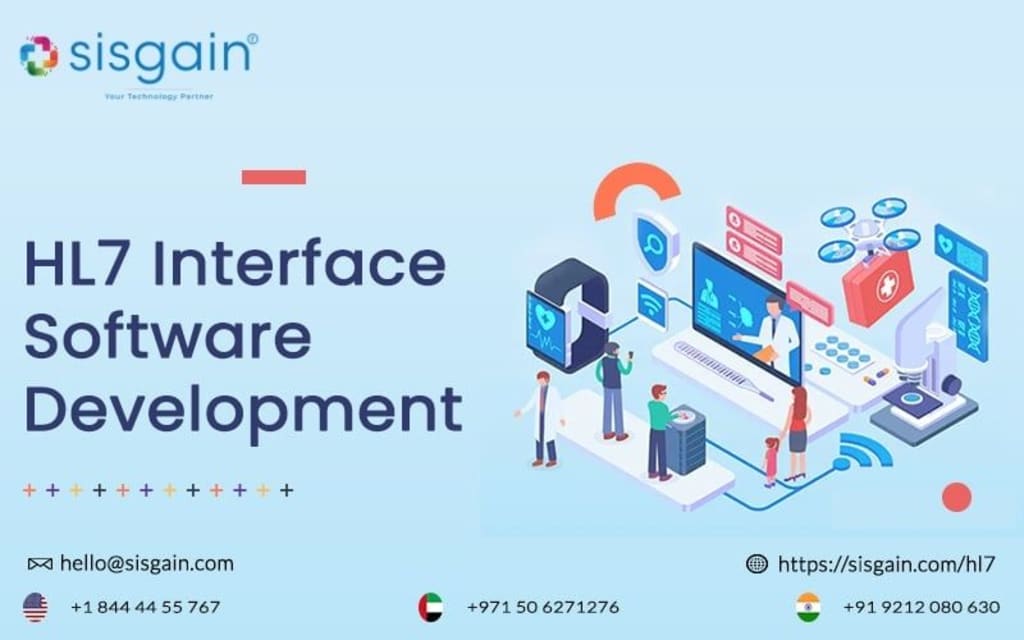
HL7 is a set of international standards designed to facilitate the exchange, integration, sharing, and retrieval of electronic health information. HL7 interface development involves creating software solutions that enable different healthcare systems, such as Electronic Health Records (EHRs), Laboratory Information Systems (LIS), and Picture Archiving and Communication Systems (PACS), to communicate and share data effectively.
Simplifying Data Exchange
Healthcare organizations often use disparate systems, each specialized in managing specific aspects of patient care. The lack of integration can lead to data silos, making it challenging to access a patient's complete medical history. HL7 interface development bridges this gap by creating connections that allow systems to exchange data in a standardized format, ensuring healthcare professionals have comprehensive patient information at their fingertips.
Enhancing Patient Safety and Care Coordination
Interoperability through HL7 interfaces enhances patient safety by reducing the risk of errors and duplicate data entry. With access to real-time patient data, clinicians can make well-informed decisions and collaborate efficiently across departments. This streamlined care coordination leads to improved patient outcomes and overall satisfaction.
Improving Workflow Efficiency
HL7 interface development automates data exchange, eliminating the need for manual data entry and reducing administrative burdens. Healthcare providers can focus more on patient care and less on managing paperwork, leading to enhanced workflow efficiency and increased productivity.
Facilitating Remote Patient Monitoring
In recent times, the importance of remote patient monitoring has grown significantly. HL7 interfaces allow seamless data exchange between wearable devices and healthcare systems, enabling healthcare professionals to monitor patients' vital signs and health metrics remotely. This capability is especially valuable in managing chronic conditions and providing timely interventions.
Integrating Imaging and Diagnostic Systems
HL7 interface development plays a vital role in integrating imaging and diagnostic systems, such as radiology and laboratory information systems, into the broader healthcare network. This integration ensures that crucial diagnostic results are readily available to physicians and specialists, expediting the diagnosis and treatment process.
Adhering to Data Security and Privacy Standards
As data breaches pose a significant threat to the healthcare industry, HL7 interface development prioritizes data security and privacy. By adhering to industry-standard security protocols, HL7 interfaces ensure that sensitive patient information remains confidential and protected from unauthorized access.
Supporting Interoperability with FHIR
Fast Healthcare Interoperability Resources (FHIR) is an emerging standard that complements HL7 interface development by providing a more flexible and modern approach to data exchange. FHIR allows for faster implementation and supports mobile health applications, promoting patient engagement and empowerment.
Conclusion
In conclusion, HL7 interface development serves as a cornerstone in simplifying interoperability in the healthcare industry. By enabling seamless data exchange and integration among various healthcare systems, HL7 interfaces facilitate efficient care coordination, enhance patient safety, and optimize workflow efficiency.
As healthcare continues to advance, HL7 interface development will play an increasingly critical role in ensuring that patient data flows securely and accurately between systems. Embracing interoperability through HL7 interfaces and emerging standards like FHIR will undoubtedly contribute to a more connected and patient-centric healthcare ecosystem, ultimately leading to improved patient outcomes and a brighter future for healthcare worldwide.
About the Creator
Keep reading
More stories from Debu singh and writers in Geeks and other communities.
Mastering the Art of Responsive Design: A UI/UX Guide
Introduction In today's digital age, where users access websites and applications across multiple devices, responsive design has become a crucial aspect of UI/UX development. A seamless user experience across various screen sizes and resolutions is essential for the success of any website or application. To achieve this, UI/UX designers and developers need to master the art of responsive design. In this comprehensive guide, we will explore the key principles and best practices of responsive design, empowering you to create visually stunning and user-friendly experiences. Whether you are a UI/UX professional or a UI/UX development company, this guide will serve as a valuable resource to enhance your skills and deliver exceptional responsive designs.
By Debu singh3 years ago in Geeks
A Knight of the Seven Kingdoms Series Review (Season 1)
As one of the biggest properties in fantasy, A Song of Ice and Fire remains immensely popular with audiences. After reaching far into the past with House of the Dragon, a second spin-off was on the cards. A Knight of the Seven Kingdoms serves up a bite-sized slice of action and drama, but it still claims a spot among the best small-screen titles.
By Robert Cain4 days ago in Geeks
SpongeBob Review
The episode “Arrgh!” opens with an exuberant Mr. Krabs sees Spongebob and Patrick playing with a treasure map at the Krusty Krabs and he joins in on the fun. It was inspired by an ancient, barnacle‑covered map he claims was salvaged from the wreckage of the legendary Flying Dutchman’s galleon, instantly igniting the imaginations of SpongeBob and Patrick. The writing cleverly balances the classic pirate tropes—rum‑filled taverns, mutinous parrots, and cursed doubloons—with the sea‑sponge universe’s trademark absurdity, such as a treasure chest that contains nothing but a collection of lost spatulas and a perfectly preserved Krabby Patty formula. The pacing in the first act is deliberately brisk; each scene transition is punctuated by a rapid-fire gag, yet the narrative never feels rushed, allowing the audience to absorb the visual gags, the exaggerated swash‑buckling poses, and the delightfully over‑the‑top voice‑over narration that mimics old radio adventure serials. This careful construction sets up a compelling premise that promises both high‑stakes adventure and the familiar comedic heart of Bikini Bottom.
By Forest Green3 days ago in Geeks



Comments (1)
Great article on simplifying interoperability in healthcare through H-L7 interface development! It's impressive to see how this technology streamlines communication in the healthcare sector. For additional perspectives on HL7 integration and its broader impact, you may find valuable insights at https://www.cleveroad.com/blog/hl7-integration/.