
Growing up and getting boring (or not)
A wrestle with reality and a brief comment on the story within the film, Frances Ha.


In what part of life do we decide to be serious? For some people, it starts early. The random person in high school not many people understand who is submitting university applications early and doesn't have original jokes. In five years or less, they're employed in a steady job and have a kid and you look at them as you would a car crash: it happened so quickly and unpredictably and it is hard to understand how it is possible from your bystander view.
For some, it might never happen. We end up people with ambitious dreams we choose to pursue, looking crazy and selfish along the way in our pursuit with all of the practice, isolation, failure. Yet we still persevere, seeming doe-eyed and naive as ever. People try to be actors, painters, lawyers, singers, all these pursuits in ignorance of the "normal" ambition of settling down and creating a nuclear family unit.
This is a larger idea that is explored in Noah Braumbach's Frances Ha.
When I first saw the film, I was frustrated by it. Frances' character is everything that university taught me not to be: a slob, a self- proclaimed mooch, impulsive, outwardly expressive of one's opinions, and most of all, immature. I was angry at her character and wanted her to be someone else, someone who knows them self better, or maybe someone who quits when the going is seemingly too tough. I was also angry at the fact that someone had made this film with the implied intention that the life of Frances would be relatable; in my mind, this kind of stereotype of the 27-year-old who seems to have lost her way is a scary idea; aren't we supposed to KNOW who we are, what we want and how to get it by this age?
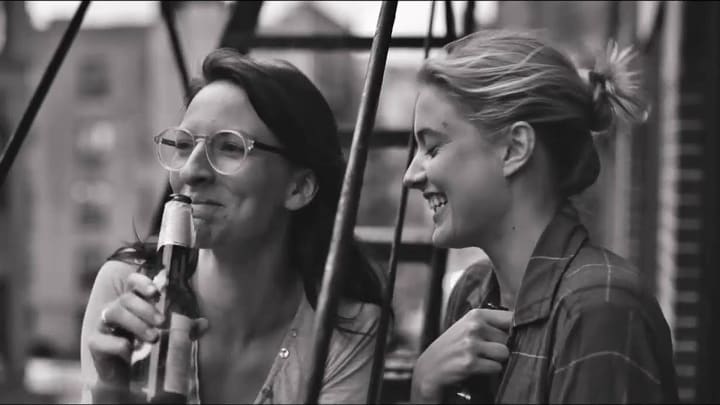
A viewing of an interview with Greta Gerwig and Noah Braumbach about the film had me feeling somewhat more sympathetic: Greta mentions in the interview that this is a coming-of-age-story and that coming of age is something that happens repetitively within life. This struck a cord with me because I was reminded that challenge is not something that we grow out of having to face, but rather something that we can learn to except or continue to reject.
Upon some self-reflection, I realized that maybe it wasn't Frances' character that I was frustrated with, but myself. Pursuing classical music in school and becoming a teacher has, as I mentioned, made me a delusional perfectionist and rejecting of the messy, beautiful nature of the world and myself. My education made me lose patience and pride in my quirkiness. I became a somewhat boring and lost soul.
I must applaud Gerwig and Braumbach for the creation of a character who is so free and wild within her life. If anything, she is (for the most part) carefree, and who doesn't want that out of at least some of life, really?
My second viewing of the movie found me more accepting of the character of Frances and the life she chooses to live; it is quirky and unique. She rejects any metaphorical boxes laid in front of her. She could go back home, live with her parents in California, and get an office job, but she chooses not to. I think that this is actually a celebration of a certain kind of life that, by many people who hold the view I expressed in the beginning of this article, is frowned upon. This is the type of life that carries and creates artistic legacy, and I don't think that anyone could fault the character for that. Yes, she is grappling with reality and what it means logistically for her, but isn't this what artists focus on and are inspired by?
In the end, I see Frances as inspiration and hope for the dreamer in all of us and the clumsy, disorganized, artist. She holds an innocence and wonder in the world which more of us adults could stand to rekindle in our lives.

About the Creator
Laura
I do what I want and I say what I feel, after I’ve picked it to bits.
SpongeBob Review
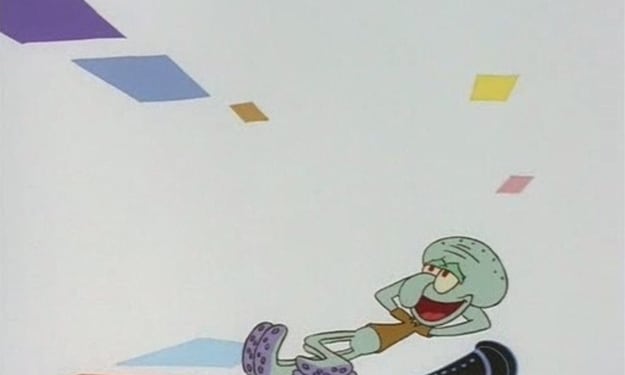
The episode “SB‑129,” a quintessential early‑season gem of SpongeBob SquarePants, thrusts the perpetually irritable Squidward Tentacles into a chronologically disorienting odyssey that begins with a simple desire to escape the incessant merriment of his neighbors, SpongeBob and Patrick. The narrative catalyst—a misfired experiment with a time‑traveling chronometer—plunges him into an eerily silent, sterile future Bikini Bottom where the familiar pastel hue of the oceanic streets has been supplanted by a stark, monochrome aesthetic reminiscent of 1960s futuristic optimism. This transition is rendered with meticulous attention to visual contrast: the crisp lines of the futuristic set design juxtapose sharply against the show’s usual wavy, hand‑drawn textures, emphasizing Squidward’s profound alienation and underscoring the episode’s thematic exploration of isolation versus community.
By Forest Green3 days ago in Geeks


Comments
There are no comments for this story
Be the first to respond and start the conversation.