
GAI Industrial Revolution is Transforming Industries in a Big Way: The Use of Generative AI in Various Sectors and Its Remarkable Use Cases
Unleashing Innovation and Efficiency through Generative AI: Revolutionizing Healthcare, Financial Services, Customer Support, Creative and Cybersecurity industry in a big way
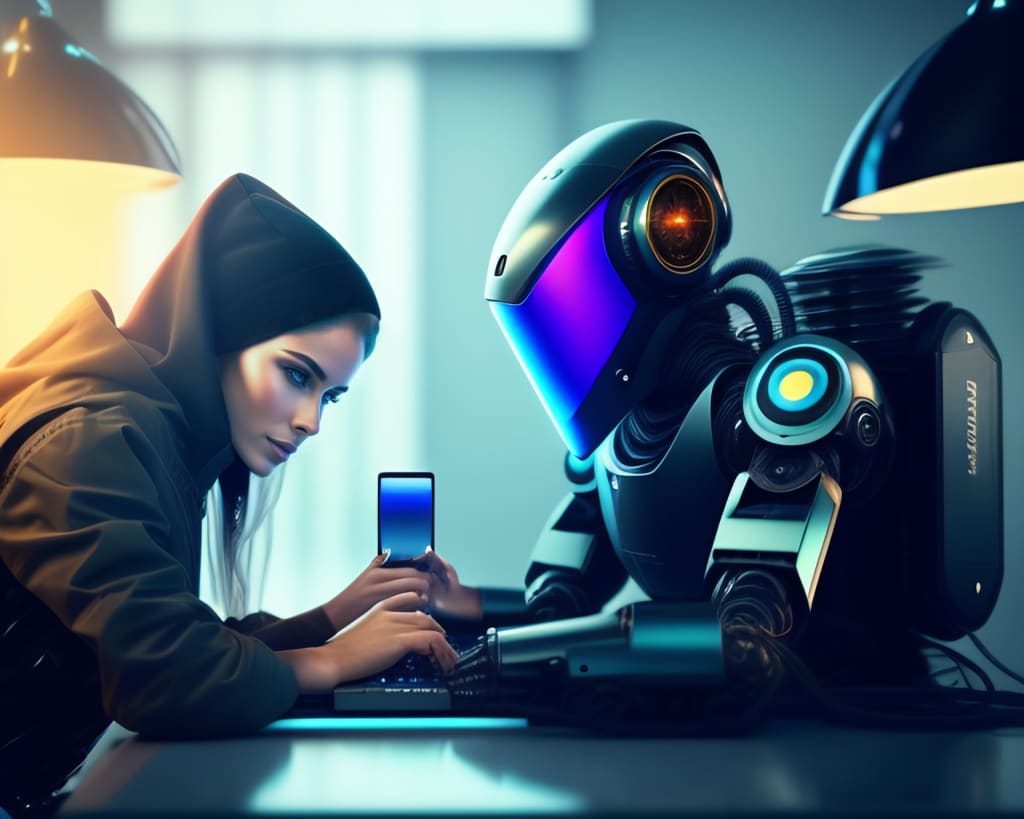
In recent years, the rapid advancements in artificial intelligence (AI) have paved the way for a revolutionary technology known as Generative AI. With its ability to create realistic and original content, Generative AI has emerged as a powerful tool across a wide range of industries. From healthcare to entertainment and design to finance, this innovative technology is transforming the way businesses operate and opening new avenues for creativity. In this article, we will explore the diverse applications of Generative AI and delve into some remarkable use cases that highlight its potential in revolutionizing different sectors.
Generative AI, also known as Generative Adversarial Networks (GANs), is an artificial intelligence technology that enables computers to generate original and realistic content. It involves two components: the generator, which creates new data, and the discriminator, which evaluates and provides feedback on the generated data. Through an iterative process of learning and refinement, generative AI models become adept at producing high-quality outputs that resemble real data.
Generative AI is revolutionizing various industries by offering innovative solutions and driving efficiency. Here's how it is helping different sectors:
Healthcare :
Generative AI is making significant strides in the healthcare industry, where it is aiding in disease diagnosis, drug discovery, and medical imaging. One notable use case is the generation of synthetic medical images, which allows researchers and clinicians to train AI algorithms without compromising patient privacy. This enables the development of more accurate and efficient diagnostic tools.
Generative AI is also used for drug discovery by generating new molecular structures that could potentially become novel drugs. By simulating the interactions between molecules, this technology accelerates the drug development process and reduces costs.
Moreover, in personalized medicine, Generative AI can create patient-specific models to predict treatment outcomes and optimize therapies. By analyzing large datasets and generating synthetic patient records, AI assists healthcare professionals in making informed decisions tailored to individual patients.
- Disease Diagnosis: Generative AI assists in early disease detection by analyzing medical data, identifying patterns, and aiding healthcare professionals in accurate diagnoses.
- Drug Discovery: It accelerates the drug development process by generating new molecular structures, predicting their efficacy, and reducing costs.
- Personalized Medicine: Generative AI creates patient-specific models, predicting treatment outcomes and optimizing therapies for better patient care.
Creative Industries:
Generative AI has found its way into various creative fields, including art, music, and design. Artists can employ generative models to generate unique and visually stunning artwork by combining different styles and elements. It enhances creativity by providing new perspectives and challenging traditional artistic boundaries.
In the music industry, Generative AI is used to compose melodies and generate harmonies. It can analyze vast music databases to learn patterns and create original compositions that align with specific genres or artist styles.
In the field of design, Generative AI can assist architects, fashion designers, and graphic designers in the creative process. It can generate design variations, explore different possibilities, and optimize complex parameters, resulting in innovative and efficient solutions.
- Art and Design: Generative AI aids artists and designers in generating unique and visually captivating artwork, exploring new styles, and pushing creative boundaries.
- Music Composition: It creates original melodies and harmonies, aligning with specific genres or artist styles, fostering musical innovation.
- Game Development: Generative AI enhances game development by generating lifelike virtual environments, dynamic storylines, and adaptive AI opponents, enhancing gaming experiences.
Finance and Investment :
Generative AI has gained prominence in the finance and investment sector, where it aids in risk analysis, fraud detection, and portfolio optimization. By analyzing vast amounts of financial data, AI models can generate realistic scenarios and assist in making informed investment decisions.
Generative models can also simulate market behavior and generate synthetic data to stress-test trading algorithms and investment strategies. This helps financial institutions anticipate and mitigate potential risks in a controlled environment.
In fraud detection, Generative AI can identify anomalies in financial transactions and detect patterns that are indicative of fraudulent activities. By continuously learning from real-time data, AI algorithms improve their accuracy and enhance security measures.
- Risk Analysis: Generative AI analyzes vast amounts of financial data to generate realistic scenarios, helping institutions make informed decisions and optimize investment strategies.
- Fraud Detection: It identifies patterns and anomalies in financial transactions, enhancing fraud detection capabilities and preventing fraudulent activities.
- Portfolio Optimization: Generative AI generates synthetic data to stress-test trading algorithms and investment strategies, improving portfolio management and risk mitigation.
Gaming and Virtual Reality:
Generative AI has transformed the gaming industry, enhancing game development, character creation, and procedural content generation. It can generate lifelike virtual environments, populate game worlds with intelligent NPCs (non-playable characters), and create dynamic storylines based on player interactions.
Additionally, Generative AI enables the development of AI opponents with adaptive behaviors, enhancing the player's gaming experience by providing more challenging and realistic gameplay.
In virtual reality (VR), Generative AI can generate immersive and realistic environments, simulating natural landscapes, cities, or even imaginary realms. This technology empowers VR developers to create interactive and visually captivating experiences that transport users to entirely new virtual worlds
Cybersecurity:
In an increasingly digital world, cybersecurity has become paramount. Generative AI is making significant contributions in this field by bolstering threat detection, vulnerability assessment, and malware detection.
Generative AI models can analyze vast amounts of network and system data to identify patterns indicative of cyber threats. By recognizing potential attack vectors, AI algorithms can assist in proactive threat detection and provide early warning signs to prevent breaches.
Moreover, Generative AI can aid in vulnerability assessment by simulating attack scenarios and identifying weak points in systems and networks. This enables organizations to patch vulnerabilities before they can be exploited by malicious actors.
Generative AI also plays a vital role in malware detection. By analyzing patterns in code and network behavior, AI algorithms can identify and classify malicious software. This helps cybersecurity professionals stay ahead of emerging threats and develop effective countermeasures.
- Threat Detection: Generative AI analyzes network and system data to identify potential cyber threats, enabling proactive detection and prevention of breaches.
- Vulnerability Assessment: It simulates attack scenarios, identifies system weaknesses, and assists in strengthening security measures.
- Malware Detection: Generative AI identifies and classifies malicious software by analyzing code and network behavior, enhancing malware detection and response capabilities.
Conclusion:
Generative AI is a transformative technology with vast potential in numerous industries. From healthcare to creative fields, finance to gaming, its applications are expanding, revolutionizing traditional practices, and enabling new possibilities. As the technology continues to evolve, we can anticipate further advancements in Generative AI, leading to more innovative and efficient solutions across industries. Embracing Generative AI opens doors to a future where intelligent machines work alongside humans, fostering creativity, improving decision-making, and driving positive change in society.
About the Creator
Malini Rao
Malini Rao is an award winning Technology leader who brings in two decade of experience and expertise working globally for Fortune 500 clients in various areas of Technology and cybersecurity. Malini Rao is CISSP CCSK certified professional
Keep reading
More stories from writers in Geeks and other communities.
Steve Burton announces he is leaving General Hospital
The Steve Burton rumor is finally real There are always rumors regarding soap stars, and usually, the information is not true. However, this time, what is being reported is accurate. Soap Opera Digest has revealed that Steve Burton is taking a hiatus from his role as Jason Morgan on General Hospital.
By Cheryl E Preston3 days ago in Geeks
Part 2 Interview With Joe Patterson, Author Of Melanin Memoirs
This is my second interview with Joe Patterson. His 4th anniversary writing on Vocal will be in March 2026. He has one achievement on Vocal, The Other Foot. He has over 17,000 reads on Vocal since he started on Vocal in 2022. Joe Patterson is very creative poet and rapper. Joe is deep thinker and I feel it is reflected in his latest published book, Melanin Memoirs.
By Mariann Carrollabout 18 hours ago in Interview




Comments
There are no comments for this story
Be the first to respond and start the conversation.