

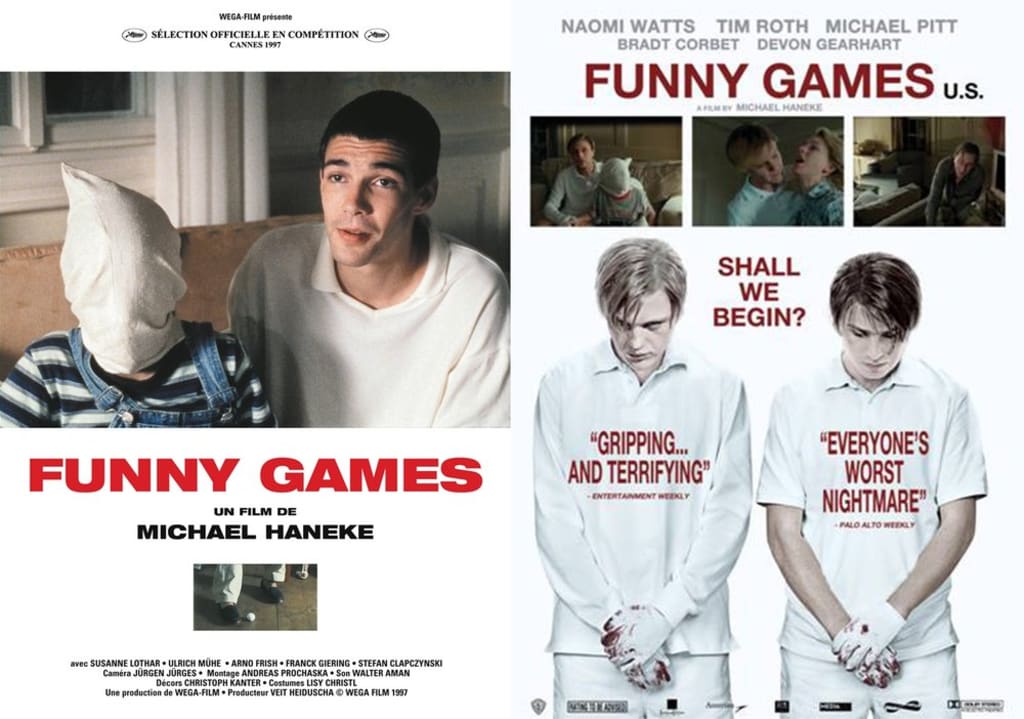
"Anyone who leaves the cinema doesn't need the film, and anybody who stays does." - Michael Haneke
Haneke's preparation, which includes studies in philosophy, psychology, and theater, is fully utilized here from the very first frame. So, in this film, we find ourselves thrown right into an exceptional psychological experiment, skillfully manipulated emotionally, and following a recipe that relies equally on the sadism on the screen, the masochism that takes place in the seat you occupy, and the perversion that embraces the entire environment.
Two young men systematically and politely take a family preparing for the weekend hostage. Throughout the film, they torture the family and ultimately kill them, after having done the same to the neighboring family and intending to do the same to the next one (the film is circular; it begins with an intermediate establishment and ends as soon as the new set of victims is approached using the same ritual).
It's not a show that you go to see, but rather a Kafkaesque trial to which you are summoned and to which you must face unprepared, from the defendant's bench, surprised by the posture, as well as the diversity and intensity of an unexpected indictment.
Funny Games doesn't let you catch your breath for a second after the opening credits. From the precise moment when it becomes clear to everyone that it's about a hostage-taking and an aberrant criminal game, Paul (the central character of the script) turns his face to the camera and directly challenges you, without any reservation, metaphor, or artifice; he personally demands that you participate in a seemingly disproportionate bet, and instantly transforms you into a participant in the story.
You are thus taken hostage yourself in everything that follows; or perhaps recruited to complicity in torturous eccentricities that satisfy hidden needs, purposes never fully declared (from outside the ego), or constantly rejected by your own censorship.
Let it be very clear, in this film, if you choose to watch it, you are part of the events, and not just a peripheral part, but you play a supporting role. In Funny Games, you actively participate throughout the entire project as an important fragment of the script, although some solutions will terrify you, and for others, magically and rebelliously, you will feel capable.
In Funny Games, meticulousness, detail, and consistency are linked to paranoia, so the localization of the affective zone in which the spectacle will unfold is brilliantly indicated. The recruitment into the cast, however, is premeditated and overt only after the allusive cinematic techniques are gradually exhausted, when Haneke increasingly and insistently directs the characters towards the audience, with remarkable ease.
You may sympathize, or be dismayed, but you will never be able to deny the flexible correctness of the players and the arbitration. Because a great value is placed on these in the balance of the ethical and moral imbalance that dominates the broad sense of the entire production. Simple cinematic techniques with calm and reduced complexity settings to a necessary minimum, the abusive use of white, the obsessive avoidance of angles that descend or ascend...everything that participates in the frame, including the moderation of the sound column, is controlled to compensate for the aggressive violence of the events in the narrative.
"Funny Games" is a film remake, which was remade by Haneke in 2007 as a remake of his earlier film from 1997, made in the German language. The 1997 film had a controversial reception at the Cannes Film Festival, with many critics walking out of the screening shortly after the film started. He has repeatedly stated that his film has been misunderstood and wrongly categorized as horror, as it is actually a manifesto against violence and the promotion of violence in contemporary cinema.
About the Creator
Andreea Sorm
Revolutionary spirit. AI contributor. Badass Engineer. Struggling millennial. Post-modern feminist.
YouTube - Chiarra AI
Keep reading
More stories from Andreea Sorm and writers in Geeks and other communities.
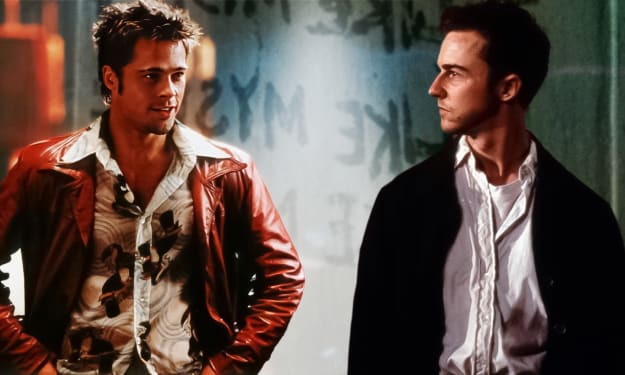
Fight Club - David Fincher (1999)
"If you wake up at a different time in a different place, could you wake up as a different person?" The term "Transgressive Fiction," which I dare not translate, signifies a relatively new literary genre and is the hardcore version of a blend of movements such as splatterpunk, noir, and erotic fiction. It is a type of writing that explores extreme violence, aberrant sexual practices, drug abuse, mutilation, torture, and sadism; in short, manifestations that push the boundaries of human body destruction. Chuck Palahniuk's novel, which the film Fight Club faithfully adheres to with commendable rigor, is representative of this orientation and is a great editorial success, and according to the author's statements...the film adaptation surpasses the book.
By Andreea Sorm3 years ago in Geeks
Silver Screen Magic with Mae West
American actress and singer Mae West became a popular film actress during the Great Depression. She started entertaining in vaudeville, then performed on Broadway, and finally went to Hollywood. She signed up with Paramount Pictures and made her debut in the 1932 film “Night After Night.” She also starred in musicals, comedies, and crime dramas. The American Film Institute named her one of the best classic Hollywood actresses.
By Rasma Raisters6 days ago in Geeks


Comments
There are no comments for this story
Be the first to respond and start the conversation.