
From "Silos" to "One Heart": Cracking the Integration Puzzle of Sodium-Battery Systems
Part I of the Sodium Frost Glow Technology Trilogy – Systems

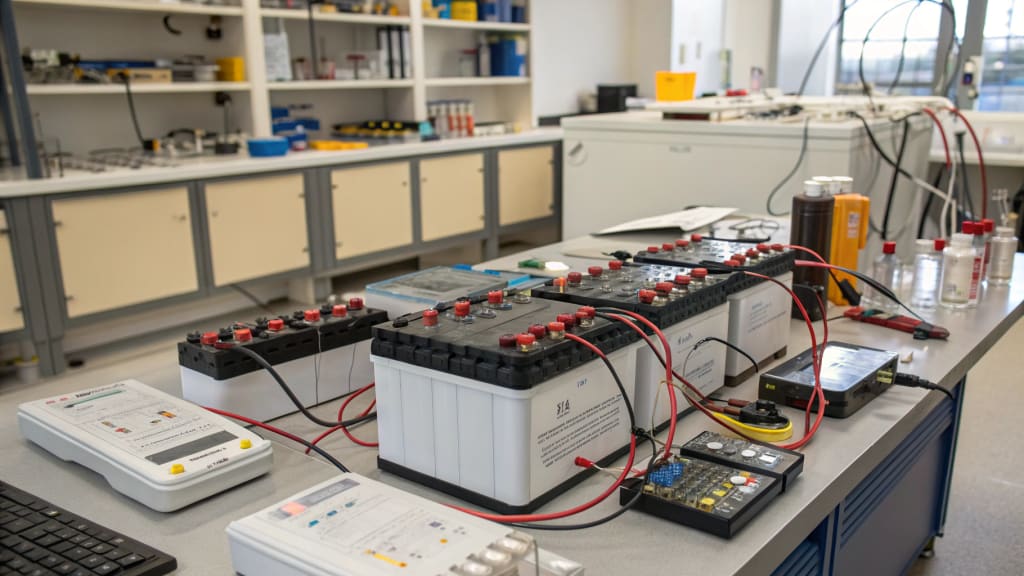
When we set our sights on sodium-ion batteries—the technology poised to rewrite the energy rulebook—we discovered a deeper truth: the real challenge is not the cell itself, but the void that surrounds it. Today, no system-level solution exists that is purpose-built for sodium.
The field is a blank page. "Just swap lithium parts for sodium"? We rejected that idea on day one. Sodium’s unique physics means a cut-and-paste approach would birth a low-performance, high-risk Frankenstein.
We had to start from zero and solve integration at its core. Our product is a family of circuit boards: a protection board (BMS) that guards the cells, an MPPT board that harvests every watt of solar, and an inverter board that delivers AC power. All are orchestrated by a central control panel. The hurdle: make these legacy "lithium-minded" boards speak fluent "sodium" and fight as one unit.
Challenge 1 – Rewrite the language of dialogue
The most basic—and thorniest—problem. A lithium-born inverter treats 2.8 V as imminent cell death and shuts down. For sodium, 2.5 V—or even 2.2 V—can be perfectly healthy. Wire the boards together unmodified and the inverter will panic, cut output early, and strand usable energy.
Our answer: dive into the firmware, rewrite the decision trees cell-by-cell. We must teach every board the new sodium vocabulary: what is a safe voltage? What is the temperature-compensated discharge curve? No global standard exists; we mapped it ourselves through thousands of lab-hours and burned those findings into each board’s DNA.
Challenge 2 – Forge a central brain that thinks for itself
In a sodium-native system the control panel cannot be a mere mailbox; it must be a central brain capable of complex computation and autonomous judgment.
Picture this: −35 °C outside, 20 % state-of-charge, user switches on a 1,500 W heater. In milliseconds the brain must:
• Read the cell’s real-time internal resistance and voltage sag from the BMS,
• Fetch actual output power from the inverter,
• Run our proprietary low-temperature sodium model,
• Predict whether continued 1,500 W draw will cause irreversible damage,
• Decide: allow operation, but intelligently cap power at 1,000 W—balancing user warmth against battery longevity.
This multi-variable, forward-looking decision-making is impossible with simple "bolt-together" products. Behind it sits a dedicated control algorithm that carries the Sodium Frost Glow signature.
We are not assembling off-the-shelf parts; we are forging an elite task-force. Every "soldier" (hardware board) is retrained from the ground up and placed under a brilliant "commander" (central panel) so they fight as one heart for the sodium cause, delivering 120 % of their rated capability.
The road is hard because every step writes the industry’s missing pages. That, precisely, is the power of pioneering.
About the Creator
roc chiang
I'm a tech enthusiast and entrepreneur based in Vancouver. I share original articles on technology, business and other related topics on social media to showcase my passion and insights.
Editor-in-Chief:fengtou.ca
Keep reading
More stories from roc chiang and writers in Geeks and other communities.
Where is the Breakthrough for Batteries in Cold Weather?
In the winter of 2024, Jack and his friends drove to the interior of British Columbia, Canada, looking forward to a snow camping trip to capture the dreamy moments of the Aurora Borealis. The tents were set up, the bonfire was lit, but the temperature quietly dropped to -20°C. Suddenly, Jack's lithium battery power supply "went on strike"—the tent light went out, the phone battery was critically low, the heater stopped working, and the romantic adventure instantly turned into a survival challenge. "Why do batteries always fail at the crucial moment?" Jack asked in frustration. This question troubles countless outdoor enthusiasts, explorers, and even residents and businesses in cold regions. Where is the breakthrough for batteries in cold weather? The answer may lie in the NB251 sodium-ion battery from Sodium Frost Glow.
By roc chiang7 months ago in Geeks
Marvel Zombie
The last entry into our 2025 superhero projects catalogue is Marvel Zombies. This was a show that was anticipated by absolutely no one and it disappeared from the public consciousness as quickly as it was released. There was nothing special about the project that made it a must see, or a must remember. In fact if anything it's a must forget.
By Alexandrea Callaghan25 days ago in Geeks
Book Review: "The Queen" by Andrew Morton
You're probably wondering why on earth I would read this book. It was free and it was a fair length. That was basically it at first. But another reason is because I enjoyed the show The Crown and so, it only makes sense to read a book that goes through separating facts from fictions - and to be fair, there aren't a lot of fictions about the show it seems. From the birth of the little princess and the way in which her father was reluctantly to become the king, all the way to meeting and marrying the veteran prince, Duke of Edinburgh and even down to the death of her father, queendom and beyond, this book actually gives us a lot about a woman who basically embodied the greatness and modernisation of the British 20th Century.
By Annie Kapur2 days ago in Geeks


Comments
There are no comments for this story
Be the first to respond and start the conversation.