
From Industry Critic to Deal Architect: How David Zaslav Helped Shape the Warner–Paramount Merger
A look at the strategy, risks, and leadership decisions behind one of the largest media consolidations in recent history

When David Zaslav took control of Warner Bros. Discovery, he inherited a company navigating debt, shifting viewer habits, and an uncertain streaming economy. Just a few years later, he became central to one of the largest media transactions in Hollywood history: the $111 billion merger between Warner Bros. Discovery and Paramount Global.
The path to that deal was not simple. Zaslav faced criticism from talent, employees, and parts of the public. At one point, he was described in industry headlines as one of the least popular executives in Hollywood. Yet he remained focused on restructuring costs, redefining streaming strategy, and pursuing scale through consolidation.
This article explains how Zaslav moved from controversy to negotiation table, and how his approach helped shape the Warner–Paramount mega-merger.
Early Restructuring and Cost Controls
When Warner Bros. Discovery was formed through a prior merger, the company carried significant debt. Zaslav made cost reduction a priority.
Projects were canceled. Streaming strategies were reassessed. Some completed films were shelved for tax and accounting reasons, sparking criticism from creative communities.
Supporters argued that these moves were necessary to stabilize finances. Critics said they signaled a retreat from creative investment.
Zaslav maintained that long-term survival required financial discipline. He emphasized profitability in streaming rather than rapid subscriber growth at any cost.
These early decisions shaped his leadership style: reduce expenses, focus on core franchises, and build scale where possible.
Reputation Challenges in Hollywood
Cost-cutting decisions drew strong reactions.
Several creative professionals publicly criticized the cancellation of projects and shifts in development strategy. Industry publications reported dissatisfaction among some filmmakers and actors.
Zaslav’s compensation package also attracted scrutiny during a period of layoffs and restructuring.
The phrase “most hated man in Hollywood” appeared in some commentary, reflecting frustration among certain industry voices.
However, Zaslav did not significantly change direction. He continued emphasizing financial restructuring and integration of Warner and Discovery assets.
Over time, some investors responded positively to improved cost management and clearer streaming profitability goals.
The Strategic Case for Consolidation
The broader entertainment market has been under pressure. Cable television revenues have declined. Streaming platforms compete for subscribers in a crowded marketplace. Content production costs have increased.
Zaslav has repeatedly argued that scale is essential in this environment. Larger companies can distribute production expenses across more platforms and regions. They can negotiate stronger advertising and licensing deals.
By pursuing a merger with Paramount, Zaslav sought to create a company with deeper libraries, broader global reach, and stronger bargaining power.
Paramount brought assets including Paramount Pictures, CBS, and streaming operations. Warner contributed HBO, Warner Bros. Pictures, CNN, and other established brands.
The combination offered potential cost savings and expanded intellectual property portfolios.
Negotiating the Warner–Paramount Deal
The reported $111 billion valuation reflects both equity and debt considerations.
Negotiations required coordination between executive teams, boards of directors, and financial advisors. While details of private discussions remain confidential, public filings indicate that both sides viewed consolidation as a path to long-term competitiveness.
For Zaslav, timing was important. Warner Bros. Discovery had made progress in reducing debt and improving streaming economics before entering advanced talks.
Paramount faced its own challenges in expanding its streaming presence while maintaining traditional network operations.
Bringing the two companies together offered the possibility of combined streaming platforms, shared production resources, and integrated marketing efforts.
Streaming as a Central Focus
One of the most significant elements of the merger involves streaming strategy.
Warner Bros. Discovery operates Max. Paramount runs Paramount+. Both platforms compete in a market dominated by large global services.
Zaslav has previously signaled that streaming must become profitable rather than purely growth-driven. Merging platforms could reduce duplication in technology infrastructure and content acquisition.
However, combining services involves brand considerations, pricing decisions, and customer retention planning.
Zaslav’s approach has emphasized measured integration rather than rapid transformation.
Managing Debt and Financial Risk
Warner Bros. Discovery entered its prior merger with substantial debt. Paramount also carries financial obligations.
Investors will closely monitor how the combined company manages liabilities.
Zaslav’s earlier cost-cutting actions were partly aimed at strengthening the company’s balance sheet before pursuing additional consolidation.
Financial discipline remains central to his strategy. Analysts expect continued review of non-core assets, operational efficiencies, and capital allocation.
Whether the merged company can generate sustainable growth while managing debt will shape Zaslav’s long-term legacy.
Balancing Creative Output and Efficiency
A recurring challenge for Zaslav has been balancing financial responsibility with creative investment.
Hollywood relies on talent relationships. Studio reputations depend on consistent production and support for filmmakers.
Following earlier cancellations, Zaslav increased communication with creative partners and emphasized franchise development.
The merger expands access to established properties across film and television. DC, Harry Potter, Mission: Impossible, Star Trek, and other brands now sit within a broader corporate framework.
The question moving forward is whether efficiency measures can coexist with steady creative output.
Regulatory Review and Political Scrutiny
A merger of this size requires regulatory approval.
Federal agencies will review the transaction under antitrust standards. Lawmakers may examine potential impacts on competition in film distribution, streaming, and broadcast television.
Zaslav and other executives must demonstrate that the deal does not significantly reduce market competition or harm consumers.
Regulatory review can take months. Conditions or divestitures may be required before final approval.
How Zaslav navigates this stage will be critical.
Employee and Industry Reaction
Large mergers often bring workforce changes.
Integration of corporate departments may lead to restructuring. Some employees face uncertainty during transitional periods.
Industry organizations will watch how the combined company handles staffing decisions and union agreements.
Zaslav has stated publicly that integration planning aims to create a stable, competitive enterprise rather than simply reduce headcount.
Clear communication with employees will influence morale and long-term performance.
From Criticism to Influence
Zaslav’s trajectory reflects the tension between creative culture and corporate management.
Early in his tenure at Warner Bros. Discovery, public perception was shaped by project cancellations and restructuring headlines.
Over time, his focus shifted toward long-term positioning within a consolidating industry.
By playing a central role in the Warner–Paramount merger, Zaslav moved from being viewed primarily as a cost-cutter to being seen as a deal architect.
The shift does not erase earlier criticism, but it reframes his leadership around strategic consolidation.
The Broader Media Landscape
The merger reflects larger trends in the entertainment sector.
Media companies are responding to audience fragmentation, global competition, and digital disruption.
Scale provides leverage in negotiations with advertisers, distributors, and technology platforms.
Zaslav’s strategy aligns with this broader consolidation pattern.
Whether consolidation ultimately strengthens creative diversity or reduces competition remains debated among analysts.
What Happens Next
Regulatory review remains the immediate hurdle.
If approved, integration teams will address leadership structure, streaming alignment, brand strategy, and operational consolidation.
Zaslav is expected to play a central role in shaping executive appointments and long-term direction.
The success of the merger will depend on effective integration, disciplined financial management, and consistent creative output.
A Defining Chapter in Zaslav’s Career
David Zaslav’s leadership has generated both criticism and support.
His approach prioritizes financial stability and strategic scale. The Warner–Paramount merger represents the clearest expression of that strategy.
Whether history views him as controversial or pragmatic may depend on how the merged company performs over time.
For now, he stands at the center of one of the most significant corporate shifts in modern Hollywood — not as an outsider criticized for cost reductions, but as a key figure shaping the next phase of media consolidation.
The transition from public criticism to negotiation leader underscores the complexity of running a modern entertainment company. In a market defined by rapid change, leadership often requires difficult decisions.
As the industry evolves, Zaslav’s role in the Warner–Paramount merger will remain a defining moment in both his career and the broader transformation of Hollywood.
About the Creator
Saad
I’m Saad. I’m a passionate writer who loves exploring trending news topics, sharing insights, and keeping readers updated on what’s happening around the world.
Why a Tiny Troupe Kept Its Kennedy Center Dates
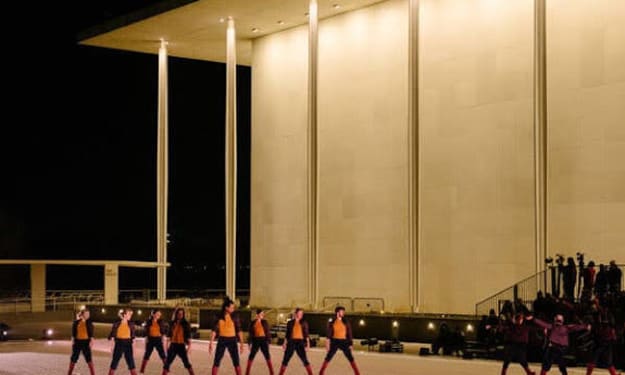
Against a backdrop of mounting financial pressure and uncertainty in the performing arts world, a small touring theater troupe has chosen to keep its scheduled performances at the John F. Kennedy Center for the Performing Arts, defying expectations that it would cancel its appearances. The decision has drawn attention not only because of the venue’s prestige, but because it reflects a broader struggle facing independent artists navigating rising costs, political sensitivities, and shrinking audiences. The troupe, made up of fewer than a dozen performers and crew members, had quietly debated whether appearing at the nation’s most prominent cultural institution was financially and logistically viable. Travel expenses, accommodation, and production costs nearly exceeded what the group expected to earn from ticket sales. Yet in the end, the performers agreed that walking away would be a greater loss than staying. A Calculated Risk “We knew it might not make sense on paper,” said the troupe’s artistic director in an interview. “But artistically and symbolically, it mattered.” For the group, the Kennedy Center represented more than a paycheck. It offered visibility, legitimacy, and the chance to reach audiences that would otherwise never encounter their work. Several members said they worried that canceling would damage future opportunities and send a message of retreat at a time when small arts organizations already feel sidelined. The troupe’s performance dates had been booked months in advance, before rising inflation and uncertainty over arts funding reshaped touring budgets. By the time the show approached, the group faced a difficult choice: absorb the losses or withdraw entirely. Pressure from Multiple Directions The decision unfolded amid broader tensions surrounding programming at national cultural institutions. Some artists have canceled appearances at high-profile venues over political concerns or disagreements with donors and sponsors. Others fear that performing in such spaces risks criticism from audiences who see large institutions as disconnected from grassroots culture. Members of the troupe acknowledged these debates but said their choice was rooted in practicality rather than protest. “We didn’t want to turn this into a political statement,” one performer said. “We just wanted to perform.” Behind the scenes, the group pared back technical requirements, simplified sets, and relied on volunteer help from local supporters to reduce expenses. Friends in the theater community offered couches to sleep on and meals to stretch the troupe’s limited funds. The Value of Being Seen For many small companies, appearing at the Kennedy Center is considered a career milestone. Even a short run can open doors to grants, residencies, and future tours. Cultural economists note that prestige venues act as amplifiers: they provide recognition that cannot easily be replicated through regional shows or online exposure. “Visibility at a place like this can redefine a troupe’s trajectory,” said an arts policy analyst. “The risk is real, but so is the reward.” Audience turnout for the troupe’s opening night was modest but enthusiastic. Several attendees said they came specifically to support independent artists who were brave enough to take the stage despite financial uncertainty. A Statement Through Persistence While the troupe avoided framing its decision as political, the act of showing up carried symbolic weight. In a time when many productions are postponed or scaled back, their presence was interpreted by some as a quiet declaration that small-scale art still belongs on the biggest stages. Critics who reviewed the performance highlighted its rawness and intimacy, qualities that contrasted sharply with the large halls and formal atmosphere of the venue. One reviewer described the show as “proof that ambition does not depend on size.” Looking Ahead The troupe will leave Washington with little profit, but with renewed confidence and broader recognition. Members say the experience reinforced their belief that survival in the arts now depends on resilience and adaptability rather than financial security alone. “We didn’t come here expecting to win,” the artistic director reflected. “We came because we believe the work deserves to be seen.” Their decision to keep the Kennedy Center dates underscores a reality facing many small arts groups: even when the numbers don’t add up, the opportunity to perform on a national stage can outweigh the risks. In an uncertain cultural landscape, persistence itself becomes a form of expression.
By Fiaz Ahmed 7 days ago in Geeks



Comments
There are no comments for this story
Be the first to respond and start the conversation.