
Exploring the Moral Dilemmas Behind the Legend of Liu Bo Wen
Beneath its gripping plot, Liu Bo Wen raises thorny moral questions. Is it really about justice—or just personal desire in disguise?

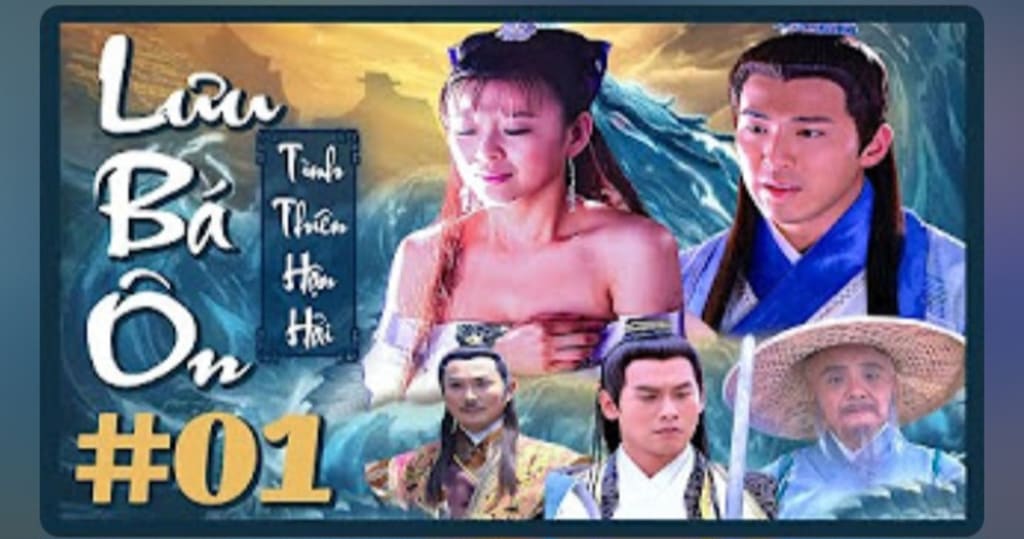
Unpacking Moral Tensions in Liu Bo Wen: When Emotion Challenges Ethics
The historical drama Liu Bo Wen won hearts with its engaging cast and dramatic twists. But beneath the surface lies a deeper concern: ethical ambiguity and character contradictions abound. Heroes blur into antagonists, and emotionally driven choices often overshadow principles. This article explores the moral dissonance embedded in the series, through the lens of traditional values and character logic.
1. Love Among Disciples: Harmony or Distraction?
Liu Bo Wen and Wang A Tu are fellow disciples, following a traditional path of cultivation and discipline. Within such a path, emotional clarity and inner balance are often emphasized over-attachment. Yet the drama frames their romance as “pure love,” presenting it as both noble and touching.
But does this portrayal conflict with the ideals of self-restraint and focus? In traditional practice, personal entanglements are often seen as tests, not triumphs. Instead of prompting reflection, the series idealizes the romance—potentially leading viewers away from the original spirit of the path. 2. Liu Bo Wen and Xia Xiao Qing: A Question of Loyalty and Gratitude
Liu Bo Wen has been betrothed to Xia Xiao Qing since birth, though both were unaware of it. When she later presents their engagement token before the emperor, he declines—largely to protect A Tu’s feelings.
What complicates this further is Xiao Qing’s father once sacrificed greatly to support Liu Bo Wen’s family. When she calls in a promise tied to familial honor, she is refused publicly and without hesitation.
Though Liu Bo Wen later helps clear her name, his initial decision reveals a tendency to prioritize personal emotion over longstanding bonds—a choice that undercuts his image of principled integrity. 3. Wang A Tu: Endearing or Disruptive?
Throughout the story, A Tu’s actions often create setbacks for Liu Bo Wen:
Her predictions frequently miss the mark—except when they conveniently assist the hero.
She makes impulsive choices, occasionally derailing vital missions.
When confronted, she responds with tears rather than transformation.
Despite this, she is consistently portrayed as lovable and pure-hearted. Meanwhile, Xiao Qing—smart, selfless, and restrained—is painted as scheming or insincere. The contrast raises an important question: why is emotional volatility praised, while calm reasoning is criticized? 4. The Death of Yang Tian You: Justice or Vengeance?
Yang Tian You, A Tu’s father, was responsible for the execution of Xiao Qing’s family. When Xiao Qing confronts him, he agrees to confess but is killed before he can do so. She is then falsely accused of the crime—and A Tu demands her execution in revenge.
This moment is complex. The real villain remains at large, and yet public sympathy shifts toward A Tu, despite her father’s past. It raises the question: is vengeance masking deeper truths? And how does this affect our perception of justice? 5. The Emperor and Empress: Compassion or Complicity?
When the Empress’s brother Hou Jia is revealed as the true antagonist, she attempts to shield him. The Emperor, caught between duty and affection, hesitates—eventually considering action against Liu Bo Wen himself.
This dynamic reveals a recurring theme: personal loyalty superseding public duty. Liu Bo Wen’s commitment to justice is overshadowed by royal indecision, challenging the viewer to ask: where does compassion end, and complicity begin? 6. Hu Wei Rong: Patriot Misunderstood?
Portrayed as a villain, Hu Wei Rong is, in fact,, a spy from the fallen Nan Wu kingdom, working covertly against the Ming court. He is strategic and disciplined and even outwits Liu Bo Wen on occasion.
Viewed differently, Hu Wei Rong’s loyalty to his homeland could be seen as a form of silent heroism. The narrative, however, labels him a traitor—highlighting how context shapes character. Conclusion: Drama, Ethics, and the Role of Storytelling
While Liu Bo Wen delivers suspense and emotional stakes, it often challenges conventional ideas of justice, duty, and loyalty. Romantic ties blur spiritual focus, impulsive acts are rewarded, and moral clarity is frequently lost in the fog of feeling.
Audiences must not only enjoy the surface—but also question what lies beneath. And storytellers, too, hold a subtle power: to entertain, yes—but also to reflect truth with care and character with a conscience.
*This article was generated by AI*.
About the Creator
The Rachels - 2025
Much to my surprise, I have kept a list of the films I‘ve seen this year. I daresay it isn’t complete. There will be films that snuck in on a late night in front of the TV that I would’ve forgotten to note. Or others, that I went to watch at the cinema, but then had a red wine and promptly forgotten about. But it’s not a bad approximation of the films I’ve seen this year. In total, there are 53 films listed, so an average of one a week and one for good luck.
By Rachel Robbins16 days ago in Geeks
Premier League in Mexico: How to Watch
The 2025–26 Premier League season is underway, marking the 34th edition of the competition and the 127th year of top-flight English football. Liverpool start their title defense with confidence after lifting their second Premier League trophy last season, but the return of Leeds United, Burnley, and Sunderland ensures fresh rivalries – including the long-awaited Tyne–Wear derby, back for the first time since 2015–16.
By David Cookabout 19 hours ago in Geeks


Comments (1)
This movie was very famous in Asia, I also watched it more than 10 years ago, it was great. I feel that the character A Xiu in the movie Liu Bo Wen is not useless, maybe the author has another reason for adding this character to the movie, on the surface it seems that A Xiu is a troublemaker, but maybe from another perspective A Xiu is the innermost part of a person: kind to the point of being naive, the heart is oriented towards a noble ideal like Liu Bo Wen but the intelligence is not enough so it turns out to be a failure, a love towards an ideal that does not fade, thanks to catalysts like A Xiu, Liu Bo Wen has the opportunity to develop his strengths and also reflect on himself. However, your analysis also makes me feel like I've watched movies without thinking.