

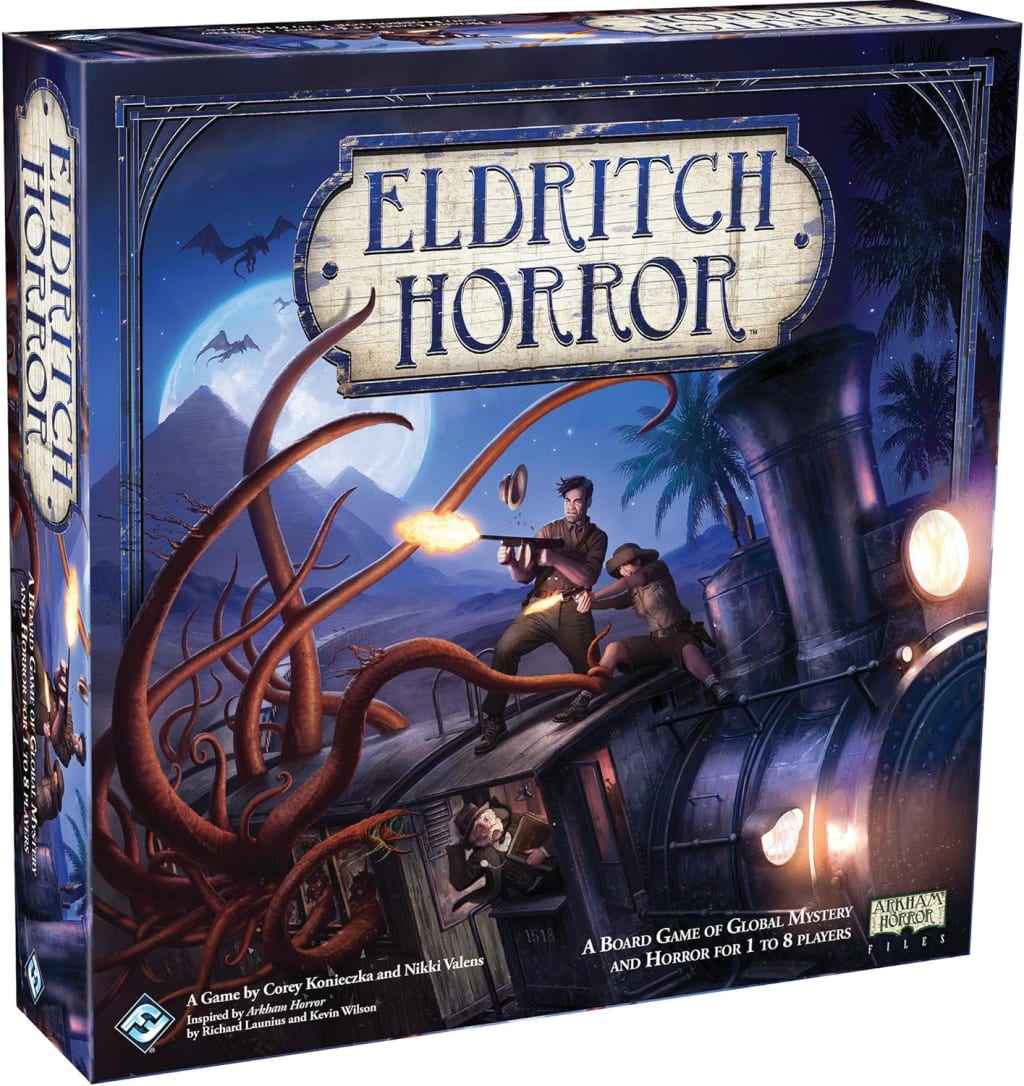
What is Eldritch Horror? To answer that we first need to travel back to February 1926, to when a young man by the name of Howard Phillips Lovecraft wrote the short story “The Call of Cthulhu” that would be published in Weird Tales in 1928. Little did Lovecraft know how influential his works would become after his death in 1937. Thanks to the machinations of August Darleth, the Cthulhu Mythos was born.
The Cthulhu Mythos was Lovecraft’s legacy having left his work to the public; which has become a shared universe in which a variety of fiction writers throughout the years have added to the ever growing Mythos. Hollywood, the Music Industry and other forms of media have all cashed in on the variety of works within the Cthulhu Mythos, to varying degrees of success. From the cheesy Herbert West: Re-Animator movies to Metallica’s Call of Cthulhu, there is no shortage of Mythos inspired media.
For us we have to skip forward from 1926 to 2013 when a company in Minnesota called Fantasy Flight Games created the globetrotting adventure game, Eldritch Horror. Eldritch Horror could be considered a sequel to the board game Arkham Horror, before FFG turned Arkham Horror into a Living Card Game, or LCG.
Eldritch Horror is a co-operative board game that utilises a combination of mechanics such as:-
Action points
Hand Management
Dice Rolling
Point-to-Point movement
Variable player Powers
These are just a sample of the mechanics in game but they will give you an insight into the what the game is like. One of the best things about Eldritch Horror is the player count. Up to eight players can play the game but the game also boasts a solo mode, which I do not recommend if you aren’t running four investigators.
How do you play Eldritch Horror?
I’ll keep this simple; especially given FFG’s habit of making their Rulebooks illegible.
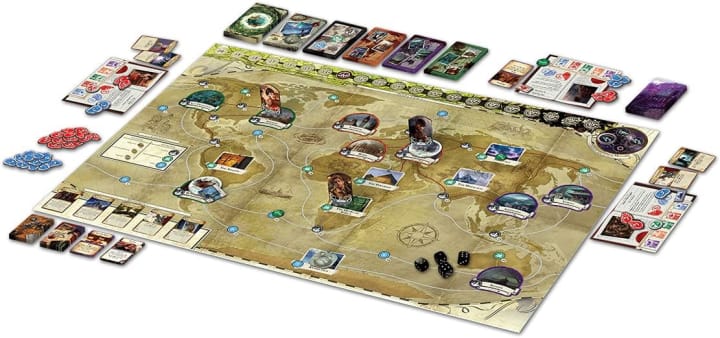

Set-up the game as described in the rulebook and then each player can either be given a random character or they can choose the character they think will be of most use, each character has different abilities and different stats, each investigator from the hunky fisherman, Silas, to the kung fu master, Lily Chen, have the same two health meters. These two meters are Health and Sanity; which are paired with the stats Strength, Observation, Lore, Influence, and Will, these attributes will be made a little clearer later.

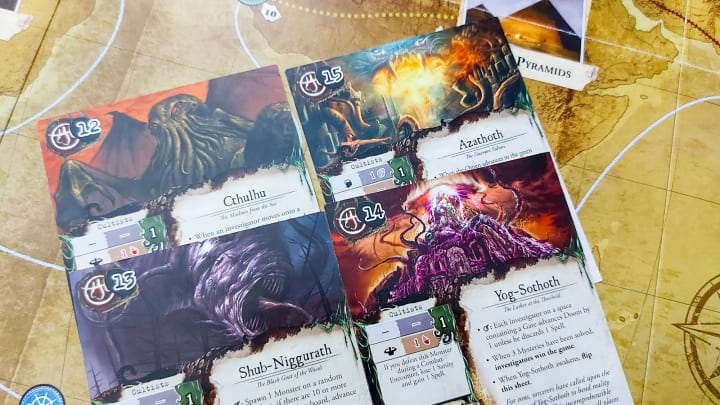
Once you have set up the board, and chosen your investigators, it’s time to pick which Elder God you want to match wits against. The base game comes with Azathoth, Cthulhu, Shub Niggurath and Yog-Sothoth, with each expansion adding either an extra location or an extra “boss” and sometimes both. Once you have chosen the baddie for the game, you adjust the board as per the instructions on the boss’s card.
After this you place your investigator on their allocated space and begin the game.
Each turn is broke down into three phases:-
Action Phase
Encounter Phase
Mythos Phase
I won’t bore you with an in depth guide on how to play it, or I’ll be here all day and you’ll have lost interest long before I am finished. I’ll keep it short and sweet.
The Action Phase: This is the phase that allows players to move, rest, acquire tickets or purchase items. All purchases are based on your character’s influence stat, if your character is about as influential as a can of beans you’ll struggle to buy any decent gear. Your character also has a special action that may be used during the action phase, you only get two actions so plan your action phase very carefully.
The Encounter Phase: This phase will see the players take on quests, encounters, or fighting any of the baddies that spawn through the gates. Remember! Not all baddies are monsters, but all monsters are baddies. Each encounter will test either:-
Lore
Strength
Influence
Will
Observation
You will roll D6 Dice according to the corresponding stat’s number. If you are rolling a test of Strength and your character is Norman Withers, it’s not looking good for you. However, the game does have a cheese factor, you only need to roll one success to pass any encounter. Even if you only roll 1D6, so long as the result is a 5 or 6 you will succeed.
Combat works in much the same way but with a few differences. To start combat you first have to roll a test of Will to see if what you are fighting makes you go insane, if you fail the Will test then you lose one sanity and combat is over as your investigator metaphorically wets their pants. Each creature will require a certain number of successes in order to pass.
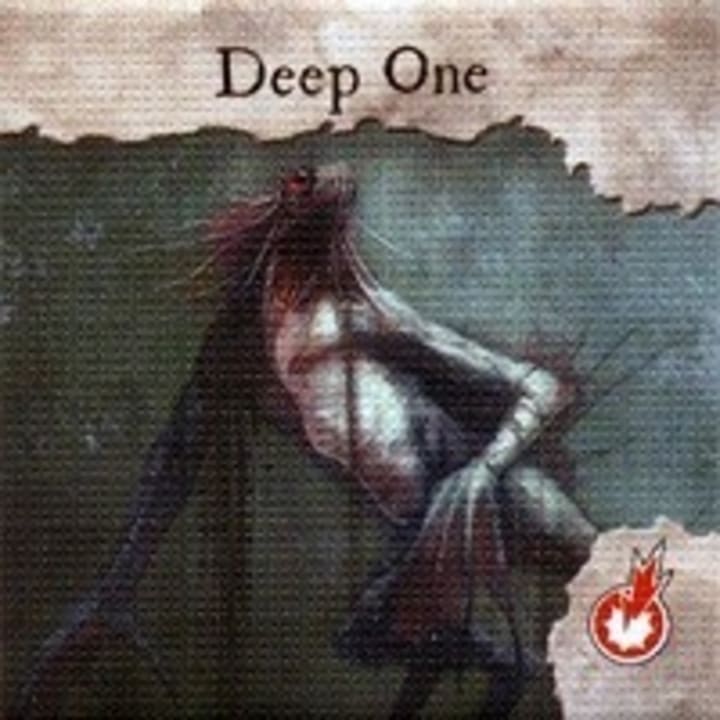
The Deep One for example has a Horror Test of 2. You roll a D6 for every point in your Will stat and hope for two successes. This is only the beginning. If you manage to steel your mind against the eldritch abomination, you still have to fight it.
Some monsters have passive effects, the Deep One has a -2 to Strength tests. That means 2 fewer dice than normal, to a minimum of 1. This where purchasing items comes in handy as weapons often grant extra dice during strength tests, or you may have a spell that can one shot the beast.
Always remember to RTFC! Read The Fudging Card.
The encounter phase is also your primary source of clues and tokens that will help you complete the current Mythos Quest
Like I said, the Encounter Phase is the Investigators’ chance to stick it to the Elder Ones and their primary method of winning the game.

The Mythos phase: The Mythos phase is where Cthulhu and his chums strike back. Every mythos phase you will draw from the Mythos deck. Each card will tell you what bad stuff happens such as:-
Advance the Omen Clock - The Omen Clock regulates the Doom Track. When Omen is advanced, the Doom token advances for every gate that matches the Omen Clock’s current omen. If Doom reaches zero, the Elder One awakens.
Reckoning: If you look at the bottom right corner of the Deep One token above you’ll see a red and white symbol, this is the Reckoning. During the Reckoning monsters, cards and effects will trigger. It always goes in order of Monsters, Ancient One, Ongoing Mythos Cards, Investigators. If you have a Dark Pact card in your inventory, this is where it comes into effect. Monsters can also make you lose health, sanity, or even move closer to the nearest investigator.
Spawn Gates: This is dependent on how many investigators are in the game, it could be 1 gate or 4. Open gates are bad for business.
Monster Surge: Do you see those open gates? Now they’re going to spawn monsters in accordance with how many investigators are in the game.
Spawn Clues: One of the few times the mythos phase will benefit the players.
Place Rumour Token: Rumours are always bad, if left alone they will reap untold havoc in the game, such as removing items from the store.
Spawn Eldritch Tokens: These don’t do anything bad, but they are often needed for certain Mythos quests instead of clues.
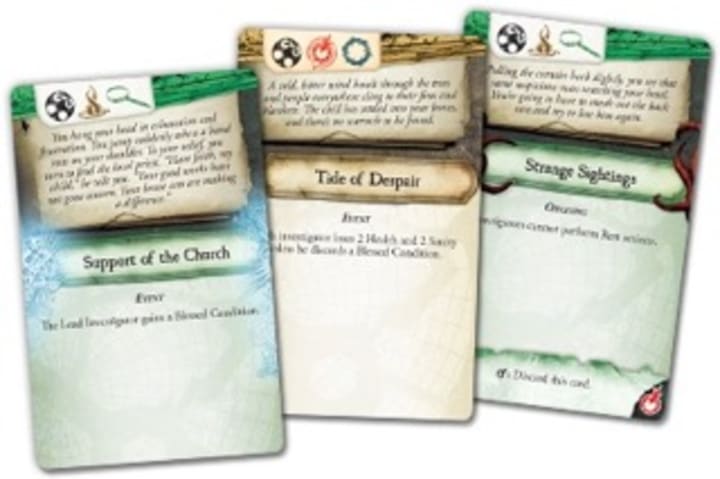
The Mythos phase is not all doom and gloom, there are three grades of Mythos card as seen above, excuse the Chinese print. The leftmost card displays frost on the sides which often makes the game a little easier and can often aid the investigators. The rightmost card has tentacles on the side and they make the game significantly harder. You can adjust the number of these cards in the Mythos deck during setup.
How do you win Eldritch Horror?
In order to win the game you need to complete all three Mythos Quests.
How do you lose Eldritch Horror?
Like any good co-operative game there is usually only one way to win and multiple ways to lose. If the Doom Track reaches 0 you lose the game, if the Mythos Deck runs out of cards you lose, certain rumour cards cause you to lose if the relevant criteria has been met.
What happens if my investigator goes insane or dies?
Don’t worry about insanity or death for they are only temporary. If your investigator dies or goes bananas you place the investigator in the prone position and set the investigator card along with their inventory to the side for later. At the start of the next turn the player can chose a new investigator to play as. If a player comes across a downed investigator they can take an action with the fallen one and aim to acquire that investigator’s loot. Sometimes a downed investigator can help push back the Doom Tracker

Why should you play Eldritch Horror?
If you like games such as Forbidden Island, Pandemic, Spirit Island or Nemesis you’ll enjoy Eldritch Horror. It’s simple mechanics make for a deeply strategic game where every action counts. Whereas games like Pandemic and Forbidden Island give the player a little more freedom in terms of what they can do, Eldritch Horror punishes players for making hasty decisions. The more investigators in the game, the faster you are likely to complete quests, but the game has an inbuilt difficulty scaler. If you play it solo the Mythos deck may take it easier on you but it will longer to complete each Mythos Quest.
Eldritch Horror is incredibly thematic; from the Gods you have to defeat to the way every interaction is written. Everything gives off that 1920s feel and you could almost believe you were back in the age of Flappers and Surrealism. The artwork is gorgeous, maybe not as nice as games such as Gloom of Kilforth but for thematic artwork it’s really good. Unlike many co-op games where if your player dies then you are out of the game, Eldritch Horror allows you to start again with a new investigator. Each investigator has their own backstory and reasons for stopping the oncoming apocalypse.
Eldritch Horror has a lot of re-playability with the base game, their may only be four Ancient Ones but there is no guarantee that you will manage to win every game. However, like many games there are multiple expansions for Eldritch Horror. Each expansion adds either a new Ancient One such as Forsaken Lore which introduces Yig and the Children of the Serpent, or Mountains of Madness which introduces the Antarctic as a location and the Rise of the Elder Things as an optional baddie.
Each expansion will also introduce new investigators and new conditions for the game such as the “Lost in Space and Time” card introduced in Forsaken Lore.
Don’t take my word for it, find someone who has a copy of this game and try it out for yourself, you will be glad you did. Remember ‘That not dead which can eternal lie, and with strange aeons even death may die.’
About the Creator
Alan Walker
Part-time Avid Gamer, self appointed nerd, and volunteer Karate Instructor
Long time reader, first time blogger
Keep reading
More stories from Alan Walker and writers in Geeks and other communities.
Top 10 References in Warhammer 40K
It’s no real surprise that a lot of media likes to make references to past works; whether they be subtle or otherwise, just watch The Amazing World of Gumball episode ‘The Meaning of Life’ for a not so subtle nod to Conan the Barbarian.
By Alan Walker12 months ago in Geeks
A Knight of the Seven Kingdoms Series Review (Season 1)
As one of the biggest properties in fantasy, A Song of Ice and Fire remains immensely popular with audiences. After reaching far into the past with House of the Dragon, a second spin-off was on the cards. A Knight of the Seven Kingdoms serves up a bite-sized slice of action and drama, but it still claims a spot among the best small-screen titles.
By Robert Cain4 days ago in Geeks
Robert Carradine and his Brothers have a lasting Hollywood legacy
Robert Carradine was a beloved entertainer The death of Robert Carradine at 71 has shocked the entertainment industry and his fans. His brother, Keith Carradine, revealed that the actor dealt with bipolar disorder and died by suicide on February 23.
By Cheryl E Preston7 days ago in Geeks


Comments
There are no comments for this story
Be the first to respond and start the conversation.