
Documentary Review 'More than Miyagi: The Pat Morita Story'
What do you really know about the man behind Mr Miyagi.

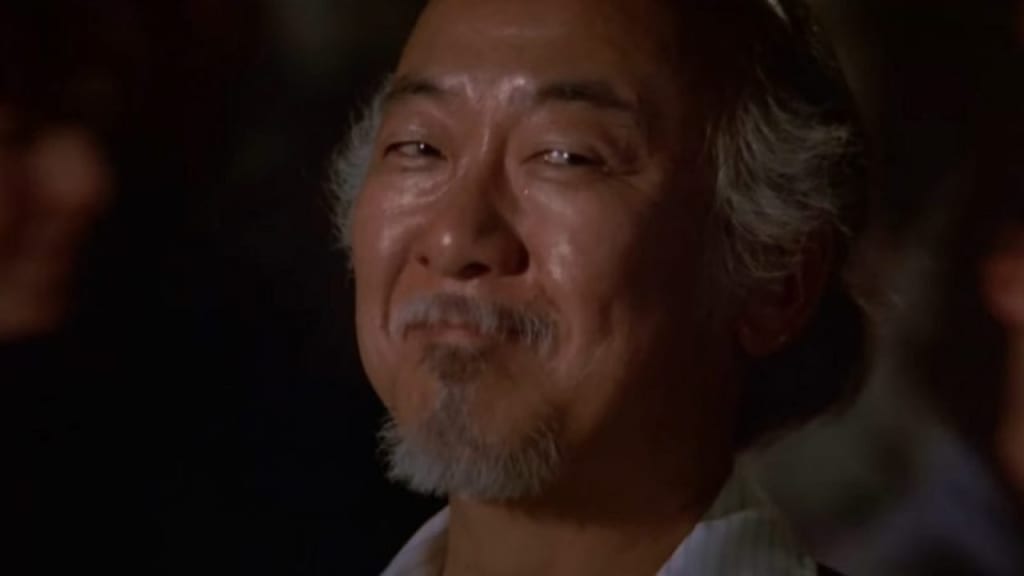
What do you know about Pat Morita? You likely know that he was Mr Miyagi in The Karate Kid. If you’re older you may remember Morita as Arnold, the proprietor of the restaurant hang out for the Happy Days gang. But did you know that Pat Morita found his first success as a stand up comic? I sure didn’t and the problematic aspects of his fame in the 1960s and 1970s is a cringe inducing trip into the American history of racism.
The new documentary, More than Miyagi The Pat Morita Story, doesn’t have much commentary on Morita’s role in his own exploitation, preferring to see it as a function of the time in which he lived and part of what made his story of overcoming Hollywood bias so 'inspiring.' Whether you are able to see it the way that filmmaker Kevin Derek and Morita’s wife, Evelyn Guerrero, appear to, as just a function of the times, is up to you. More than Miyagi is more interested in the man than his place in history.
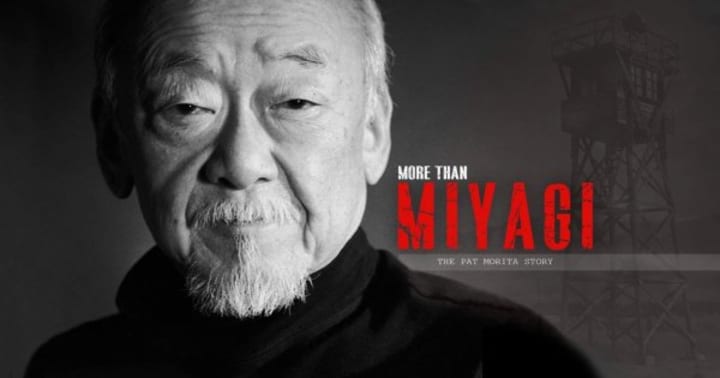
Noriyuki ‘Pat’ Morita didn’t make a move toward the entertainment industry until he was 30 years old. One night he decided to get on stage at a San Francisco comedy club and crack wise about his Asian heritage and he found his calling. After working in San Francisco he was introduced to Sally Marr, the mother of fellow comic Lenny Bruce, who became his manager and brought Morita to television.
Morita was a regular on the talk show circuit of the late 60’s and early 70’s appearing everywhere from Laugh In to The Captain & Tennille Show, always beloved by audiences and the people he worked with. Morita used comedy to cope with a history of abandonment and racism. At the age of 2 Morita was in a wheelchair and was told he may never walk. He spent years in a hospital where the staff became more of a family to him than his own parents.
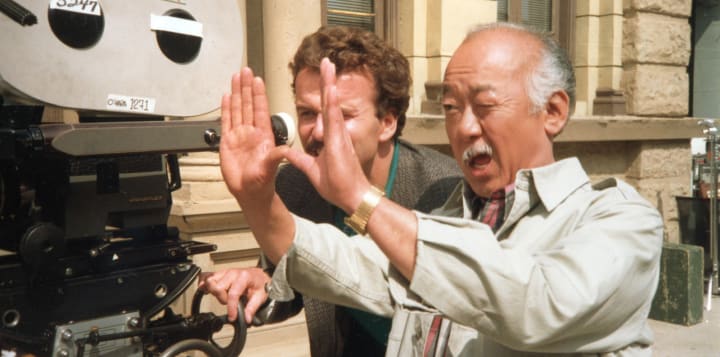
When he finally reunited with his parents, it was in an internment camp in California during the height of World War 2. So, not only had he been taken from his pseudo family in the hospital, he became an outcast and a captive alongside his distant parents. It was a jarring and transformative time and one that informed Morita that his place in the world was uncertain, a problem he tackled via alcohol.
Though no one in More than Miyagi says that Pat Morita was a functioning alcoholic during his most successful years in Hollywood but, all signs point to that unique distinction. By Morita’s own admission, he drank every single day from his Happy Days fame through The Karate Kid and eventually made the move from functioning to non-functioning, becoming unreliable and coasting on past glory just to get enough for more booze.
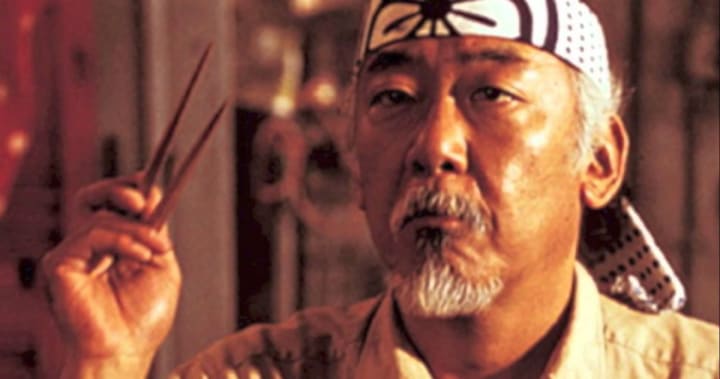
If you ever wondered why the drunk scene in The Karate Kid was so authentic it was because Pat Morita knew all about being drunk, it was a consistent state of mind for him. And yet, when he needed to function during the late 70’s and mid-80s, his most prolific time, he transformed into a professional, generous and beloved colleague. It surprised people when Pat would admit to being drunk on sets. At his peak he still memorized scripts and was capable of encouraging and supporting his fellow actors.
It’s a dichotomy that many who have dealt with addiction can relate to. Morita prided himself on appearing sober. It’s a typical coping mechanism for alcoholics to find ways to hide their drinking behind a veneer. Morita, for several years, mastered that ability as those who decided to participate in this documentary attest to. Henry Winkler, Morita’s Happy Days co-star, saw Morita at his best and at his lowest point and it wasn’t until that low, which came during a Happy Days 30 year reunion, that Winkler understood how serious Pat’s issues were.

Winkler, by the way, continues to have the best reputation in all of Hollywood. There is a reason why 'The Fonz' is so beloved, he’s loving, caring, compassionate and so sweet. Those qualities radiate from Winkler as he speaks of Pat Morita as a co-star and colleague. He never claims to have been close to Morita but he always treated him like a beloved old friend and it’s not hard to imagine that’s just how Henry Winkler treats people in general.
So, what can we learn from Pat Morita’s time as, I kid you not, ‘The Hip Nip.’ That was his billing in comedy clubs, lounges and bars across the country. He once got a laugh by apologizing for what his people did to that beautiful harbor in Hawaii. He played stereotypical characters across television for years because that was what was offered to him and he had kids to feed. Is that an excuse? No, just an explanation.
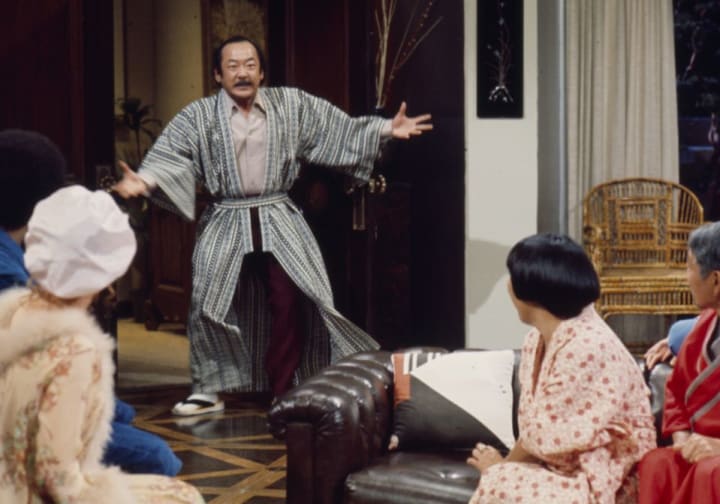
It was a different time, that’s what people like to say in order to justify enjoying what they enjoy. It’s easy for us to say that, we didn’t have to be the one subjected to it. You may not have been the producer who asked Morita to play these stereotypical characters but we have to own up to watching them and even enjoying them. Is The Karate Kid a good movie? I like to think so but is just casting an Asian man just to play a karate master a little on the reductive side? Yes, as is asking him to affect an accent that he doesn’t have in real life is REALLY on the reductive side?
That’s the bargain we must make with the past. The Karate Kid is a guilty pleasure because we are watching a reductive stereotype AND a tremendous, genuinely great performance. Both of these aspects exist. How you reckon with them is entirely up to you. More than Miyagi: The Pat Morita Story passes no judgment or opinion on these aspects and leaves us to reckon with Morita and his ephemeral legacy. More than Miyagi works because it acknowledges what no one wants to talk openly about but doesn't get derailed from the purpose of venerating and loving a deeply flawed and complex individual.
More than Miyagi: The Pat Morita Story is in limited virtual theatrical release as of February 5th, 2021 and will soon be available on streaming rental services.
About the Creator
Sean Patrick
Hello, my name is Sean Patrick He/Him, and I am a film critic and podcast host for the I Hate Critics Movie Review Podcast I am a voting member of the Critics Choice Association, the group behind the annual Critics Choice Awards.
Keep reading
More stories from Sean Patrick and writers in Geeks and other communities.
Movie Review: 'Phantom Thread'
Phantom Thread is incredible. I’m not surprised by this; P.T Anderson has proven to be one of the most remarkable and consistently inventive directors of his era. Nothing surprises me about P.T Anderson crafting an incredible film. What did catch me off guard was the strange and fascinating way in which Phantom Thread is incredible. There is no predicting where this study of obsession and genius is headed.
By Sean PatrickExclusive • 8 years ago
The Rachels - 2025
Much to my surprise, I have kept a list of the films I‘ve seen this year. I daresay it isn’t complete. There will be films that snuck in on a late night in front of the TV that I would’ve forgotten to note. Or others, that I went to watch at the cinema, but then had a red wine and promptly forgotten about. But it’s not a bad approximation of the films I’ve seen this year. In total, there are 53 films listed, so an average of one a week and one for good luck.
By Rachel Robbins25 days ago in Geeks


Comments
There are no comments for this story
Be the first to respond and start the conversation.