
Dark: Do we have free will?
A short analysis on the themes of Netflix’s Original show: Dark
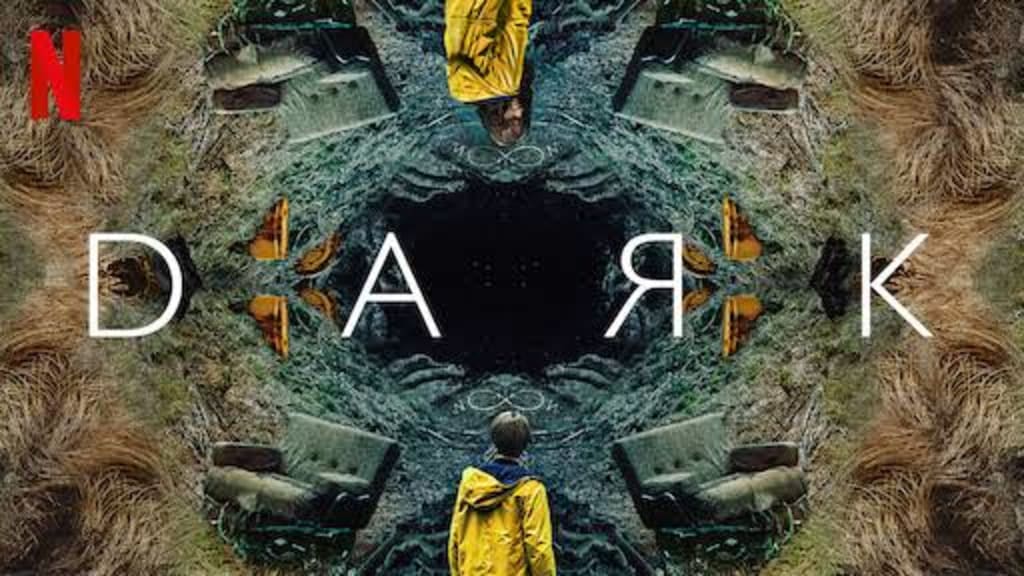
Netflix has garnered a reputation in recent years of being a company that cares more about quantity over quality. Through the slog of terrible reality shows and hundreds of cooking competitions, a few genuinely brilliant shows have been released under the Netflix brand. Many of these original works of art are cancelled before their time, but thankfully a little known German show was able to avoid the Netflix curse and blossom into one of the best works of fiction to grace our screens in recent years.
Dark released in 2017 and follows the complex lives and twisted relationships of four families living in Winden, Germany. Their lives are thrown into disarray as children around town begin to disappear, and what begins as a beautifully written drama mystery descends into the twisted tale of a town trapped in an eternally doomed time-loop.
Several brilliant and complex themes are presented to the viewer throughout the shows three seasons, but one of the most through provoking tackles the concept of free will.
Are we in charge of our destiny? Or are we nothing more than slaves to biological function and our emotional attachments?
As the show progresses it becomes apparent that each and every person in Winden has a dirty secret they want to bury. Lies, love, and hatred span generations, and as our characters begin venturing through time we start to see how history has a habit of repeating in more ways than one.
Ulrich Neilson is one of the most compelling characters that makes his debut as a father of three who is currently having an affair. After his youngest child, Mikkel, disappears and he discovers that the towns John Doe is that of his brother who disappeared thirty-three years ago, Ulrich is able to identify the man who shattered his childhood by taking his sibling away.
Assuming that Helge Doppler, through the use of time travel, had also had a hand in the disappearance of his son, Ulrich tracks the elderly man into the Winden caves and through the passage at it’s heart, launching him sixty-six years into the past.
Now loose in 1953, Ulrich manages to track down a younger version of Helge Doppler and attempts to kill him to prevent the disappearance of his brother and son. Ulrich attempts to hide the body, not realising that the boy is still alive.
Unfortunately for Ulrich, his attempt to stop the man from ruining his life was the very same action that sent Helge down the path that leads to the kidnapping of Mads Neilson.
This action creates a paradoxical loop in which Helge will always kidnap Mads in 1986 and Ulrich will always try to kill Helge in 1953. Because they don’t know the true extent of their actions, they will continue to make the same decisions over and over again.
If they are choosing to do the same thing every time, do they actually have free will? Ulrich is always going to impulsively act on his grief. A slave to his own emotions.
In season Three, we are granted a look at a different reality in which Mikkel never disappears and Ulrich chooses to leave his wife for his mistress, Hannah.
These are major life differences, and yet even then Ulrich continues to make the same decisions. He cheats on Hannah with Charlotte Doppler. He still identifies Helge as Mads’ kidnapper and tries to kill him in 1953.
Is this free will? Does Ulrich Neilson really have a choice in how he reacts to the horrible world around him?
This inability to choose how we feel is best reflected, however, in the relationship between Jonas Kahnwald and Martha Neilson.
The two have had a slow burn, budding romance throughout their early teenage years, resulting in incredibly strong feelings for the other from both parties. These feelings grow from a simple crush to love, which quickly shifts from a blessing to a curse once Jonas learns that his father is actually Mikkel Neilson, Martha’s younger brother.
Now scarred with the knowledge that the love of his life is his aunt, Jonas tries to fight off his feelings and cut their connection entirely. As we see Jonas at various stages in his life, however, it becomes apparent that he was never able to get over Martha. Relations be damned, his love for her influenced every decision he made for sixty-six years.
What are you supposed to do when you feel that strongly about somebody for so long - even after they have passed away?
This overwhelming obsession with another person is also reflected in Jonas’ mother, Hannah.
Upon viewing Hannah’s teenage years in 1986, it quickly becomes apparent how infatuated she is with Ulrich Neilson. She fights desperately for his attention in school, almost always losing it in favour of Katarina. At the end of Season One, Episode Three, we see her pasting pictures of him in a scrapbook.
Thirty-three years later, Hannah is in the exact same position as she was before. Though she is now sleeping with Ulrich, he continuously avoids telling her that he loves her. At the end of the day, he is still choosing to give Katarina most of his attention. Hannah is nothing more than a mistress to him.
This inability to get what she wants most of all drives Hannah to do some horrible things, but it’s hard to ignore that she’s lashing back out at a world that has always dangled everything she wants just out of arms length. She can’t control how strongly she feels - and after thirty three years, how could she ever expect her feelings to fade away?
The true horror of Dark stems from the characters inability to escape themselves. They continue to make the same mistakes. They lie and cheat and hurt those around them. But each and every one of them is only acting on feelings they are incapable of controlling.
Whether it’s love, regret, fear, or grief, these primal emotions push these characters to make the same decisions over and over again.
If our emotions influence our decisions and choices, and we cannot choose how we truly feel about things, there is only one thing left to ask:
Do we really have free will?
About the Creator
Keep reading
More stories from Michael Braithe and writers in Geeks and other communities.
Why American Dad is ultimately superior to Family Guy.
The adult animation industry has managed to garner itself a rather controversial reputation in recent years. With The Simpsons mindlessly pumping out season after season, the internets strange obsession with and following hatred of Rick and Morty, and Family Guys reputation of having some of the worst humour on Television, it is easy to understand why many people are hesitant to delve into the world of animation.
By Michael Braithe 3 years ago in Geeks
Book Review: "The Palace"by Gareth Russell (Pt. 1)
This review covers the introduction to chapter 3 You know how much I love books about royal history. No, that doesn't particularly mean I enjoy the monarchy the way it is at the moment. I do however, enjoy how the monarchs were once, even as recent as Queen Elizabeth II, were involved in the political landscape of their country. So, it only makes sense to read a book about one of the most important places in the whole of England - Hampton Court. The Palace covers the 500 years from its building to the modern day, including all the great and worrying things that happened there over this time. It was intriguing.
By Annie Kapur6 days ago in Geeks
A System That Isn’t Working Challenge Winners
Systems promise order. They organize behavior, distribute opportunity, and suggest that if everyone follows the rules, things will work. The entries in A System That Isn’t Working look closely at what happens when that promise begins to slip.
By Vocal Curation Team4 days ago in Resources

Comments
There are no comments for this story
Be the first to respond and start the conversation.