
"Clash of the King and the Beast"
A Battle for Survival in the Heart of the Wild
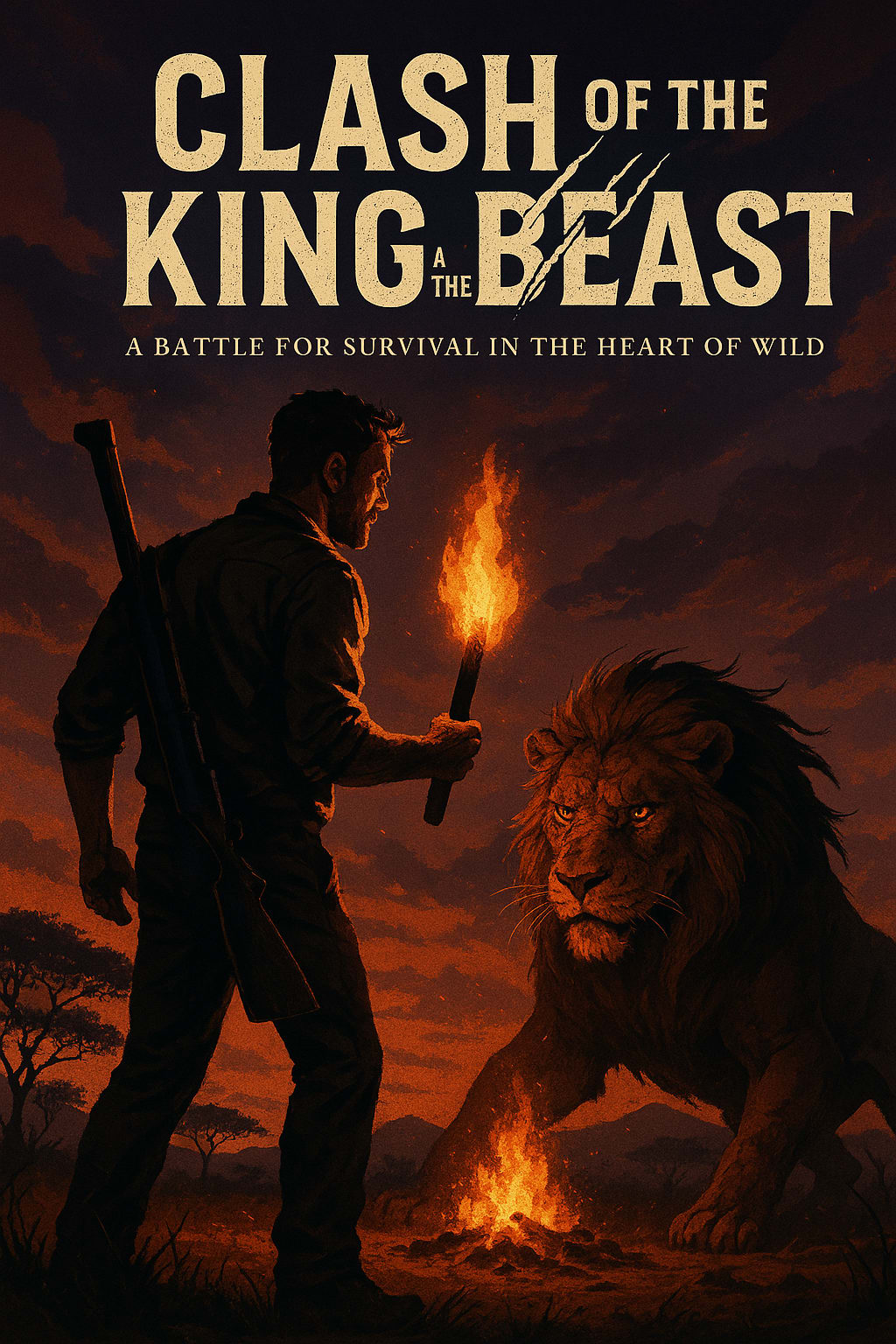
The sun scorched the African savannah, casting long shadows of acacia trees across the dry earth. The wind carried the distant cries of birds and the rustle of tall grasses stirred by unseen predators. In the midst of this unforgiving land stood a man—David Kane, a seasoned adventurer and former soldier, now turned wildlife conservationist. He had faced many battles in his life, but none like the one he was about to encounter.
David had come to Kenya to help track and protect endangered species. He wasn't looking for fame, only redemption. Years of war had hardened him, made him a man of discipline and silence. But the savannah had a way of stripping down layers, exposing something raw and primal in every soul who walked it.
One morning, David joined a small team of rangers to investigate the sudden disappearance of cattle near a remote village. The signs were clear—a large predator was prowling near human settlements. Locals whispered of a lion, massive and scarred, a beast not driven by hunger alone but by fury. Some called him Simba Mshenzi, the Wild King.
David tracked the lion for days, finding shredded carcasses, enormous paw prints, and once, a patch of fur snagged on a broken branch. Each sign drew him deeper into the lion's territory, further from the safety of the base camp.
One evening, as the sun dipped below the horizon and the sky blazed with hues of gold and crimson, David made camp under a rock outcrop. His rifle lay beside him, but he preferred not to use it unless absolutely necessary. He respected the lion—not just as a predator, but as a symbol of the wild itself.
That night, the silence was broken by a low growl.
David sat up instantly, eyes scanning the shadows. The lion was there—massive, golden-eyed, a living mountain of muscle and fury. Its mane bristled as it stepped into the firelight. Scars crisscrossed its body, each telling a tale of battles survived. This was not just any lion. This was Simba Mshenzi.
David stood slowly, hands raised in calm. He spoke gently, not in fear but in reverence. “I didn’t come to kill you,” he whispered. “But I won’t run.”
The lion snarled and pawed the earth, its eyes locked onto David’s. It was a standoff—man against beast, instinct against reason. For a moment, time seemed to freeze.
Then the lion charged.
David dove to the side, grabbing a burning branch from the fire. He swung it wide, the flames hissing as they cut the air. The lion halted, backing off with a growl, its instincts wary of fire. But it didn’t flee.
The two circled each other—David with the flaming torch, the lion with bared fangs and flicking tail. He could see in its eyes a kind of madness, not natural aggression but pain. Then he noticed the limp in its stride and the blood matting one of its hind legs.
It was wounded. And desperate.
In that moment, David made a choice. He dropped the torch and slowly stepped backward, lowering his rifle to the ground. The lion watched him, puzzled.
David reached into his pack and pulled out a tranquilizer dart. It wasn’t easy—aiming at a moving, agitated lion from such close range—but he managed to hit the shoulder. The lion roared and stumbled, then fell into a heavy, dreamless sleep.
When the rangers found David the next morning, he was sitting beside the lion, exhausted but alive.
“He’s hurt,” David said. “But he’s not a killer. Not by choice.”
They treated the lion’s wounds and eventually released him back into a protected reserve. David stayed in Kenya, becoming known not for slaying the beast, but for understanding it.
Years later, villagers would still tell the story of the man who faced the Wild King and chose compassion over conquest. And somewhere out there, in the golden light of dawn, a lion walked the savannah once more—free, fierce, and forever a symbol of the untamed soul of the wild.
About the Creator
Keep reading
More stories from Muhammad Nasim and writers in Geeks and other communities.
The Rachels - 2025
Much to my surprise, I have kept a list of the films I‘ve seen this year. I daresay it isn’t complete. There will be films that snuck in on a late night in front of the TV that I would’ve forgotten to note. Or others, that I went to watch at the cinema, but then had a red wine and promptly forgotten about. But it’s not a bad approximation of the films I’ve seen this year. In total, there are 53 films listed, so an average of one a week and one for good luck.
By Rachel Robbins25 days ago in Geeks
Tamer Hassan
Tamer Hassan is a name that carries weight in British film, television, and even popular culture beyond the screen. Known for his tough-guy roles and unmistakable presence, Hassan has built a career that reflects resilience, reinvention, and a deep connection to family. In recent years, public curiosity around him has also grown because of his daughter, Belle Hassan, who rose to fame on Love Island. This combination of cinematic grit and reality TV visibility has introduced Tamer Hassan to a whole new generation of audiences. Early Life and Path to Acting Before becoming a familiar face in crime dramas and action films, Tamer Hassan lived a life far removed from movie sets. Born in London, he grew up in a working-class environment where discipline and survival were everyday lessons. In his early adulthood, Hassan was involved in professional boxing and worked as a bouncer, experiences that later influenced the authenticity he brought to his on-screen roles. Unlike many actors who follow a traditional drama school route, Hassan’s entry into acting was unconventional. His natural intensity, real-life toughness, and commanding voice caught the attention of casting directors looking for realism rather than polish. This background helped him stand out in an industry often saturated with similar profiles. Career Highlights and Acting Style Tamer Hassan is best known for portraying hardened characters—gangsters, enforcers, and morally complex figures who live on the edge. Films such as Layer Cake, The Business, Kick-Ass, and Batman Begins allowed him to showcase his ability to bring depth to characters that could otherwise feel one-dimensional. His performances often balance menace with vulnerability, making his roles memorable even when screen time is limited. On television, Hassan has appeared in popular British series including EastEnders, Silent Witness, and Game of Thrones. These roles further cemented his reputation as a reliable character actor who elevates every project he joins. Rather than chasing leading-man status, Hassan has built a steady career by embracing roles that feel authentic to his life experience. Life Beyond the Camera While his on-screen persona is often intimidating, those close to him describe a different side of Tamer Hassan. Family plays a central role in his life, and this became especially visible when his daughter entered the public eye. Many viewers who searched online for “belle hassan dad” or “who is belle’s dad Love Island” were surprised to discover the connection between the reality TV contestant and the seasoned actor. This curiosity wasn’t just gossip-driven. It reflected genuine interest in how two people from the same family could navigate fame in such different ways—one through gritty cinema and the other through modern reality television. Belle Hassan and Public Curiosity Belle Hassan appeared on Love Island in 2019 and quickly became known for her strong personality and emotional honesty. As her popularity grew, so did questions like “who is Belle from Love Island’s dad” and “who is Belle Hassan dad”. The answer consistently led back to Tamer Hassan. Unlike some celebrity parents who actively leverage their status, Hassan remained largely in the background during Belle’s time on the show. This approach earned respect from fans who appreciated that Belle’s journey felt independent rather than manufactured. Searches such as “Love Island Belle dad” or “belles dad Love Island” often revealed interviews where Hassan expressed pride in his daughter while emphasizing that her success was her own. A Father-Daughter Dynamic in the Public Eye The relationship between Tamer Hassan and his daughter added an interesting layer to public discussions. People asking “who is Belle’s dad from Love Island” often expected a flashy celebrity figure, but instead found a grounded actor who values privacy and hard work. Hassan has spoken openly about wanting to protect his children from the harsher sides of fame while still supporting their ambitions. This balance resonated with many parents watching from the sidelines, especially those navigating social media-driven celebrity culture. In that sense, Hassan’s role as a father became just as compelling as his roles on screen. Legacy and Cultural Impact Tamer Hassan’s career is a reminder that success in entertainment doesn’t follow a single path. His journey from boxing gyms and nightclubs to major film sets reflects determination and adaptability. At the same time, his association with Love Island through Belle Hassan has expanded his relevance beyond traditional film audiences. For some, he is the actor known for intense performances; for others, he is simply the answer to “who is Belle from Love Island dad.” Both identities coexist, and together they paint a fuller picture of a man who has lived multiple lives within one. Final Thoughts Tamer Hassan stands as a unique figure in British popular culture. His work ethic, authenticity, and commitment to family have shaped a career that continues to evolve. Whether recognized for his film roles or through questions about who is Belle Hassan dad, Hassan remains a compelling example of how personal history and professional life can intersect without losing integrity.
By Saboor Brohi 4 days ago in Geeks


Comments
There are no comments for this story
Be the first to respond and start the conversation.