
Lozer Trader: The Rise Behind the Red
A Journey Through Losses, Lessons, and the Long Game of Trading
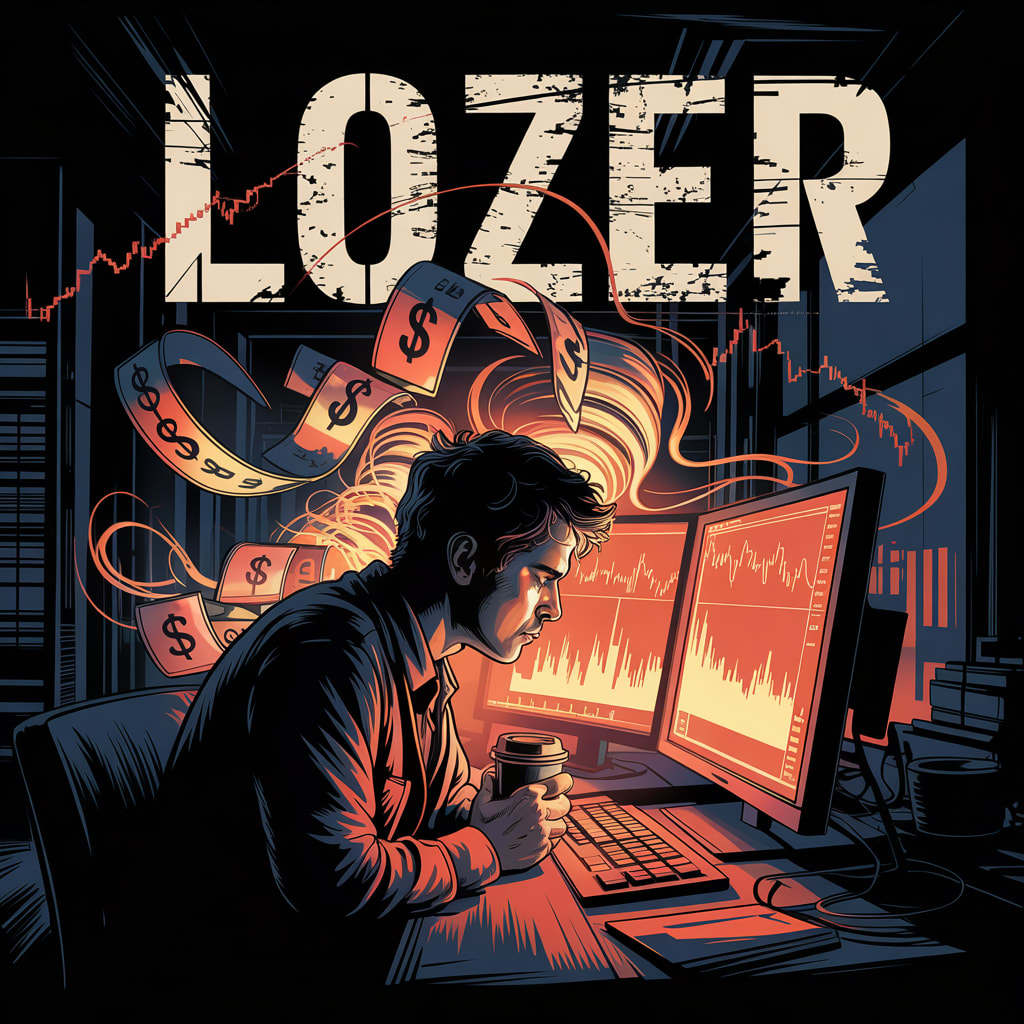
They called him the “Lozer Trader” on every forum he dared post to. At first, it was just a misspelled jab in the comments of a failed trade recap video he uploaded. But it stuck. And somehow, it fit.
Ravi was just 24 when he decided to leave his part-time job at the electronics store and dive full-time into trading. His Instagram feed was flooded with stories of overnight millionaires, twenty-somethings holding laptops in Bali, and luxury cars parked outside rented penthouses. He thought: If they can do it, so can I.
He opened a trading account with just $1,000—money he had saved over months by skipping out on coffee, movies, and anything that resembled a social life. The first week was euphoric. A few lucky calls, one meme stock that jumped 40%, and suddenly he was up 300 dollars. In his head, the numbers multiplied like magic: If I keep doing this every week, I’ll be rich in a year.
But trading isn’t magic. It’s a game of patience, psychology, and pain.
By the end of month one, Ravi was down to $400. He told himself it was just a bad streak. He watched YouTube gurus, joined Discord groups, and bought courses that promised “the secret to consistency.” He even made a vision board with pictures of Lamborghinis and the words “FREEDOM” across the top.
Month two was worse. Every trade was fueled by desperation. He doubled down on losses. He bought dips that kept dipping. He stared at red charts for hours, unable to sleep, refreshing his account like it was some kind of digital life support.
He borrowed money from friends—just small amounts, fifty here, a hundred there. He told them he was “learning the ropes” and that trading was “a long game.” They believed him. He barely believed himself.
By month four, he had lost over $3,000—money he didn’t have. His inbox was full of reminders to pay, and his room looked like a scene from a late-night crime drama: fast-food wrappers, sticky notes with stock tickers, and a whiteboard filled with chaotic arrows and question marks.
One night, after a particularly brutal trade that wiped out what little was left of his account, Ravi stared at the screen and laughed. Not a joyful laugh—but that empty kind, where the only thing left is disbelief.
He opened Reddit, scrolled through r/WallStreetBets, and posted a meme with the caption: “Hi, I’m Ravi. Professionally losing money since 2024.”
The top comment simply said: “Classic Lozer Trader.”
That was the moment.
Not the breakdown. Not the post. But the realization that he had become exactly that. A loser. A lozer. A punchline. But unlike before, this time he didn’t deny it. He owned it.
The next morning, Ravi deleted every get-rich-quick guru from his social media. He signed up for a demo trading account and told himself he wouldn’t touch real money until he was profitable on paper for at least six months. He started journaling every trade—not just the result, but the why.
He read real books. Not flashy titles, but thick ones—“Trading in the Zone,” “The Disciplined Trader,” and “Reminiscences of a Stock Operator.” He stopped chasing wins and started studying risk. He learned to love the red—not because it felt good, but because it taught him more than any green ever did.
By month eight, Ravi was trading small again. A few dollars per trade. Nothing glamorous. But this time, every move had a reason. Every loss had a lesson.
And slowly, the tide began to shift.
He started recording his trades—not for clout, but to review. He created a YouTube channel, not to show off gains, but to talk about discipline, mindset, and the psychology of loss. People began commenting again. But this time, with respect.
One guy wrote: “Damn, Lozer Trader’s actually making sense now.”
Another: “This is the realest trading content I’ve seen in months.”
It wasn’t about the money anymore. It was about mastery. About redemption.
One year later, Ravi passed his first funded trading challenge. It wasn’t a fortune, but it was proof. Proof that the “lozer” label didn’t have to stick forever. That pain, when faced with honesty and humility, could become purpose.
He kept the name. “Lozer Trader.” It was on his channel, his trading journal, even his merchandise. Not as a badge of shame—but as a reminder.
Behind every rise, there’s a lot of red.
About the Creator
Keep reading
More stories from Muhammad Nasim and writers in Motivation and other communities.
A Poor Man’s Dream
In the small village of Dharampur, nestled between dry hills and sun-baked fields, lived a man named Ramu. He was a weaver by trade, with rough hands and a quiet smile. Every morning, before the sun painted the sky orange, he would rise, tie a faded cloth around his forehead, and begin work on his rickety loom. The loom had been his father’s and his grandfather’s before that. It creaked like old bones but still managed to spin magic out of thread.
By Muhammad Nasim10 months ago in Confessions
Looking back: 2025 was a beast
It's difficult to know how to start this. I've suggested that it's been a tough one from my title and in many ways, it has; however, there is an argument that it's not been that extraordinary at all, merely this wonderful thing we call "life" with all its climaxes and pitfalls.
By Rachel Deeming29 days ago in Motivation
Start Now, Not Tomorrow
I used to believe I had time. Time to grow. Time to change. Time to chase my dreams. Whenever life felt uncomfortable, I told myself, “I’ll start tomorrow.” Tomorrow felt safe. Tomorrow felt forgiving. Tomorrow didn’t ask anything from me except patience.
By Fazal Hadia day ago in Motivation


Comments
There are no comments for this story
Be the first to respond and start the conversation.