
Chess Piece Names
A Complete Guide to Understanding Each Piece
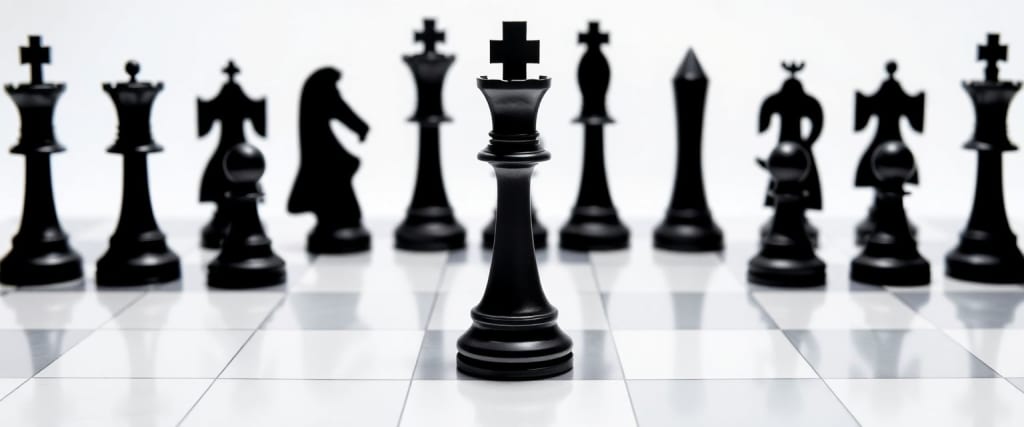
Chess is a timeless game of strategy, intellect, and skill, played by millions of people worldwide.
At the heart of the game are the chess piece names, each with its unique role and movement capabilities.
Whether you're a beginner learning the basics or an experienced player looking to refine your knowledge, understanding the names and functions of each chess piece is essential.
In this article, we’ll explore the chess piece names, their movements, and their strategic importance to help you master the game.
The Chessboard Setup
Before diving into the pieces, let’s quickly review the chessboard setup:
The board consists of 8 rows (ranks) and 8 columns (files), making 64 squares in total.
Each player starts with 16 pieces: 1 king, 1 queen, 2 rooks, 2 knights, 2 bishops, and 8 pawns.
The pieces are arranged in a specific order at the start of the game.

Chess Piece Names and Their Roles
Here’s a detailed breakdown of each chess piece, its name, and its role in the game:
1. King
Symbol: ♔ (White) or ♚ (Black)
Role: The most important piece. The game is lost if the king is checkmated.
Movement: Moves one square in any direction (horizontally, vertically, or diagonally).
Special Move: Castling (a move involving the king and a rook for defensive purposes).

2. Queen
Symbol: ♕ (White) or ♛ (Black)
Role: The most powerful piece. It combines the abilities of the rook and bishop.
Movement: Moves any number of squares horizontally, vertically, or diagonally.

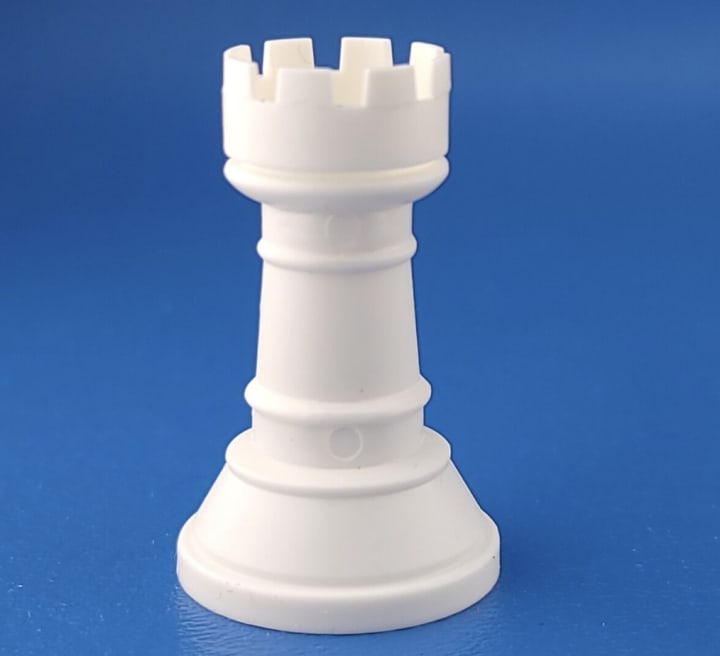
3. Rook
Symbol: ♖ (White) or ♜ (Black)
Role: A strong piece for controlling open files and ranks.
Movement: Moves any number of squares horizontally or vertically.
Special Move: Castling (involves the rook and king).
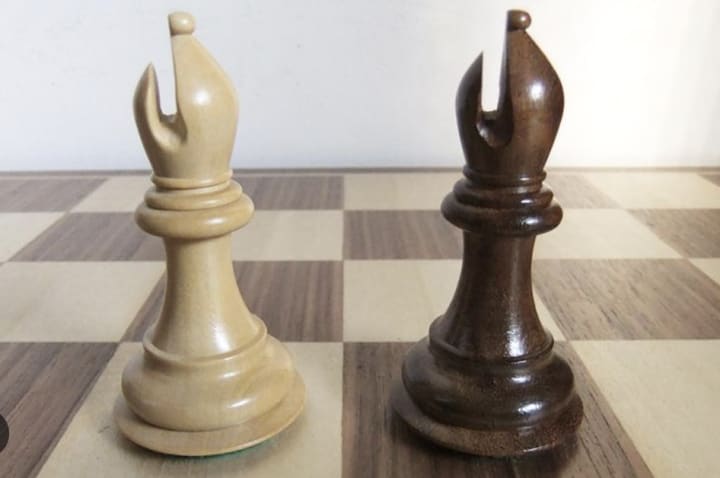
4. Bishop
Symbol: ♗ (White) or ♝ (Black)
Role: A long-range piece that excels in diagonal attacks.
Movement: Moves any number of squares diagonally.
Note: Each player starts with one bishop on a light square and one on a dark square.
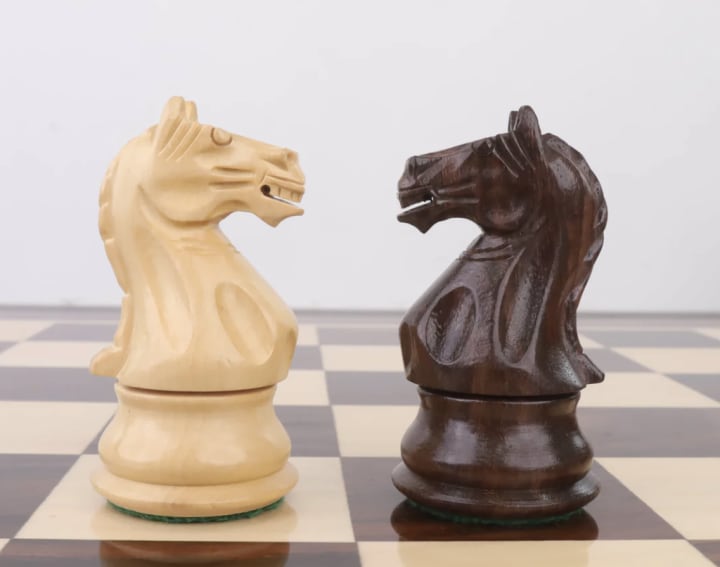
5. Knight
Symbol: ♘ (White) or ♞ (Black)
Role: A versatile piece known for its unique movement.
Movement: Moves in an "L" shape: two squares in one direction (horizontal or vertical) and then one square perpendicular.
Special Ability: Can jump over other pieces, making it valuable in crowded positions.
6. Pawn
Symbol: ♙ (White) or ♟ (Black)
Role: The smallest and most numerous piece, often used for controlling the center and creating structure.
Movement: Moves forward one square, but on its first move, it can move forward two squares.
Capture: Pawns capture diagonally one square ahead.
En Passant: A pawn can capture an opponent’s pawn that moves two squares forward from its starting position.
Promotion: If a pawn reaches the opponent’s back rank, it can be promoted to any other piece (usually a queen).

Strategic Importance of Each Chess Piece
1. King
Protect your king at all costs. Keep it safe by castling early and avoiding unnecessary exposure.
2. Queen
Use the queen to control key squares and support attacks. Avoid moving it too early, as it can become a target.
3. Rook
Place rooks on open files or connect them for maximum effectiveness. Use them to support pawn advances and control the board.
4. Bishop
Position bishops on long diagonals to exert pressure on the opponent’s position. Avoid blocking them with pawns.
5. Knight
Knights are most effective in closed positions where their ability to jump over pieces is valuable. Place them in central squares for maximum influence.
6. Pawn
Use pawns to control the center and create pawn structures that support your pieces. Avoid creating weaknesses like isolated or doubled pawns.
Tips for Beginners
- Learn the Names and Movements: Familiarize yourself with the chess piece names and how each piece moves.
- Practice Piece Coordination: Focus on how your pieces work together to control the board.
- Protect Your King: Always prioritize the safety of your king by castling early.
- Control the Center: Use your pawns and pieces to dominate the central squares.
- Study Basic Tactics: Learn common tactics like forks, pins, and skewers to gain an advantage.
Frequently Asked Questions (FAQs)
1. What is the most powerful chess piece?
The queen is the most powerful piece, as it combines the abilities of the rook and bishop.
2. Can a pawn move backward?
No, pawns can only move forward, but they capture diagonally.
3. What happens when a pawn reaches the other side?
A pawn that reaches the opponent’s back rank can be promoted to any other piece (usually a queen).
4. How does castling work?
Castling is a move where the king moves two squares toward a rook, and the rook moves to the square next to the king. It’s used to improve king safety and activate the rook.
5. Why are knights shaped like horses?
The knight’s shape is a nod to its historical role as a cavalry unit, capable of jumping over obstacles.
Conclusion
Understanding the chess piece names and their roles is the foundation of mastering the game.
Each piece has unique strengths and weaknesses, and learning how to use them effectively is key to becoming a skilled player.
Whether you’re a beginner or an experienced player, revisiting the basics of chess pieces can help you refine your strategy and improve your gameplay.
So set up your board, study the pieces, and start practicing.
With dedication and a solid understanding of the chess piece names, you’ll be well on your way to becoming a formidable chess player!
About the Creator
Arctic Plunge Gear
I’m passionate about cold therapy and wellness. Explore more at https://arcticplungegear.com/
Keep reading
More stories from Arctic Plunge Gear and writers in Geeks and other communities.
A Knight of the Seven Kingdoms Series Review (Season 1)
As one of the biggest properties in fantasy, A Song of Ice and Fire remains immensely popular with audiences. After reaching far into the past with House of the Dragon, a second spin-off was on the cards. A Knight of the Seven Kingdoms serves up a bite-sized slice of action and drama, but it still claims a spot among the best small-screen titles.
By Robert Cain4 days ago in Geeks




Comments (1)
How you tied the naming conventions to the roles each piece plays on the board. It was fascinating to learn more about the origins and how different languages and cultures have influenced the names. Your writing made the history of chess feel fresh and engaging, even for someone like me who’s been playing for years!