

The question of whether AI can replace humans is a complex and multifaceted one, and there are many different perspectives on this issue. Some argue that AI has the potential to revolutionize many aspects of human society, from healthcare and education to transportation and manufacturing. Others worry that AI could lead to widespread job loss and economic disruption, or even pose a threat to human autonomy and dignity. In this essay, I will explore some of the key arguments for and against the idea that AI can replace humans.
Proponents of AI argue that it has the potential to significantly improve many aspects of human life. For example, AI can be used to diagnose and treat diseases more accurately and efficiently than human doctors, or to optimize supply chains and manufacturing processes to reduce waste and improve productivity. AI can also be used to improve education by providing personalized learning experiences that are tailored to each student's individual needs and abilities. Additionally, AI has the potential to help us tackle some of the biggest challenges facing humanity, such as climate change, by analyzing vast amounts of data and identifying patterns and trends that would be difficult for humans to discern.
However, there are also concerns that AI could lead to widespread job loss and economic disruption. As AI becomes more advanced, it is likely that many jobs that are currently done by humans will become automated, leading to significant changes in the labor market. This could lead to a situation where large numbers of people are unable to find work, which could have serious social and economic consequences. Additionally, there are concerns that AI could exacerbate existing inequalities, as those who have access to the technology and skills required to work with it will have an advantage over those who do not.
Another concern is that AI could pose a threat to human autonomy and dignity. As AI becomes more advanced, there is a risk that it could be used to monitor and control human behavior in ways that are detrimental to our freedom and wellbeing. For example, AI could be used to monitor and analyze our online activity, or to control the vehicles we use for transportation. Additionally, there are concerns that AI could be used to create autonomous weapons that are capable of making decisions and taking actions without human intervention, which could have serious consequences for global security.
Despite these concerns, there are also many arguments against the idea that AI can replace humans. One of the key arguments is that AI is not capable of replicating the complexity and creativity of human thought and behavior. While AI is certainly capable of performing many tasks more efficiently than humans, it lacks the intuition, empathy, and creativity that are essential to many aspects of human life. Additionally, AI is only as good as the data and algorithms that are used to train it, and there is always a risk that it could be biased or flawed in some way.
Another argument is that AI is not a monolithic entity, but rather a collection of different technologies and approaches that are used for different purposes. While some applications of AI may be able to replace humans in certain contexts, there are many areas where human input and expertise are still essential. For example, while AI can be used to diagnose diseases based on medical imaging data, it still requires human doctors to interpret and act on that information.
Finally, there is the argument that AI should not be seen as a replacement for humans, but rather as a tool that can be used to augment and enhance human capabilities. By working alongside humans, AI can help us to solve complex problems and achieve goals that would be difficult or impossible to achieve otherwise. For example, AI can be used to help doctors make more accurate diagnoses, or to help farmers optimize their crop yields. By combining the strengths of humans and machines, we can create a more productive, efficient, and equitable society.
In conclusion, the question of whether AI can replace humans is a complex one, and there are many different
About the Creator
Keep reading
More stories from Mohd Shaarif and writers in Geeks and other communities.
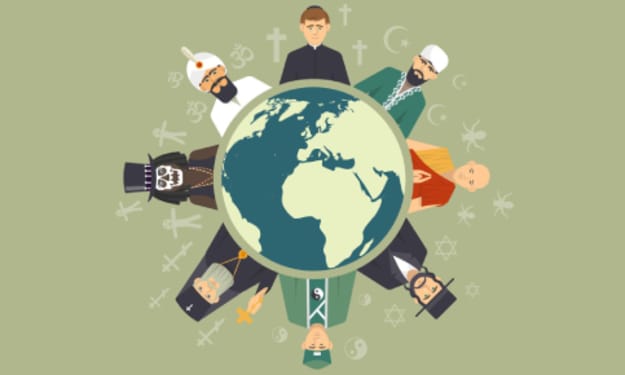
Which will the most Followed Religion in 2050?
It's difficult to predict which religion will be the most followed in 2050, as there are many factors that can influence religious adherence, including demographic trends, cultural changes, and political developments. However, some projections suggest that Islam may become the world's largest religion in terms of the number of followers by 2050.
By Mohd Shaarif3 years ago in Humans
Goodbye, Mr. Duvall
It is turning out to be an interesting year. I was in the middle of teaching a class when a pop-up appeared on the screen announcing the death of Mr. Robert Seldon Duvall (yes, that was his full name). I was in the middle of a discussion on the obsession we have with winning when it comes to sports (the Winter Olympics was a theme), and I felt as though things were coming full circle. We had already lost Gene Hackman last year, and along with that titan, it feels though one particular golden age has closed off to be replaced by...?
By Kendall Defoe 26 days ago in Geeks
Meet the Director Nominated for Two Oscars for Two Different Films
In the highly competitive world of filmmaking, earning a nomination for the Academy Awards is considered one of the greatest recognitions of artistic achievement. For one director, however, the honor arrived twice in a single year — for two completely different films. The unusual milestone has drawn attention across the global film industry and highlighted the creative range of a filmmaker whose work continues to push boundaries. The nominations, announced by the Academy of Motion Picture Arts and Sciences, place the director in a rare category of artists who have managed to captivate audiences and critics simultaneously with multiple projects released within the same awards cycle. While it is common for filmmakers to spend several years developing a single project, this director oversaw two distinct productions, each with its own cast, theme, and visual language. Both films went on to gain widespread critical praise, eventually earning nominations at the prestigious Academy Awards. Industry observers say the achievement reflects not only technical skill but also a remarkable ability to navigate vastly different storytelling approaches. Two Films, Two Worlds The first nominated film is a sweeping historical drama that explores the complexities of identity, power, and personal sacrifice. Set against the backdrop of a turbulent political era, the film combines intimate character studies with large-scale cinematic spectacle. Critics praised the director’s ability to balance emotional storytelling with historical authenticity. Carefully constructed scenes, detailed production design, and powerful performances helped the film resonate with audiences around the world. The second nominated film stands in stark contrast. Rather than historical drama, it is a contemporary character-driven story focused on personal relationships and moral ambiguity. The narrative unfolds in a quieter setting, relying heavily on dialogue and subtle performances. Despite its smaller scale, the film has been described as equally powerful. Reviewers noted the director’s talent for extracting complex emotions from everyday situations, turning ordinary moments into compelling cinematic experiences. Together, the two films demonstrate a rare versatility that has impressed both critics and members of the film academy. A Career Built on Risk The director’s path to recognition was not immediate. Early in their career, they worked on independent productions that struggled to secure wide distribution. Many of those early films were praised in small film festivals but received limited commercial success. Those projects, however, helped shape a distinctive creative voice. Rather than following conventional industry formulas, the filmmaker developed a reputation for taking risks with narrative structure and visual style. Over time, those risks began attracting international attention. Film critics often compare the director’s approach to that of celebrated auteurs such as Christopher Nolan and Alejandro G. Iñárritu, both known for blending ambitious storytelling with strong artistic identity. Although the comparison is flattering, the director’s work remains distinctly their own. The Challenge of Creating Two Films Producing two award-caliber films within the same period is an enormous logistical challenge. Each production requires months — sometimes years — of planning, financing, casting, and post-production work. Film industry insiders say the director’s ability to manage both projects simultaneously speaks to an exceptional level of organization and creative discipline. Crew members involved in the productions describe a collaborative environment where ideas were encouraged and experimentation was welcomed. “Every scene felt carefully planned but also open to discovery,” one cinematographer who worked on the projects said in an interview. “The director had a clear vision, but they also trusted the creative team.” Recognition from the Film Community Since the nominations were announced, the director has received congratulations from filmmakers and actors around the world. Social media has been filled with tributes from colleagues who admire the achievement. Some analysts say the nominations reflect a broader shift within the film industry toward recognizing bold storytelling and diverse perspectives. In recent years, the Academy Awards has expanded its membership and voting body, bringing in a more international and diverse group of filmmakers. That change has allowed a wider range of films to gain recognition. For this director, the moment represents both validation and new expectations. Looking Ahead While awards season attention often focuses on trophies and ceremonies, many filmmakers emphasize that recognition is only part of the creative journey. The director has already hinted at several upcoming projects, including a potential collaboration with major international studios and a smaller experimental film expected to return to their independent roots. Whether or not the Oscar nominations lead to a win, the dual recognition has firmly established the filmmaker as one of the most exciting voices in modern cinema. For audiences, the achievement offers a reminder that great storytelling can take many forms — from sweeping historical epics to intimate human dramas. And for the director behind both films, the moment marks not an end point, but the beginning of an even more ambitious chapter in a rapidly evolving career.
By Fiaz Ahmed a day ago in Geeks


Comments
There are no comments for this story
Be the first to respond and start the conversation.