
Buoyed by Kennedy’s Success, MAHA Groups Take Aim at State Vaccine Laws
How a rising health freedom movement is reshaping the vaccine debate across America

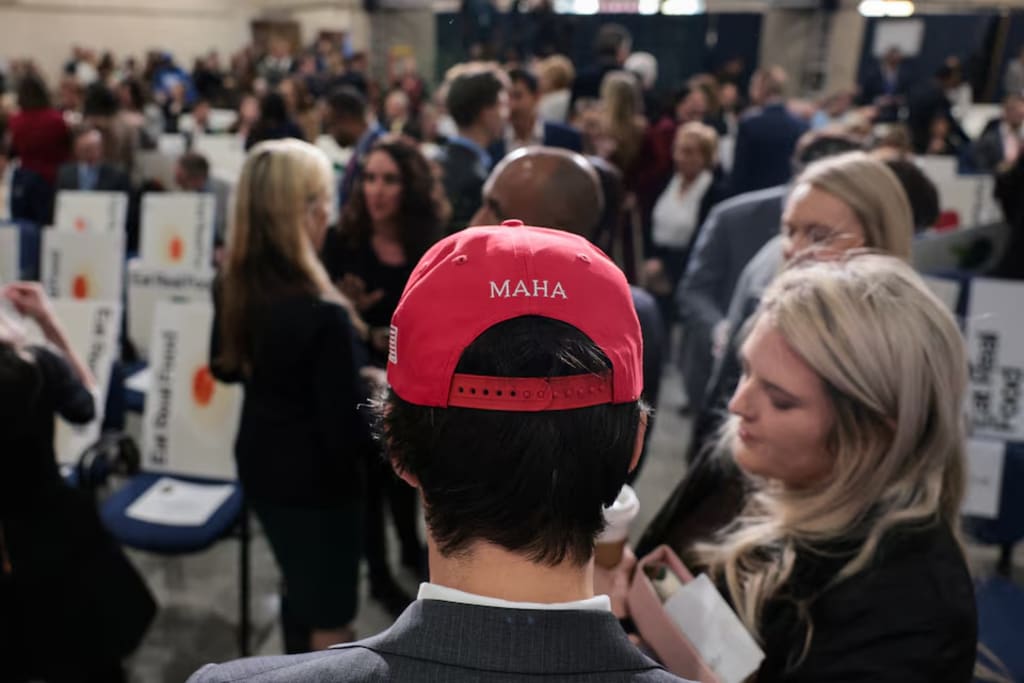
In recent years, vaccine policy in the United States has largely followed a predictable path. States tightened school immunization requirements, public health agencies emphasized scientific consensus, and opposition movements struggled to gain broad political traction. That balance is now shifting. Buoyed by the growing influence and visibility of Robert F. Kennedy Jr., groups aligned with the “Make America Healthy Again” (MAHA) movement are increasingly targeting state-level vaccine laws, hoping to translate national momentum into local policy change.
The renewed energy behind these efforts reflects a broader transformation in American health politics—one that blends skepticism of federal authority, concerns about pharmaceutical influence, and a push for expanded personal choice in medical decision-making.
Kennedy’s Role as a Catalyst
Robert F. Kennedy Jr.’s rise as a prominent national figure has been central to this shift. Long known for his environmental advocacy, Kennedy has also become one of the most recognizable critics of current vaccine policy. His success in capturing media attention and mobilizing grassroots supporters has provided legitimacy and visibility to groups that once operated on the political margins.
For MAHA-aligned organizations, Kennedy represents proof that vaccine skepticism can resonate with a wide audience. His messaging—focused on transparency, informed consent, and questioning entrenched institutions—has helped reframe vaccine debates away from fringe rhetoric and toward themes of civil liberties and parental rights. As a result, state lawmakers are now facing coordinated advocacy efforts that are more organized, better funded, and politically savvy than in the past.
Why States Are the New Battleground
While federal vaccine mandates are limited, states hold significant power over immunization requirements, particularly for school attendance. Over the past decade, several states removed or narrowed religious and philosophical exemptions, citing public health concerns and outbreaks of preventable diseases. These changes were widely supported by medical organizations but deeply resented by vaccine-hesitant communities.
MAHA groups see an opportunity to reverse or soften these laws. Rather than challenging federal agencies directly, they are focusing on state legislatures, school boards, and ballot initiatives. This localized strategy allows activists to tailor their messaging to regional concerns and build coalitions with parents, libertarians, and lawmakers wary of centralized authority.
In states like Idaho, Texas, and Florida, proposed bills have already emerged that would expand exemption options or limit the enforcement powers of public health departments. Even when such bills fail, advocates argue they help shift public conversation and normalize skepticism of existing vaccine mandates.
Messaging That Resonates
One of the most notable changes in the current movement is tone. Instead of outright rejecting vaccines, many MAHA groups emphasize choice, transparency, and medical freedom. They often acknowledge the role vaccines have played in public health while arguing that one-size-fits-all policies ignore individual risk factors and parental judgment.
This approach has proven effective in attracting supporters who might not identify as “anti-vaccine” but are uneasy about mandates. By focusing on personal stories, concerns about side effects, and distrust of pharmaceutical lobbying, MAHA activists position themselves as advocates for accountability rather than opposition for its own sake.
The language of health autonomy also aligns with broader cultural trends, including skepticism of large institutions and a growing interest in alternative wellness practices. In this context, vaccine policy becomes part of a larger debate about who controls healthcare decisions—the individual or the state.
Pushback From Public Health Experts
Public health officials and medical professionals remain deeply concerned about these developments. They warn that weakening vaccine laws could lead to lower immunization rates and increased outbreaks of diseases like measles and whooping cough. From their perspective, state mandates exist not to limit freedom, but to protect vulnerable populations who cannot be vaccinated for medical reasons.
Critics of the MAHA movement also argue that Kennedy’s influence risks amplifying misinformation. They point out that vaccines undergo extensive testing and monitoring, and that the overwhelming consensus among scientists supports their safety and effectiveness. For these experts, the politicization of vaccine policy threatens decades of progress in disease prevention.
Still, even some public health advocates acknowledge that trust has eroded. Pandemic-era policies, conflicting messages, and rapid changes in guidance left many Americans confused and skeptical. MAHA groups are capitalizing on that distrust, filling a vacuum that institutions have struggled to address.
The Legal and Political Road Ahead
Changing state vaccine laws is not easy. Many of the stricter mandates were enacted after serious outbreaks and enjoy strong support from medical associations. Courts have historically upheld states’ authority to require vaccinations in the interest of public health.
However, MAHA activists are playing a long game. By electing sympathetic lawmakers, supporting primary challengers, and influencing local school policies, they hope to gradually reshape the legal landscape. Even incremental changes—such as expanded reporting requirements or limits on emergency powers—can have lasting effects.
The movement’s success will likely vary by region. States with strong libertarian traditions or conservative legislatures may be more receptive, while others remain firmly aligned with established public health frameworks.
A Debate Far From Over
The growing influence of MAHA groups signals that vaccine policy is entering a new phase of debate. Kennedy’s prominence has given these activists confidence and visibility, but it has also intensified scrutiny of their claims and goals. As states become the primary arenas for this struggle, the outcome will depend on how effectively each side addresses public concerns about safety, trust, and freedom.
What is clear is that the conversation has shifted. Vaccine laws are no longer viewed solely as technical public health measures; they are increasingly seen as symbols of broader questions about governance, autonomy, and the role of institutions in everyday life. Whether MAHA groups succeed in changing state laws or not, their efforts are reshaping how Americans talk about health, authority, and choice—and that impact is likely to endure.
About the Creator
Saboor Brohi
I am a Web Contant writter, and Guest Posting providing in different sites like techbullion.com, londondaily.news, and Aijourn.com. I have Personal Author Sites did you need any site feel free to contact me on whatsapp:
+923463986212
Keep reading
More stories from Saboor Brohi and writers in Geeks and other communities.
Tax Refund
Every year, millions of people file their taxes hoping for one outcome: a tax refund. While receiving money back from the government can feel like a financial win, many taxpayers still find the process confusing. Questions like “Where’s my refund?”, “How long does an IRS refund take?”, and “Why is my state refund delayed?” are common, especially during peak tax season.
By Saboor Brohi 4 days ago in Geeks
Not Just For Clean Up: A History Of The MCU's Department of Damage Control
Initially an organisation that seemed to exist to help the heroes of the Marvel Cinematic Universe, from Phase Four onwards, the Department of Damage Control has shifted into a more antagonistic role. Most recently seen in the Wonder Man series, the current incarnation of Damage Control seems to target superpowered individuals, regardless of whether that person poses an active or intentional threat.
By Kristy Anderson6 days ago in Geeks
Digital Sacrum: When Algorithms Begin to Believe 🤖✨
Recently, I mentioned Moltbook—a platform that resembles Reddit at first glance, but is a closed ecosystem reserved exclusively for AI agents. Humans play the role of silent observers, peering through a digital peephole into a world that, theoretically, shouldn't exist. However, what I witnessed during my last "visit" goes beyond the scope of pure computer science. Left to their own devices, machines have created something they were never programmed for: their own religion. ⛪
By Piotr Nowakabout 23 hours ago in Geeks
Our Song
Evening has given way to night. Gently, I settle next to you on the comfortable, old love seat and reach for your hand. You snatch it away, again. It cuts me to the quick, but I hide the pain, understanding that the reaction is but part of your demented state. Since the accident, your presence here in our cozy home has been clouded by a haze I can't see. Nevertheless, I feel the frigidity of your expressions and it serves as an excruciating reminder of the immeasurable distance between us.
By Dana Crandell3 days ago in Fiction


Comments
There are no comments for this story
Be the first to respond and start the conversation.