
Book Review: "The Men Who Made Hollywood" by Michael Freedland
5/5 - an expansive look at some of the earliest eras of American Film and those who funded the expansion...

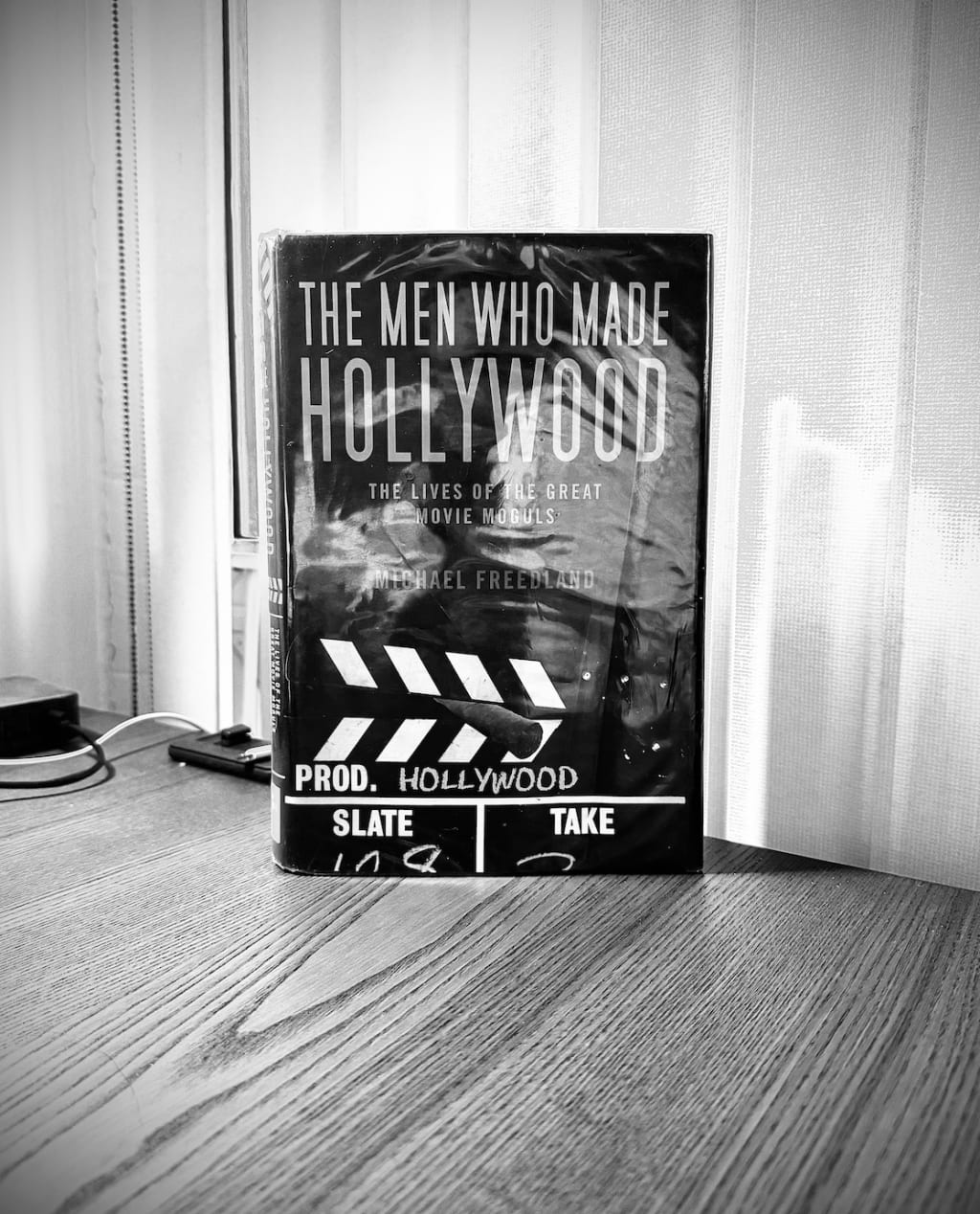
You know I like reading books about film and I have mentioned over and over again in reviews and lists that if you want to know more about film then you should start reading books regarding films. Possibly one of the best is called The Big Screen by David Thomson - I mean, it is a fantastic book which goes over some historical and cultural contexts of earlier cinema eras. I've probably read over twenty or thirty books on film in my time and yet, I have never encountered the one we are about to go through. This is The Men Who Made Hollywood...
Freedland emphasises how the early Hollywood moguls, many of whom were Jewish immigrants from Eastern Europe, built the American film industry from the ground up. Coming from humble backgrounds, they arrived in the United States with little more than ambition and a willingness to work hard. These men, including Louis B. Mayer, Adolph Zukor, and the Warner brothers, transformed what was initially a fledgling industry into a cultural powerhouse. Their experiences as outsiders in both Europe and America influenced the way they crafted Hollywood’s escapist narratives, offering audiences an idealised version of the American Dream.
The book highlights how these moguls established the studio system, a vertically integrated business model that allowed them to control every aspect of film production, distribution, and exhibition. Studios such as MGM, Paramount, and Warner Bros. functioned almost like factories, where actors, directors, and writers were under strict contracts. Freedland explores how this system was both highly efficient and creatively restrictive, ensuring profitability but limiting artistic freedom. He also discusses the eventual decline of this model in the 1950s, particularly due to legal challenges and the rise of television.
Freedland argues that these early film moguls were instrumental in defining the very idea of Hollywood as a place of glamour, luxury, and larger-than-life storytelling. They were not just businessmen; they were visionaries who understood the power of myth-making. They carefully curated the public personas of their stars, controlled their private lives, and used film to project an idealised version of America. Through grand spectacles, lavish musicals, and sweeping romances, they created a dream world that captivated audiences worldwide.
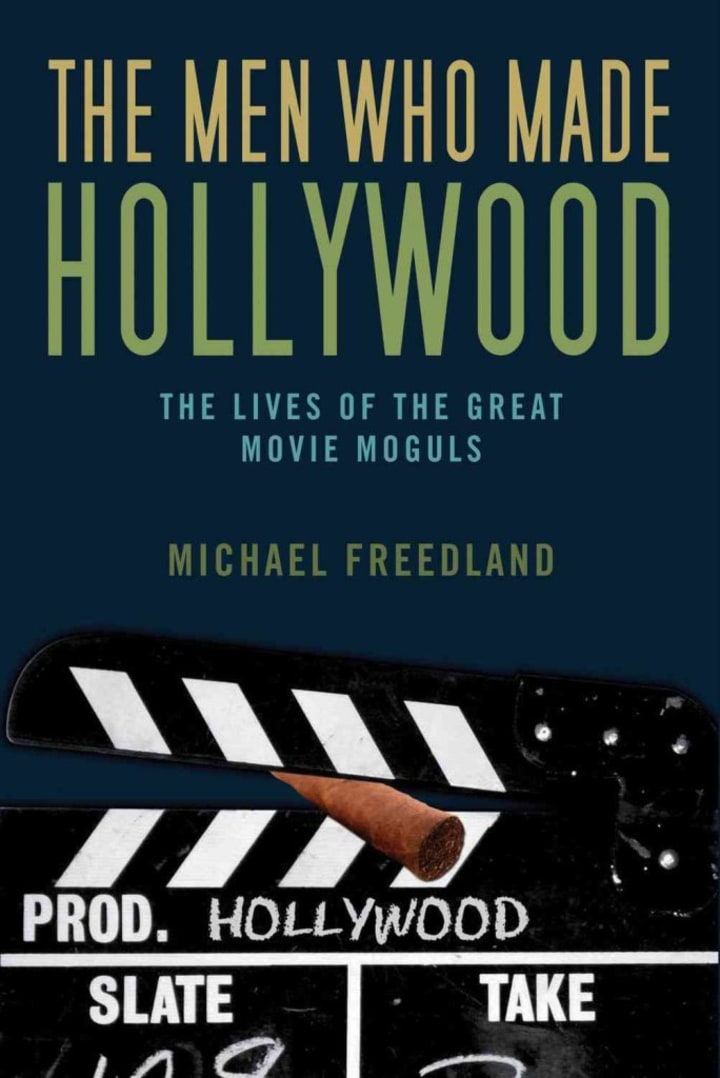
One of the key themes in the book is the ongoing struggle between creative ambition and financial pragmatism. Freedland examines how these moguls were not necessarily artists themselves but had an instinctive understanding of what audiences wanted. Their primary concern was profit, but they also recognised that artistic quality was crucial to sustaining audience interest. This tension often led to clashes with directors and writers who sought greater artistic freedom, particularly in later decades as auteurs began to challenge the studio system.
The book delves into the ways in which Hollywood’s early moguls navigated censorship and morality concerns. In response to public outcry over perceived immorality in films, they introduced the Motion Picture Production Code (or Hays Code) in the 1930s to regulate on-screen content. While ostensibly a move to maintain Hollywood’s reputation, Freedland argues that this was also a strategic decision to avoid government intervention. By self-regulating, the moguls maintained control over their industry while ensuring that their films remained commercially viable.
Freedland examines how the golden age of Hollywood, dominated by these moguls, eventually gave way to a new wave of filmmakers in the 1960s and 1970s. The decline of the studio system, shifts in audience tastes, and the rise of independent directors ushered in an era where control shifted from producers to filmmakers. Directors like Martin Scorsese, Francis Ford Coppola, and Steven Spielberg began to redefine Hollywood storytelling, moving away from the rigid structures imposed by the old moguls.
All in all, the author presents Hollywood as a microcosm of the American Dream, both in its promises and contradictions. The moguls who built Hollywood were themselves embodiments of this dream, immigrants who rose to extraordinary power and wealth. However, their success was also built on rigid control, calculated manipulation, and, at times, exploitation. It then leaves the reader questioning whether Hollywood’s golden age was truly an era of artistic brilliance or simply one of masterful business strategy wrapped in the illusion of glamour.
About the Creator
Annie Kapur
I am:
🙋🏽♀️ Annie
📚 Avid Reader
📝 Reviewer and Commentator
🎓 Post-Grad Millennial (M.A)
***
I have:
📖 280K+ reads on Vocal
🫶🏼 Love for reading & research
🦋/X @AnnieWithBooks
***
🏡 UK
Keep reading
More stories from Annie Kapur and writers in Geeks and other communities.
"Most of Our Students Are Functionally Illiterate..."
Background and Context: Of course, we are finding that social media is becoming more divisive than ever, or it could be the fact that we are seeing things that would create more of a visceral reaction in us because it suits the algorithm and the requirement for interaction on social media. It's true people tend to communicate more on social media when they are upset about something or angry about something.
By Annie Kapur9 months ago in Geeks
The Rachels - 2025
Much to my surprise, I have kept a list of the films I‘ve seen this year. I daresay it isn’t complete. There will be films that snuck in on a late night in front of the TV that I would’ve forgotten to note. Or others, that I went to watch at the cinema, but then had a red wine and promptly forgotten about. But it’s not a bad approximation of the films I’ve seen this year. In total, there are 53 films listed, so an average of one a week and one for good luck.
By Rachel Robbins25 days ago in Geeks
The Conspiracists Is Less About Secrets and More About Us
Conspiracy theories used to live on the fringes. Today, they thrive in comment sections, podcasts, and algorithm-fed echo chambers. The Conspiracists steps directly into this cultural minefield—not to mock it, glorify it, or neatly explain it away, but to sit uncomfortably inside it. What emerges is a film that feels eerily familiar, disturbingly intimate, and surprisingly human.
By David Cooka day ago in Geeks



Comments
There are no comments for this story
Be the first to respond and start the conversation.