
Book Review: "The Lost Art of Silence" by Sarah Anderson
4/5 - a book on the powerful nature of noise and the psychological abuse of those who commit to it...

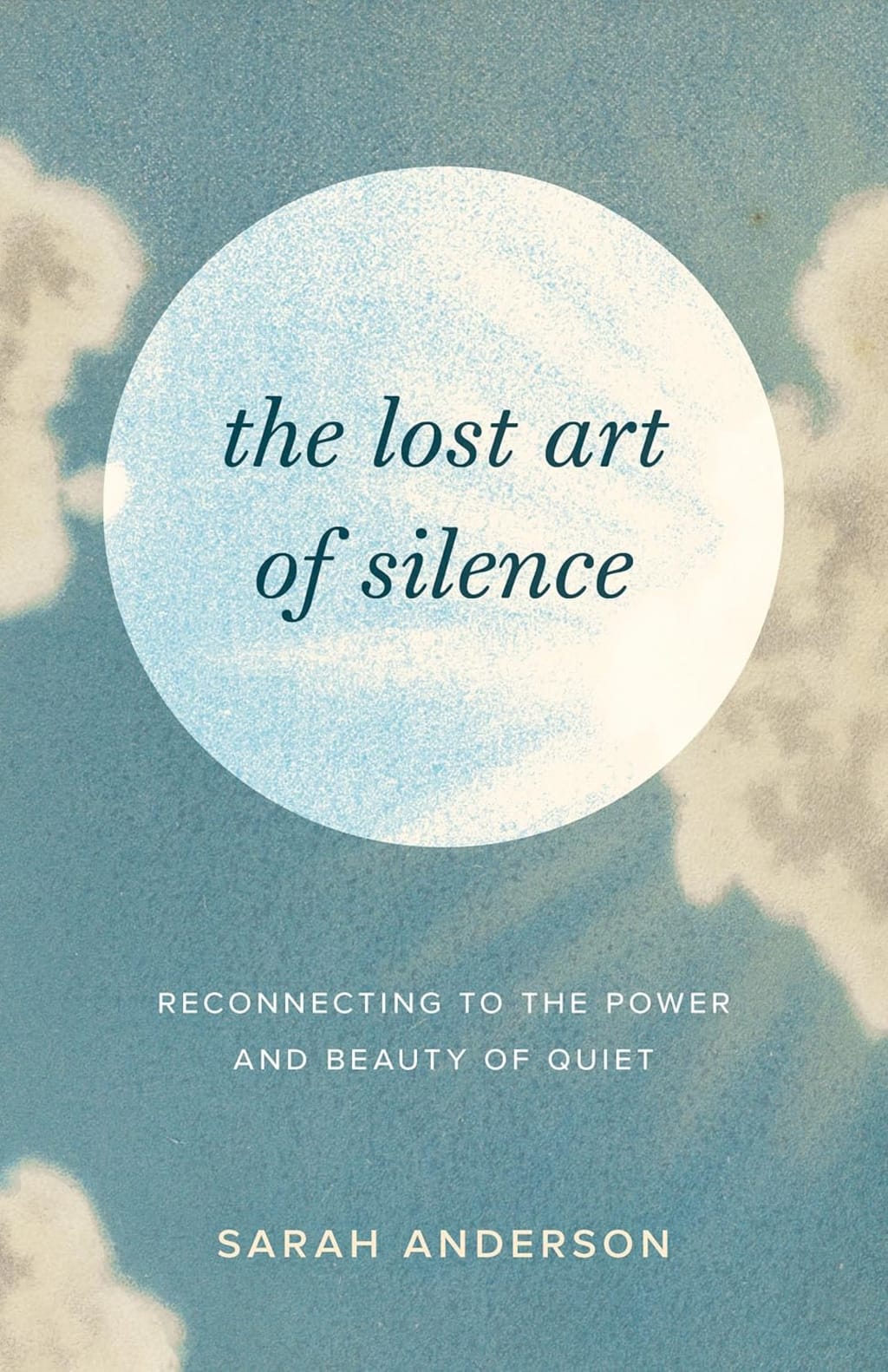
Silence is a lost art, I think we can all agree. In the age of over-consumption we have distractions all the time and even when we think we have silence, we don't actually have it. There are many people who are afraid of silence, people who play music all the time, or watch television in the background of doing absolutely anything at all. The true nature of silence has therefore been lost on us. We no longer sit there with our boredom and with our thoughts out of a fear of them transgressing to a place much worse. Reflection is past, revelation is fiction.
Constant background noise is one of the most horrific things about our modern day, suggests the author. The requirement for noise means that we don't have much reflection time. However another argument made is that it is always those with power who generate the most noise whilst those who are powerless must endure it. From open-plan offices to public transport to digital platforms, silence is increasingly unavailable to those with fewer resources. This is not accidental; it serves economic and political systems that benefit from distraction. Silence, by contrast, enables autonomy. If people can be allowed to think, they can be free. If they are not allowed to think, they simply consume.
This is really where we begin with the argument regarding what silence is and how it impacts our lives. The author's main argument is set up by explaining why silence is so feared in modern culture. Social norms encourage constant speech as proof of engagement or competence. In workplaces, silence can be misread as disengagement; in relationships, as emotional distance. Honestly, this is something that we can all relate to. Being silent is seen as having something to hide yes, but it is also seen as something being 'wrong' with the other person. As we know, introverts normally get a whole lot of mouth from others. But whilst silence exposes vulnerability, moments where there is nothing to perform - those who struggle with silence, the author suggests, allow noise to fill the gaps in their thoughts and often as a result, do not think too deeply at all. Those who are uncomfortable with silence often struggle with uncertainty and complexity.
Another point the author makes is that creativity depends on silence and the forming of original thought is hinged on the fact that we must allow ourselves to think in a space of nothingness. Constant noise short-circuits this, favouring reaction over creation. No, creativity is not a moment of spontaneous brilliance, she states, but instead it is work and critical thought, it is prolonged thinking upon ideas and the development of practices related to concentration. Originality seems to depend on silence as in noisy environments, people tend to reproduce familiar ideas - they lack the space to think otherwise. I thought that the ideas related to creativity were perhaps, obvious - but the more I look around the more I find that maybe its not that obvious to everyone.
Solitude, the author argues, is essential for psychological health and that people who are naturally in recovery-mode (as we say) when practicing solitude suffer greatly in their mental health if forced to socialise and be with others are pretty much the same as the powerless in the noisy society. Noise and socialising when forced, are expressions of power and are seen as relentless acts of psychological abuse on the person who is attempting to focus, concentrate and commit to their original processes. I am someone who loves my alone time more than anything and yet, I still recognise when people are forcing me forwards, forcing me to listen to their conversation and making horrifying attempts to hold prolonged conversations with me once they have realised I am trying to do something.
All in all, I have realised through this book that there is a strange amount of power involved in the way noise is pushed into our society and a horrible amount of insecurity in those who both don't like silence and don't allow others to have it either. The book does tell us to pratice silence but also acknowledges how difficult it is for those who are powerless to do so. The question is: how do we regain our power and do we ever actually get back to being in silence? Where do we go from here?
About the Creator
Annie Kapur
I am:
🙋🏽♀️ Annie
📚 Avid Reader
📝 Reviewer and Commentator
🎓 Post-Grad Millennial (M.A)
***
I have:
📖 280K+ reads on Vocal
🫶🏼 Love for reading & research
🦋/X @AnnieWithBooks
***
🏡 UK
Keep reading
More stories from Annie Kapur and writers in Geeks and other communities.
Book Review: "Dancing by the Light of the Moon" by Gyles Brandreth
I love poetry and I love trying to memorise my favourite poems. Ever since I was a young girl, I've loved memorising poems like The Raven by Edgar Allan Poe (which I managed to do when I was about 13 years' old) and of course, the famed Vincent Malloy by Tim Burton (if you haven't seen it already I would say definitely go and watch it). Poetry can convey so much in a short space of time, and some of my favourite poets include Lord Byron, Percy Shelley and of course, John Keats. I'm a big fan of Romanticism as you can see, but when it comes to Gyles Brandreth - he has allowed me to explore these favourites whilst also presenting me with nostalgia for lost poets I haven't revisited. But best of all, I have discovered new poets I have not read before.
By Annie Kapura day ago in Geeks



Comments
There are no comments for this story
Be the first to respond and start the conversation.