
Book Review: "The Cancer Journals" by Audre Lorde
5/5 - An intense look into life as a woman of colour with cancer...

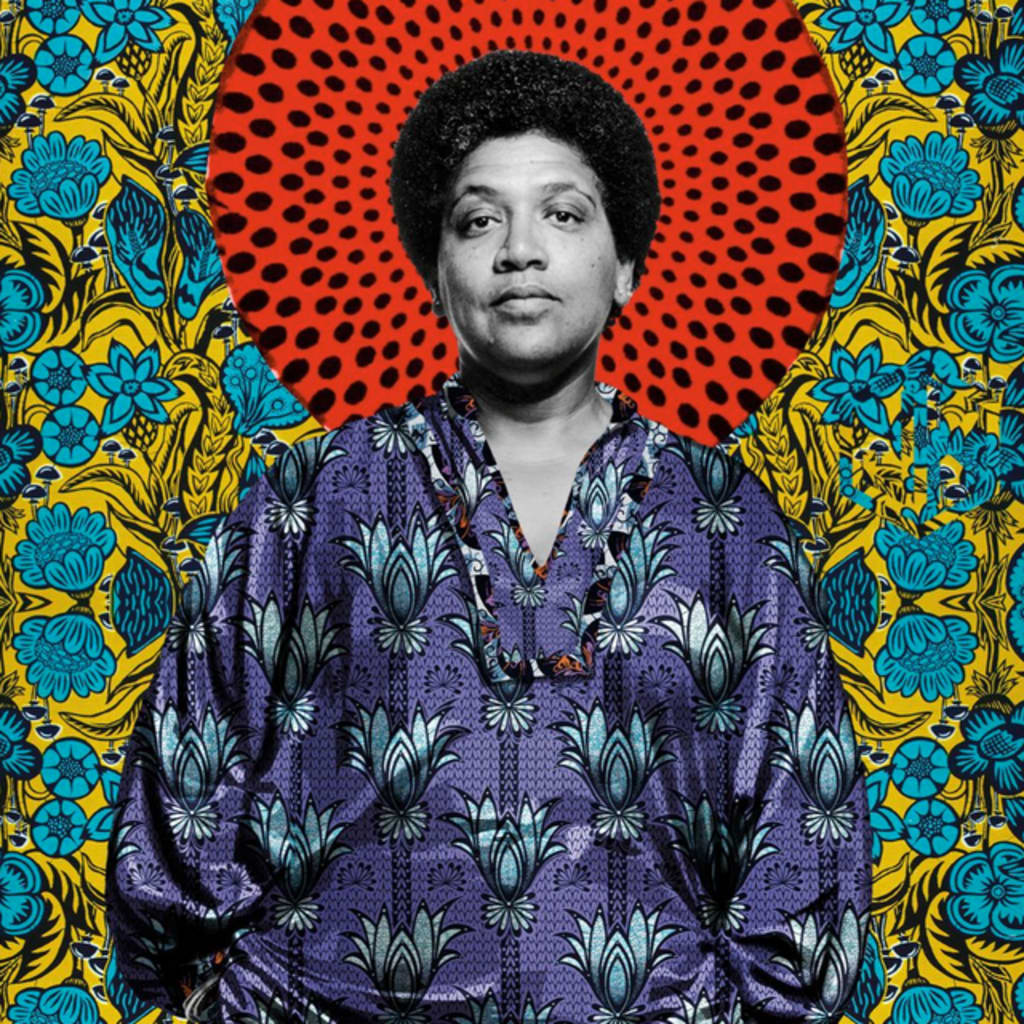
Written when she was diagnosed with cancer and her first operation to remove her right breast. As Audre Lorde comes to terms with her new body experience, she tries to rationalise and reason the ways in which she can learn to live again whilst also reasoning with death. There was something about this book which was not only personal but deeply moving and introspective. Audre Lorde goes into herself and from looking within, she sees that one day she will die and although she doesn't know whether it will yet, she thinks that this may be a thing that can kill her. It is through this understanding and reasoning of death that she comes closer to herself and some of her best and deepest philosophical writings in all of her career.
Audre Lorde covers this in a series of journal entries and chapter introductions. So it is like reading an uncovering of her life with cancer as it happens, but also contains these passages that are hyper-reflective when it comes to what she dealt with during this time. Audre Lorde listens to her soul and that is one of the things I most respect about her. She has such incredible beauty with her words that she can make even cancer seem like a learning curve and a chance to really realise who she is and what she is on this earth to do.
Let us have a look at some quotations that I really liked from this book then:
"I was going to die, if not sooner then later, whether or not I had ever spoken myself. My silences had not protected me. Your silence will not protect you. But for every real word spoken, for every attempt I had ever made to speak those truths for which I am still seeking, I had ever made contact with other women while we examined the words to fit a world in which we all believed, bridging our differences. And it was the concern and caring of all those women which gave me strength and enabled me to scrutinise the essentials of my living..."
So, this is a quotation on reasoning and rationalising death and honestly, it has a brilliant amount of beauty and you really cannot believe that this writer believes they are going to die from cancer, even though that is exactly what the quotation is saying. It is because Audre Lorde describes it in such a way that it is some sort of higher experience.
"Feeling was returning to the traumatised area at the same time as I was gradually coming out of physical and emotional shock. My voices, those assorted pieces of myself that guided me between the operations were settling back into their melded quieter places, and a more and more conscious part of me was struggling for ascendancy, and not at all liking what she was finding/feeling..."
Looking at both the physical and the emotional pain of things is something that Audre Lorde is great at comparing. In the quotation above, she compares the two simultaneous as she feels both at the same time. It is the most authentic voices I have ever read.
"...For instance, I will never be a doctor. I will never be a deep sea diver. I may possibly take a doctorate in etymology, but I will never bear any more children. I will never learn ballet, nor become a great actress, although I might lear to ride a bike and travel to the moon. But I will never be a millionaire nor increase my life insurance. I am who the world and I have never seen before..."
The things that she can and cannot do is kind of a realisation for Audre Lorde that her cancer is very real and that realisation without saying 'the cancer is real' is something very emotional and existential indeed.
"The status of untouchable is a very unreal and lonely one, although it does keep everyone at arm's length and protects as it insulates. But you can die of that specialness, of the cold, the isolation. It does not serve the living. I began quickly to yearn for the warmth of the fray, to be good as the old even while the slightest touch meanwhile threatened to be unbearable..."
Relating loneliness and the fact that people treat you different for having cancer is something that Audre Lorde covers more than once in the book and it always seems like something that will probably make her cancer worse and may end up killing her because of the fact she values human touch in the most normal and regular environments. She also respects the fact that nothing is normal or regular anymore. It is a want that will probably never happen again and it is so sad.
"...But I am writing across a gap so filled with death - real death, the fact of it - that it is hard to believe that I am still so very much alive and writing this. The fact of all these other deaths heightens and sharpens my living, makes the demand upon it more particular, and each decision even more crucial..."
Not only do other people treat you better and more special when you're dying, but you tend to treat yourself better too. You are more aware of being alive and no longer just existing for the sake of it. It is something I really respect Audre Lorde for writing because normally, it can be very hard to put that into words.
"...I am talking here about the need for every woman to live a considered life. The necessity for that consideration grows and deepens as one face's directly with one's own mortality and death. Self scrutiny and an evaluation of our lives, while painful, can be rewarding and strengthening journeys toward a deeper self..."
The way Audre Lorde links in having breast cancer with her sector of feminism is brilliance. She focuses on the woman's responsibility to fight this very female-centred disease and live. This would basically be like an 'up yours' to the breast cancer. Audre Lorde's recognition of her womanhood becomes more and more opaque throughout the book all the was up to the mastectomy.
"We are surrounded by media images portraying women as essentially decorative machines of consumer, function, constantly doing battle with rampant decay...As women, we fight this depersonalisation every day, this pressure toward the conversion of one's own self-image into a media upon breast prostheses as 'decent' rather than functional is an additional example of that wipe-out of self in which women are constantly encouraged to take part. I am personally affronted by the message that I am only acceptable if I look 'right' or 'normal', where those norms have nothing to do with my own perceptions of who I am. Where 'normal' means the 'right' colour, shape, size or number of breasts, a woman's perception of her own body and the strengths that come from that perception are discouraged, trivialised and ignored..."
I am going to leave this quotation here and you can just see how one of the many passages during the mastectomy process is intertwined with feminism and how it strengthens her cause. Think about the strength that Audre Lorde must have had to take this cancer and its treatments and create them into a physical critique that supports the cause she has been fighting for in most aspects of her life. She is a physical embodiment of her own cause and her strength is absolute brilliance.
About the Creator
Annie Kapur
I am:
🙋🏽♀️ Annie
📚 Avid Reader
📝 Reviewer and Commentator
🎓 Post-Grad Millennial (M.A)
***
I have:
📖 300K+ reads on Vocal
🫶🏼 Love for reading & research
🦋/X @AnnieWithBooks
***
🏡 UK
Keep reading
More stories from Annie Kapur and writers in Geeks and other communities.
BIPOC Film is Still Missing...
Everyone knows that for as long as film has been around, it has mainly starred straight people who are also caucasian. The BIPOC folk are still missing from Hollywood movies and even though we have moved forward a little with the films of Ryan Coogler, Jordan Peele and Ava DuVernay, there is still a long way to go before people stop saying ‘this is not diversity’ when a film has an all-BIPOC cast. There is also a long way to go before films are truly diverse and not just the Hollywood meaning of diverse. Let us first therefore discuss what the Hollywood meaning of diverse is.
By Annie Kapur5 years ago in Geeks




Comments
There are no comments for this story
Be the first to respond and start the conversation.