
Book Review: "The Alternatives" by Caoilinn Hughes
5/5 - sisterhood in a post-modern literature...

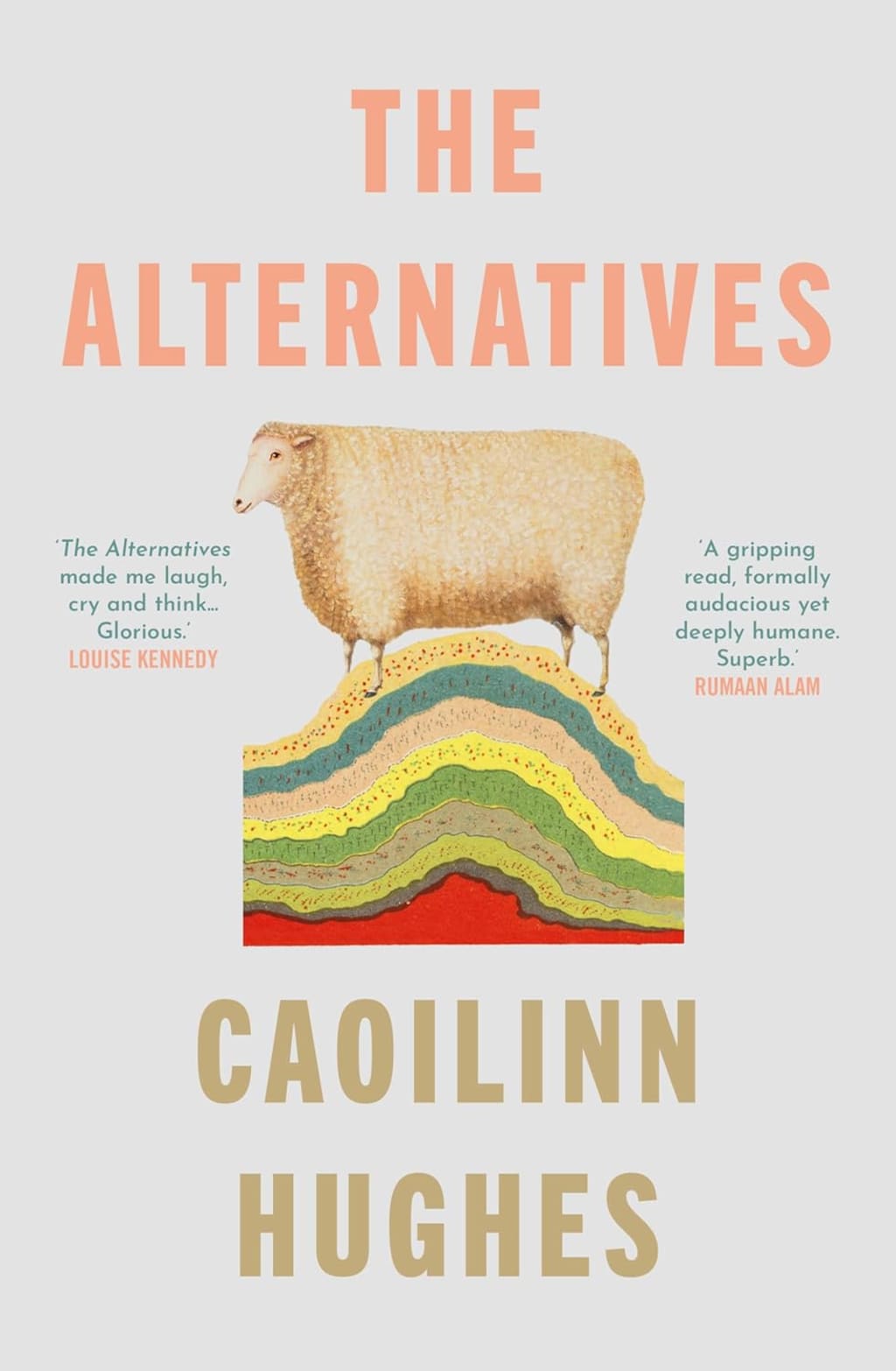
I never thought I would pick up a book that teetered on the realism marker in a way that David Foster Wallace does. We all have to be thankful that the writing is not the same as his, but it does have the same 'real-but-couldn't-be-real' quality. I found this book whilst exploring the depths of 'customers who bought this also bought' on my Kindle, and literally just kept clicking through until I came across something I had never heard of. That's where we come to a book called 'The Alternatives'. I think the title really does say it all about the realism portrayed by the book - maybe it iself is 'alternative' in its ideas about reality.
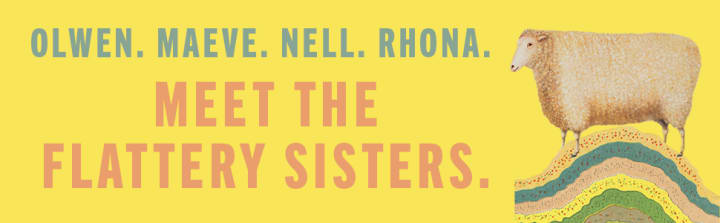
We are introduced to a group of sisters, all of which have PhDs. We have Maeve, who got an honorary PhD and works in the snobby culinary world in London. I think that the most interesting thing about her is not that though, it is that she lives on a houseboat. I mean come on, isn't that cool? Anyways, Maeve is a character we get introduced to in part 2 of the text.
We have the eldest sister named Olwen who is a professor of Geology in Galway, Ireland. She has a concern about climate change, the environment and the book itself opens on her taking her class on a field trip. She resides with her boyfriend and his two teenage sons. Honestly, I feel like Olwen is the perfect 'every-woman' kind of character with bits and bobs that make her seem a little bit different here and there. But, I think Olwen out of all of them is supposed to be the 'stereotypical' one so that the reader may identify with her more.
Rhona teaches at the Trinity College in Dublin and Nell teaches philosophy in the USA. The sisters don't have much contact with each other and the book tells us that their parents died when they were young in a tragic car accident. I think this allowed the girls to separate as when they got older they felt like they had no home base anymore and so, didn't bother to keep in touch. Olwen, being the eldest, finished raising the other kids and then went about her own way. But there is something much stranger that happens: Olwen disappears.
I found the book's start to be a bit slow but when I look back on it, I also think that was supposed to be the whole point of it. We are introduced in part one to Olwen and her personality, her care for her students and her love for her subject. I think that the slow start allows the reader to get acquainted with Olwen and her ways, her often comical blunders and her family as well. Once we move into the heavier parts of the text, we actually feel like we know the woman who has gone missing as opposed to her just being a news broadcast or a sign on a pole with her photo on it.
Hughes' writing is often very interesting. We don't just get straight narratives. Even in part one, there is a letter that helps tell the story. The epistolary form helps the reader gather the different identities of the book and shows us personalities later on that we are constructing from descriptions, relationships and ideas as well. I think that the author does a great job of utilising all the available narrative quirks that she can in order to let the reader know who we are dealing with.
I love these sections where nothing happens and we get these periodic discussions about philosophy and intellect, these strange thoughts that litter the novel. Sometimes, that can really bring a novel down but I didn't feel like I was being pushed through it and so, I think it worked quite nicely. This is where it gets all David Foster Wallace on us, but I think Hughes is better at it if I can say so. There's so much to take in. It is definitely not a passive reading experience.
All in all, I thought this book was a great effort at post-modern fiction and the more I thought about it afterwards, the more I enjoyed it. It is definitely one of those you have to sit with after and reflect on, especially regarding the pacing. I love how it didn't force the reader into new plains but instead, sat with the ones it had and then got out of that first gear when it was ready - after bringing the exposition to an end and you got a clear picture of each sister. It was really quite wonderful.
About the Creator
Annie Kapur
I am:
🙋🏽♀️ Annie
📚 Avid Reader
📝 Reviewer and Commentator
🎓 Post-Grad Millennial (M.A)
***
I have:
📖 280K+ reads on Vocal
🫶🏼 Love for reading & research
🦋/X @AnnieWithBooks
***
🏡 UK
Reader insights
Nice work
Very well written. Keep up the good work!
Top insights
Expert insights and opinions
Arguments were carefully researched and presented
Eye opening
Niche topic & fresh perspectives
Keep reading
More stories from Annie Kapur and writers in Geeks and other communities.
Book Review: "This House of Grief" by Helen Garner
Helen Garner's "This House of Grief" is a true crime narrative that delves deep into the dark heart of a real-life tragedy. Before picking up this book, I had only heard of the case through the popular true crime podcast "CaseFile." The podcast episode gave me a chilling overview of the events, but Garner’s book brings a whole new depth to the story, providing an intimate look at the people involved and the emotional aftermath of the tragedy.
By Annie Kapurabout a year ago in Geeks
Marvel Zombie
The last entry into our 2025 superhero projects catalogue is Marvel Zombies. This was a show that was anticipated by absolutely no one and it disappeared from the public consciousness as quickly as it was released. There was nothing special about the project that made it a must see, or a must remember. In fact if anything it's a must forget.
By Alexandrea Callaghan25 days ago in Geeks
Can you watch Premier League in USA
The 2025–26 Premier League season is underway, marking the 34th edition of the competition and the 127th year of top-flight English football. Liverpool start their title defense with confidence after lifting their second Premier League trophy last season, but the return of Leeds United, Burnley, and Sunderland ensures fresh rivalries – including the long-awaited Tyne–Wear derby, back for the first time since 2015–16.
By David Cook5 days ago in Geeks
Smart phones, Humans and Aliens.
WARNING. I will be tapping into one of your favorite creative tensions: The absurdity of humans worshipping their glowing rectangles as if they were tiny oracles. There’s something deliciously poetic about that contradiction, and it lends itself beautifully to an instructive proviso.
By Novel Allen5 days ago in Poets


Comments (1)
Postmodern fiction...? Hmm... I will still give it a try!