
Book Review: "Six Stories" by Stefan Zweig
5/5 - Stefan Zweig's short works contain meticulously written extended metaphors about the wars and their horrors...

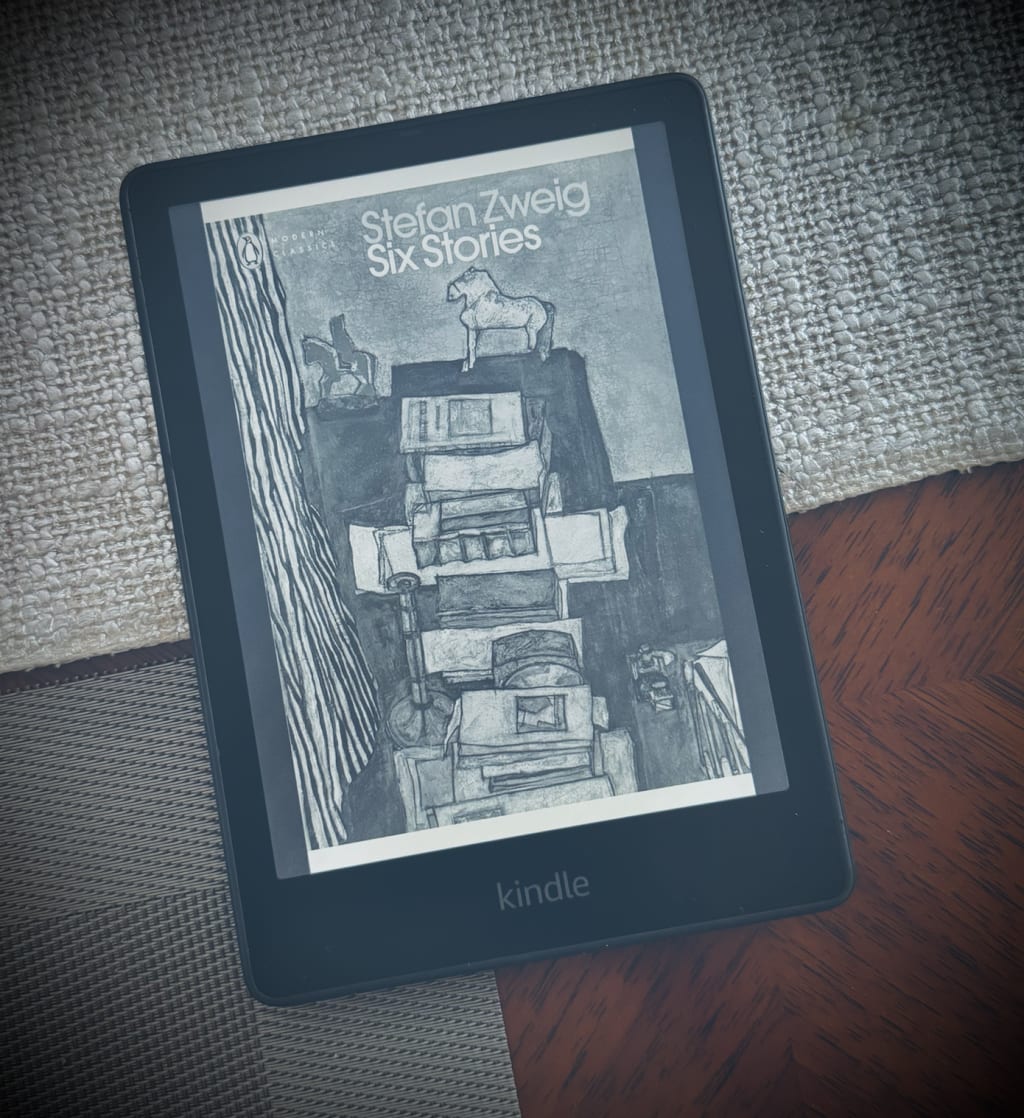
Stefan Zweig is probably one of my favourite writers of all time. His language is often terrifyingly emotional and tear-inducing. I purposefully left Six Stories for a while because of the emotions it may bring up that I really wasn't quite ready for until now. 6 years' ago, I said this about Journey into the Past if you would like to read it:
Stefan Zweig's books always attract me. I try to stay away from them because "The Impatience of the Heart" emotionally damaged me. This one is about a man called Ludwig who has his world turned upside down after he returns from the first world war to be with the woman he loves. It's a horrid love affair and a descent into unbridled madness. It's a passionate and violent love story waiting to implode and it's a memory of a long lost lifestyle that has no place in the new world. I cried.
So, let's take a look at the Six Stories and whether they reflect the same feelings, atmosphere and whether it contains the same language/style.
The first story is called The Invisible Collection and is about an art dealer who visits a blind collector believing his treasures intact and still there during the German inflation period. Believing that the blind collector's truths about them never being sold at first, the art dealer soon realise that they were sold long ago. They were since replaced with cheap copies. He then realises that if the blind collector knew this, it would completely shatter his world, making him think he was not in fact, that good at his job. The art dealer therefore withholds the information he has learnt. He comes back to admire paintings that no longer exist in order to maintain this illusion out of compassion for the collector. This is one thing Stefan Zweig does really well, he presents us with extended metaphors. This extended metaphor concerns what happens when people maintain illusions out of compassion, especially when reality is something much worse.
The next story is called Episode on Lake Geneva and is about a soldier who becomes obsessed with architecture after encountering a lakeside retreat in which there is decay. The PTSD of war he experiences is littered with the knowledge that things that previously existed are now dying, the lakeside retreat being a physical manifestation of that. He then begins to have these intense mental breakdowns. His memory haunts him horribly and he ultimately becomes hyper-aware of the situation he finds himself in. His history as a soldier has been a catastrophe for the real world, even if it was a job for him. Stefan Zweig definitely presents us with his common obsessive and terrified characters, underscored by their own sense of depression whilst being hyper-aware of their own existence. It's the opposite of "ignorance is bliss".
Another story is called Leporella. It is about a servant of the same name who, in Vienna, devotes herself to a baron with a broken marriage. Her devotion becomes the subject of rumour, some stating that she may have organised the death of the wife in order to solidify her space in the baron's life. But ultimately, after much chasing and chasing, the baron realises she is in fact, quite high maintainence in terms of her emotions. He rejects her and her obsession leads to her emotional downfall. This is Stefan Zweig doing what he does in Beware of Pity but in a slightly different way. He tells us the story of what happens when we do not create boundaries, especially where heightened emotions are concerned.
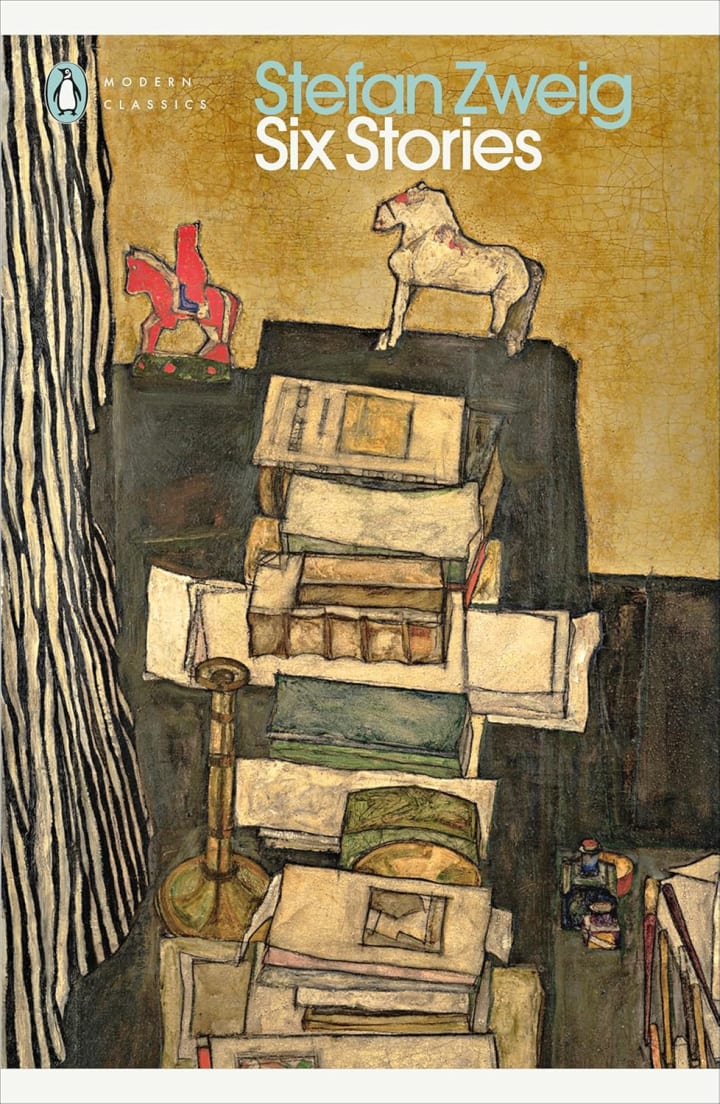
The next story, entitled Buchmendel, is about Jakob Mendel who is a book-dealer. He's famous in Vienna's reading circles for how smart he is. But, he is accused of befriending the enemy during the war and is therefore interned. When he is released, he returns to find his entire old world has changed. The cafe he once loved is gone and his mind is not the way it used to be. Things have changed and not for the better. His clients are no longer around and he can no longer recall texts like he should be able to. His identity becomes unstable. Stefan Zweig definitely believed that these wars were going to destroy the souls of the individuals who have to endure it - I mean he didn't exactly have high hopes for Europe as we understand. We cannot say that he didn't warn us.
The Buried Candelabrum is the next story and looks at the way our own histories can make us long for things. A rabbi is set to inherit an artefact which is the buried candelabrum of ancient ritual. Through this, we come to understand how he yearns for his homeland, how he aches for his spiritual and physical home. The dislocation he feels in himself is ultimately one of the saddest things about the whole anthology. His whole character is haunted by the threat of uncertainty and obviously, when we as readers look at the history of the Jewish people of the 20th century, we cannot say that things got better for him. This had such an emotional atmosphere. If you love Stefan Zweig's stories of spiritual breakage then you will adore this story.
The final story is called Burning Secret and is about a baron who captivates the son of a woman who is a grieving widow. The son idolises the rich man, and thus he can set about manipulating the mother but something goes horrible wrong before he can go about it. There's a rebellion that I don't want to say too much about because to be honest, it is definitely a spoiler. If there is another thing that Stefan Zweig is brilliant at, it is showing us the way in which the rich can manipulate others to their own will, even if they are threatened with being uncovered. Perhaps it is only fierce rebellion that will stop them. Again, it is an extended metaphor and it is brilliantly woven into the text.
I hope you enjoyed reading this fairly long review. I could not exactly choose which stories to cover and so I simply covered all of them, there are only six at the end of the day. Again, if you haven't yet read Stefan Zweig's works then I suggest you start with Beware of Pity and work you way around from there. They are all brilliant.
About the Creator
Annie Kapur
I am:
🙋🏽♀️ Annie
📚 Avid Reader
📝 Reviewer and Commentator
🎓 Post-Grad Millennial (M.A)
***
I have:
📖 280K+ reads on Vocal
🫶🏼 Love for reading & research
🦋/X @AnnieWithBooks
***
🏡 UK
Keep reading
More stories from Annie Kapur and writers in Geeks and other communities.
Book Review: "The Village of Stepanchikovo" by Fyodor Dostoevsky
I was practically itching to read some Dostoevsky and seeing as my copy of The Brothers Karamazov, you know that one from years' ago that has all my notes in it, is lost in translation at the moment. So, I'm going to have to settle with a bit of a re-read of The Village of Stepanchikovo. I read this for the first time whilst taking my hiatus a couple of years back and I never reviewed it. I revisited it on my Kindle (again, only the lord will know where my paperback has gone) and all those emotions came rushing back. Dostoevsky just has this way with words that, if you haven't read his works or find them daunting - here is my advice: do it anyway.
By Annie Kapur6 months ago in Geeks
The Rachels - 2025
Much to my surprise, I have kept a list of the films I‘ve seen this year. I daresay it isn’t complete. There will be films that snuck in on a late night in front of the TV that I would’ve forgotten to note. Or others, that I went to watch at the cinema, but then had a red wine and promptly forgotten about. But it’s not a bad approximation of the films I’ve seen this year. In total, there are 53 films listed, so an average of one a week and one for good luck.
By Rachel Robbins25 days ago in Geeks


Comments
There are no comments for this story
Be the first to respond and start the conversation.