
Book Review: "Rationality" by Steven Pinker
5/5 - a brilliant sociological analysis of our own times...

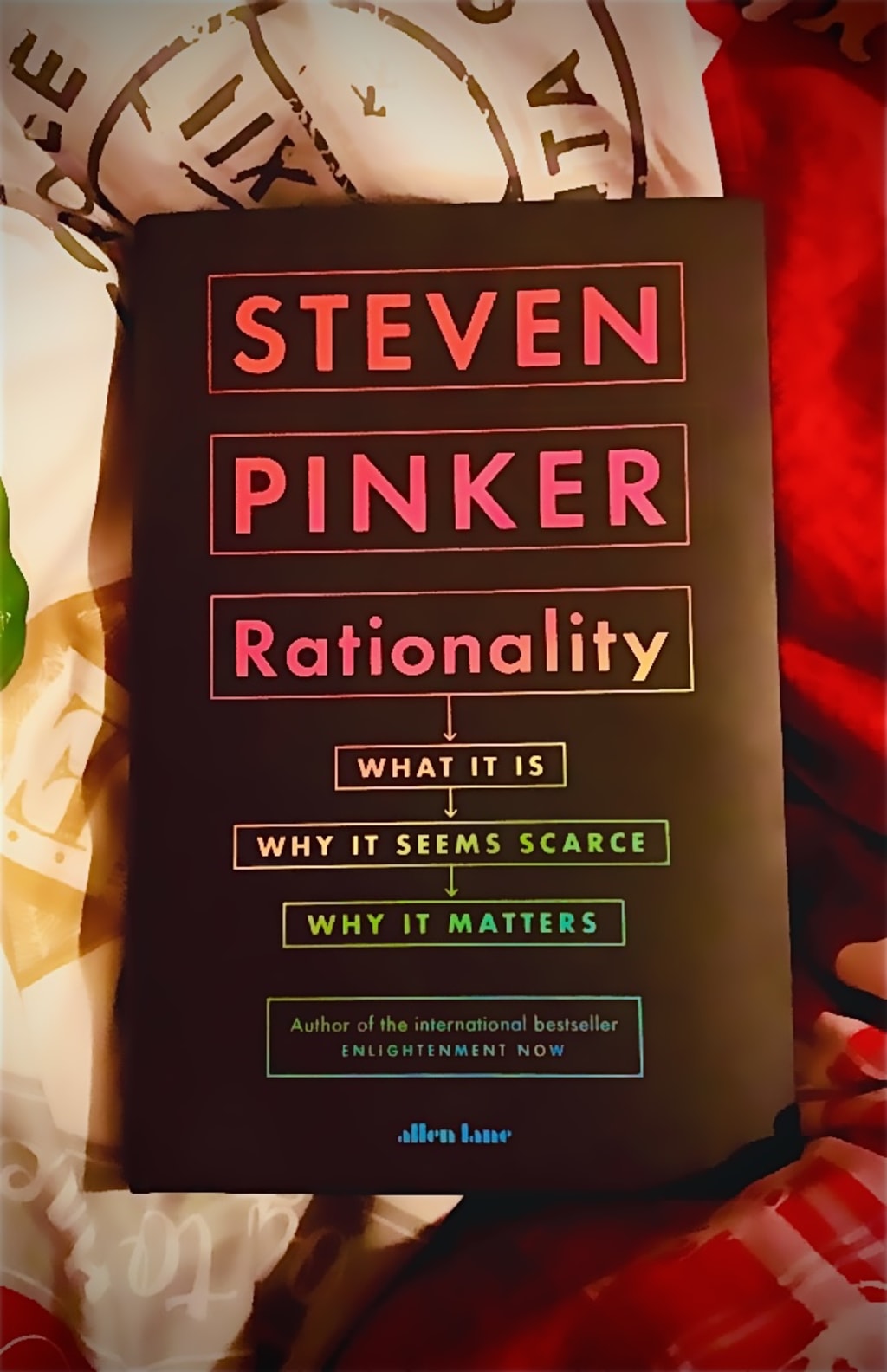
Let me start by saying that I am a pretty big Steven Pinker fan, ever since I read his book Enlightenment Now, I have read pretty much most of the books he has written. His reason and logic makes sense to the person who can see past the end of their nose and have a want to know different opinions and studies about linguistics, the mind and rationality. Unfortunately, you're not going to understand many of Steven Pinker's core theories if you don't know much about the study of language - but that's no matter. So far, I have read books like The Sense of Style, The Blank Slate and Better Angels of Our Nature. In this book entitled, Rationality, Steven Pinker seeks to argue that we are not irrational cavemen of human beings - and we have purpose.
This book at its outset is surprisingly optimistic about human nature - knowing Pinker's theory on how children learn language and behaviours and reading his book Better Angels of Our Nature can help with understanding why this is. But, in Rationality, the one thing I like about the discussion is the ability to change your own mind and make up your own mind based on rationality, evidence and of course, being human. This can present flaws and problems in logic, but again - that is a part of being a human with a rational thought process.
Another thing I like about this is that in terms of beliefs, it promotes reality over myth. Many people will claim that their own ideas are based in reality, but Pinker seeks to investigate which ones actually are with some very surprising answers. I think this part of the book is best understood as a system of linguistic and ideological analyses in order to come to some sort of truth - a truth which is not strictly just told to you, but one that the journey takes you towards in order to figure out for yourself.
The next thing I enjoyed about this book is the way he notices that nearly everything has been turned into a political symbol for everything else and not adhering to the political symbol of such in real life can result in you being ostracised from the group. Naturally, this has been true in our own society which some call 'post-truth' and Steven Pinker begs to differ on the term. I think that there is a lot to agree with and yet, still a lot to think about, this is common of Pinker to leave us with thoughts that we may want to change of our own and thoughts that we can ponder about for the next few weeks, even if we read other books.
The truth is that I think that Steven Pinker really outdoes himself here. The arguments are solid, complete with scientific analysis so that nobody can really say that he is completely wrong. I think the only people who could possibly argue with this are the people who look at emotional subjectivity rather than, what Pinker calls, objective goal-based analysis. I also think that the people who fully disagree with him are the ones who don't understand what he's actually talking about. He isn't taking a political side, rather he is trying to rationalise both sides whilst arguing about how, in their minds, the rationality checks out as correct.
In conclusion, I believe that this is yet another Steven Pinker goal-based logical argument and I have thoroughly enjoyed this book. Honestly, I cannot possibly wait for his next one to see what sociological idea he conquers next.
About the Creator
Annie Kapur
I am:
🙋🏽♀️ Annie
📚 Avid Reader
📝 Reviewer and Commentator
🎓 Post-Grad Millennial (M.A)
***
I have:
📖 280K+ reads on Vocal
🫶🏼 Love for reading & research
🦋/X @AnnieWithBooks
***
🏡 UK
Keep reading
More stories from Annie Kapur and writers in Geeks and other communities.
Book Review: "William the Conqueror" by David Bates
The one thing I like about reading historical nonfiction is that there is so much scope. You don't have to just write about the facts, you can use primary and secondary resources to assess something and draw conclusions based on various facts - especially if the person you are writing about is far back in history like William the Conqueror.
By Annie Kapur4 years ago in Geeks
Marvel Zombie
The last entry into our 2025 superhero projects catalogue is Marvel Zombies. This was a show that was anticipated by absolutely no one and it disappeared from the public consciousness as quickly as it was released. There was nothing special about the project that made it a must see, or a must remember. In fact if anything it's a must forget.
By Alexandrea Callaghan26 days ago in Geeks
How Much Money Has Been Spent on Oak Island?
For over two centuries, treasure hunters have poured time, money, and hope into Oak Island’s murky depths. But since the debut of The Curse of Oak Island on the History Channel, that investment has grown from modest digs to multi-million dollar excavation projects involving cutting-edge technology, massive drilling rigs, and full-scale operations. So how much money has actually been spent chasing the elusive treasure beneath Nova Scotia’s Oak Island?
By Rukka Nova6 days ago in Geeks


Comments
There are no comments for this story
Be the first to respond and start the conversation.