
Book Review: Quiet by Susan Cain
The Power of Introverts in a World That Can’t Stop Talking


Quiet: The Power of Introverts in a World That Can’t Stop Talking
About the Author
Susan Cain is an American writer, lecturer, and former lawyer known for her work on introversion and its societal implications. A graduate of Princeton University and Harvard Law School, Cain practiced corporate law before transitioning to writing. Her debut book, Quiet: The Power of Introverts in a World That Can’t Stop Talking (2012), became a New York Times bestseller, translated into over 40 languages, and sparked global conversations about personality types. Cain co-founded Quiet Revolution, a company dedicated to empowering introverts, and her TED Talk on introversion has garnered millions of views. Her work draws on extensive research and personal experience, making her a leading voice on the subject.

Overview of Quiet
Quiet explores the often-overlooked strengths of introverts in a world that predominantly values extroversion. Susan Cain argues that modern Western culture—particularly in the United States—prioritizes traits associated with extroverts, such as assertiveness, sociability, and constant collaboration, while undervaluing the reflective, focused, and creative qualities of introverts. Through a blend of scientific research, historical analysis, and personal anecdotes, Cain challenges the "Extrovert Ideal" and advocates for a more balanced appreciation of personality types.
The book is structured in four parts:
The Extrovert Ideal: Cain examines how society has shifted toward valuing extroversion, tracing its roots to the industrial era and the rise of corporate culture. She highlights how institutions like schools and workplaces often favor outgoing personalities, sidelining introverts.
Your Biology, Your Self?: This section delves into the science of temperament, exploring how genetics and brain chemistry influence introversion and extroversion. Cain discusses studies, such as those on dopamine sensitivity, to explain why introverts may prefer quieter settings and deeper interactions.
Do All Cultures Have an Extrovert Ideal?: Cain compares Western extroversion-centric cultures with others, like those in East Asia, where introverted traits like restraint and thoughtfulness are often prized. This cross-cultural perspective underscores the relativity of societal norms.
How to Love, How to Work: The final part offers practical advice for introverts navigating relationships, parenting, and professional environments. Cain also provides strategies for extroverts and ambiverts to coexist harmoniously with introverts.
Key themes include the power of solitude for creativity, the importance of deep focus in problem-solving, and the need for environments that accommodate diverse personality types. Cain profiles historical figures like Rosa Parks and modern innovators like Steve Wozniak to illustrate how introverts have shaped history through quiet determination.

Summary
Quiet begins by debunking myths about introversion, emphasizing that it is not synonymous with shyness or social anxiety but rather a preference for less stimulating environments. Cain argues that introverts, who make up roughly one-third to half of the population, possess unique strengths—such as deep thinking, empathy, and persistence—that are often undervalued. She critiques societal biases, like the emphasis on group work in schools or open-plan offices, which can stifle introverts’ contributions.
Through research, Cain explains the biological underpinnings of introversion, such as heightened sensitivity to stimuli, which leads introverts to thrive in calm settings. She also explores how cultural norms shape personality perceptions, noting that societies valuing collectivism often foster introverted traits. The book concludes with actionable advice: introverts can leverage their strengths by setting boundaries, seeking meaningful connections, and advocating for their needs, while extroverts can learn to appreciate quieter perspectives.
Cain’s narrative is both scholarly and accessible, weaving studies from psychology and neuroscience with stories of real people. Her personal reflections as an introvert add authenticity, making the book relatable to readers of all personality types. Quiet ultimately calls for a cultural shift toward embracing diversity in temperament, fostering environments where both introverts and extroverts can thrive.
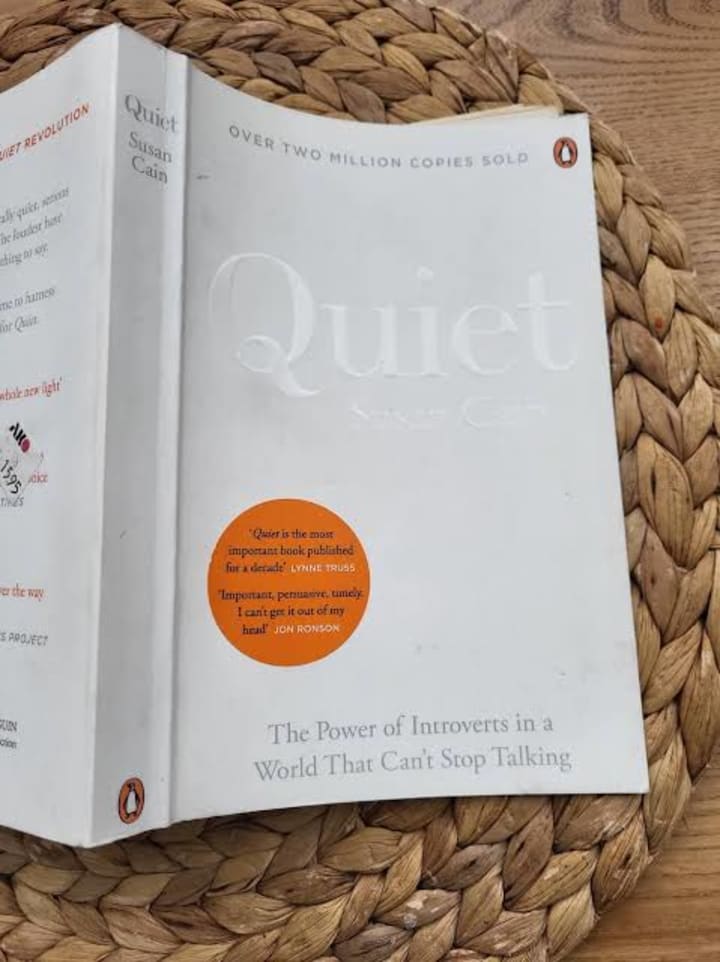
Impact and Reception
Since its release, Quiet has resonated with millions, sparking discussions about workplace dynamics, education reform, and personal growth. It has been praised for its rigorous research and compelling storytelling, though some critics note its focus on introversion might oversimplify the extrovert-introvert spectrum. The book remains a seminal work for understanding personality and advocating for inclusivity.
About the Creator
Am@n Khan
I'm educational storyteller passionate about turning knowledge into engaging narratives.
I write about topics like science, history and life skills.
Contact
WhatsApp : +923336369634
The Politics of Playing Dress-Up
Well, to start off I'd like to say a happy world book day to all who celebrate. I know I haven't really posted anything on my socials about it but I'm not a jubilant kind of person. I lay low most of the time. Let's start off with a popular anecdote from the vaults...
By Annie Kapur2 days ago in Geeks



Comments (1)
You make a good point about how society values extroversion. I've seen it in workplaces where quiet, introverted colleagues get overlooked. It's time for a change.