
Islam and Science: A Historical and Contemporary Perspective
Exploring the Interplay of Faith and Scientific Inquiry in the Muslim World


Introduction
The relationship between Islam and science has been a subject of fascination and study for centuries. From the Golden Age of Islam (8th to 13th centuries) to the modern era, Muslim scholars have made significant contributions to scientific disciplines while navigating the interplay between faith and empirical inquiry. This article explores the historical and contemporary connections between Islam and science, highlighting key contributions, philosophical perspectives, and ongoing discussions.
Historical Contributions: The Golden Age of Islam
During the Islamic Golden Age, roughly spanning the 8th to 13th centuries, Muslim scientists and scholars made groundbreaking advancements in various fields, including mathematics, astronomy, medicine, optics, and chemistry. This era was marked by a culture of intellectual curiosity, driven by the Islamic emphasis on seeking knowledge, as encouraged in the Quran (e.g., Surah Al-Alaq 96:1-5, which urges believers to "read" and seek understanding).
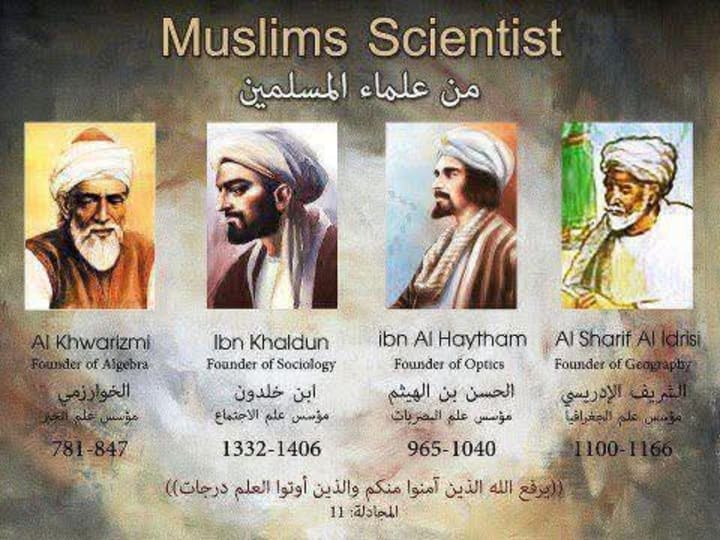
Mathematics: The Persian mathematician Al-Khwārizmī (c. 780–850 CE) laid the foundations for algebra, with his work Kitab al-Jabr introducing systematic methods for solving equations. His name inspired the term "algorithm," reflecting his contributions to computational methods.
Astronomy: Scholars like Al-Battani (c. 858–929 CE) refined Ptolemaic models, improving calculations of planetary orbits and contributing to trigonometry. Observatories in cities like Baghdad and Samarkand facilitated precise astronomical observations.
Medicine: Ibn Sina (Avicenna, 980–1037 CE) authored The Canon of Medicine, a comprehensive medical encyclopedia used in Europe and the Islamic world for centuries. His work systematized medical knowledge and emphasized empirical observation.
Optics: Ibn al-Haytham (Alhazen, 965–1040 CE) revolutionized optics with his Book of Optics, introducing the scientific method and conducting experiments on light and vision, challenging earlier Greek theories.
These advancements were supported by institutions like the House of Wisdom in Baghdad, where scholars translated Greek, Persian, and Indian texts, synthesizing and expanding knowledge. The Islamic emphasis on learning, coupled with a cosmopolitan approach, fostered an environment where science thrived.
Philosophical and Theological Perspectives
Islam encourages the pursuit of knowledge as a means to understand God's creation. The Quran and Hadith contain references to natural phenomena, urging reflection on the universe's order and complexity (e.g., Quran 3:190-191). However, tensions have occasionally arisen between literalist interpretations of religious texts and scientific findings, particularly in areas like cosmology and evolution.
Compatibility with Science: Many Muslim scholars argue that Islam and science are inherently compatible, as scientific inquiry reveals the intricacies of divine creation. For instance, the Quran’s descriptions of embryonic development (Surah Al-Mu’minun 23:12-14) have been cited as aligning with modern embryology.
Challenges: Some contemporary debates, such as those surrounding evolution, reflect differing views. While many Muslim scientists accept evolutionary theory, certain religious groups reject it, citing conflicts with creation narratives. These debates mirror similar discussions in other religious traditions.
Modern Contributions and Challenges
In the modern era, Muslim-majority countries have produced notable scientists, though contributions are less centralized than during the Golden Age. For example, Pakistani physicist Abdus Salam (1926–1996) won the Nobel Prize in Physics in 1979 for his work on the electroweak theory. However, challenges like underinvestment in research, political instability, and brain drain have hindered scientific progress in some Muslim-majority nations.
Organizations like the Islamic World Academy of Sciences promote scientific research, while initiatives in countries like Qatar and Saudi Arabia aim to build research hubs. The tension between secular and religious education systems remains a hurdle, with some advocating for integrating scientific inquiry into religious curricula to foster innovation.
Key Point
Historical Impact: The Islamic Golden Age saw pioneering work in mathematics, astronomy, medicine, and optics, influencing global scientific progress.
Religious Motivation: Islamic teachings emphasize knowledge acquisition, encouraging scientific exploration as a form of worship.
Modern Dynamics: While individual Muslim scientists excel, systemic challenges limit broader contributions in some regions.
Ongoing Debates: Issues like evolution highlight the need for dialogue between religious and scientific communities to address perceived conflicts.

Conclusion
The relationship between Islam and science is rooted in a rich historical legacy of intellectual achievement and a theological framework that values knowledge. While the Golden Age showcased the potential for synergy between faith and reason, modern challenges call for renewed investment in education and research. By fostering dialogue and collaboration, the Islamic world can continue to contribute to global scientific advancement while honoring its spiritual heritage.
About the Creator
Am@n Khan
I'm educational storyteller passionate about turning knowledge into engaging narratives.
I write about topics like science, history and life skills.
Contact
WhatsApp : +923336369634
A Knight of the Seven Kingdoms Series Review (Season 1)
As one of the biggest properties in fantasy, A Song of Ice and Fire remains immensely popular with audiences. After reaching far into the past with House of the Dragon, a second spin-off was on the cards. A Knight of the Seven Kingdoms serves up a bite-sized slice of action and drama, but it still claims a spot among the best small-screen titles.
By Robert Cain7 days ago in Geeks
Two Grumpy Old Men Solve the Problem
Marty and Steve were two grumpy old men who lived together. They had known each other for years. Marty had been a bachelor all his life. Steve said it was because no one could stand to ever live with. Marty’s standard reply was “Well, you are, so what sort of a moron does that make you!”
By Calvin London2 days ago in Humor



Comments
There are no comments for this story
Be the first to respond and start the conversation.